
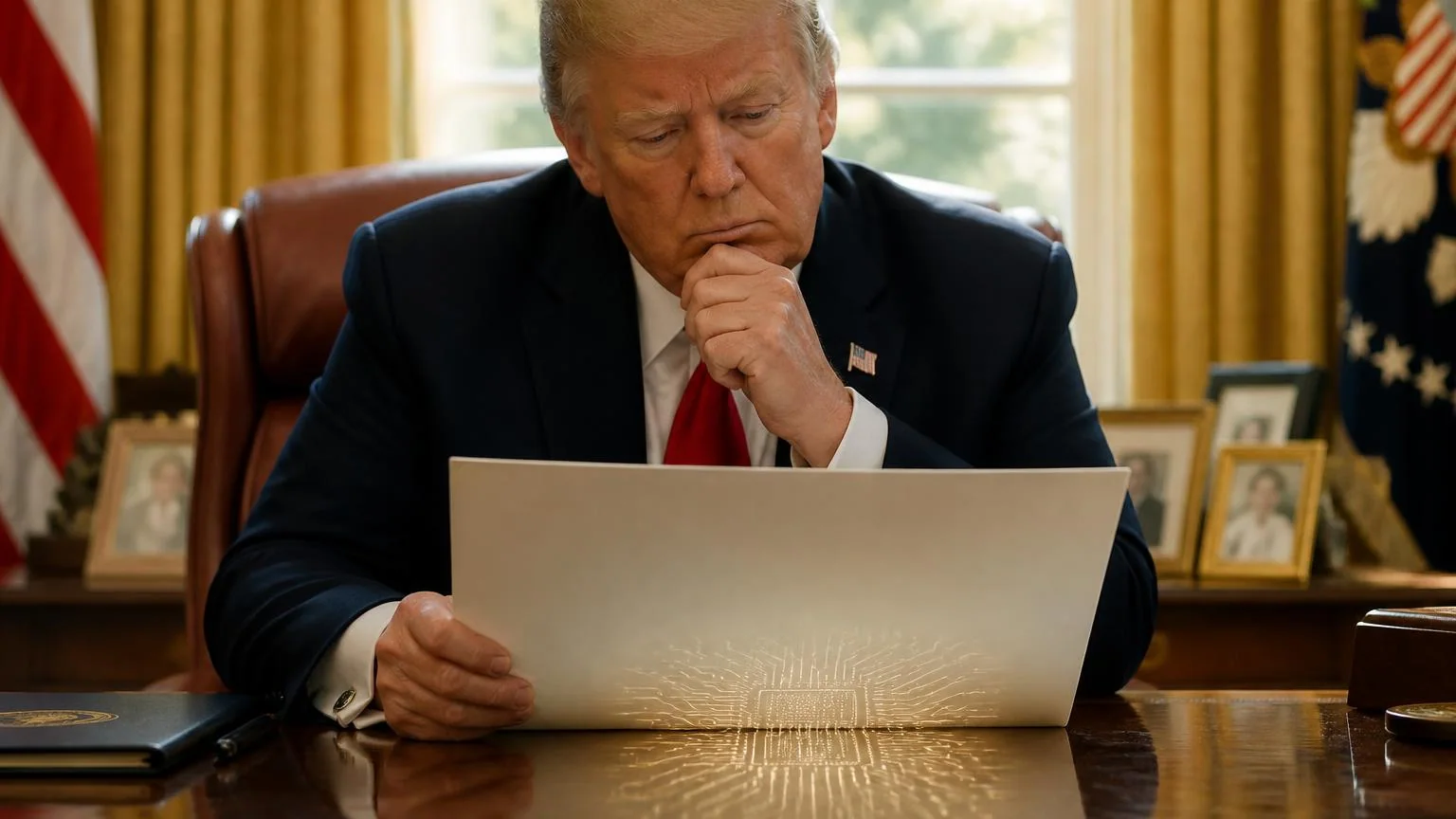
On Thursday, May 21, 2026, President Donald Trump called off a planned White House signing ceremony for a new artificial intelligence and cybersecurity executive order just hours before it was expected to happen. The draft order would have created a voluntary framework for frontier AI companies to give the U.S. government early access to covered models before public release. As of Saturday, May 23, 2026, no such order appears on the White House executive orders page, leaving one of Washington’s most closely watched AI policy moves in limbo.
The White House was ready to move, then stopped
The reversal was abrupt. According to AP, Trump said he did not like the text and worried it could weaken the United States’ lead in AI. That matters because the order was not being framed as a full licensing regime or a Biden-style reset. Instead, it was shaping up as a voluntary national-security and cyber-review framework built around frontier models from companies such as Anthropic, OpenAI, and Google.
The timing is important. The debate around the order accelerated after growing concern in Washington and in regulated industries that the newest AI systems can find software vulnerabilities faster than existing patching and disclosure systems can handle. In other words, the administration was not only reacting to generic AI safety arguments. It was reacting to a narrower and more operational fear: that frontier models are becoming powerful enough to change the tempo of cybersecurity risk.
What the draft order would have required
The most consequential detail in the draft was the timeline. Multiple reports said the framework would have asked covered AI developers to provide the government with access to new frontier models 90 days before public release. The same draft also contemplated early access for critical-infrastructure defenders, including sectors such as finance and healthcare, so they could study how these systems might change cyber risk before public rollout.
That is a bigger shift than it first sounds like. A 90-day review window would effectively create a quasi-launch gate for the most powerful AI systems, even if participation remained voluntary on paper. Product planning, partner briefings, red-team work, security disclosures, and enterprise rollout timing would all begin to bend around that review cycle.
CyberScoop reported that the draft empowered the National Security Agency to conduct classified evaluations of frontier models, while the Treasury Department would have set up an information-sharing arrangement between AI companies and cybersecurity defenders in critical infrastructure. Other agencies, including the Office of the National Cyber Director, CISA, and NIST, were also expected to help define which models fell under the regime.
Why this matters for frontier labs and enterprise buyers
For frontier labs, the canceled order shows that Washington is still searching for a middle ground between hands-off acceleration and formal preclearance. If the order had gone through, labs would have faced a new expectation to treat model launches less like software releases and more like security-sensitive infrastructure events. That would have raised the policy cost of moving fast, especially for cyber-capable models and agent systems with stronger coding and tool-use abilities.
For enterprise buyers, the missed signing does not mean the pressure is gone. It means the pressure has become less predictable. Banks, healthcare operators, infrastructure providers, and large software teams still have to plan around the possibility that new frontier models will face deeper government review, sector-specific testing, or pre-release sharing expectations. The difference is that there is no single federal operating rule to design around yet.
This uncertainty is especially relevant for companies moving from AI pilots to agent deployment. Teams evaluating coding agents, internal copilots, security workflows, or multi-agent automation now have to think about governance on two levels at once: internal controls for their own deployments and external policy risk around the models they rely on.
What to watch next
The next signal is not whether Washington suddenly stops caring about frontier-model oversight. It is whether the administration comes back with a narrower version of the order, shifts the work into agency-level agreements, or keeps a voluntary testing process alive without a headline executive action.
Another thing to watch is whether critical-infrastructure sectors continue building their own direct relationships with frontier labs even without a formal order. The draft suggests the U.S. government was trying to institutionalize pre-release access for cyber defenders, not just run one-off conversations. That goal does not disappear because the ceremony did.
For AI agents, automation, and enterprise AI, the practical implication is straightforward: model capability is now colliding with launch governance. Even without a signed order, the market is moving toward earlier testing, tighter security expectations, and more scrutiny of systems that can write code, use tools, and surface exploitable weaknesses at scale.