
On May 7, 2026, Google updated the Gemini API release notes and migration documentation to announce a breaking change to the v1beta Interactions API. The update replaces the older outputs response shape with a new steps timeline, changes how response_format works, and sets two concrete dates that matter: the new schema becomes the default on May 20, 2026, and the legacy schema is removed on June 6, 2026.
That makes this more than a documentation cleanup. Any product, internal tool, or agent workflow that still expects the old Interactions API response structure now has a short migration window. For teams building long-running agent flows, tool-using assistants, or observable execution layers on top of Gemini, this is a real compatibility event.
What Google changed on May 7
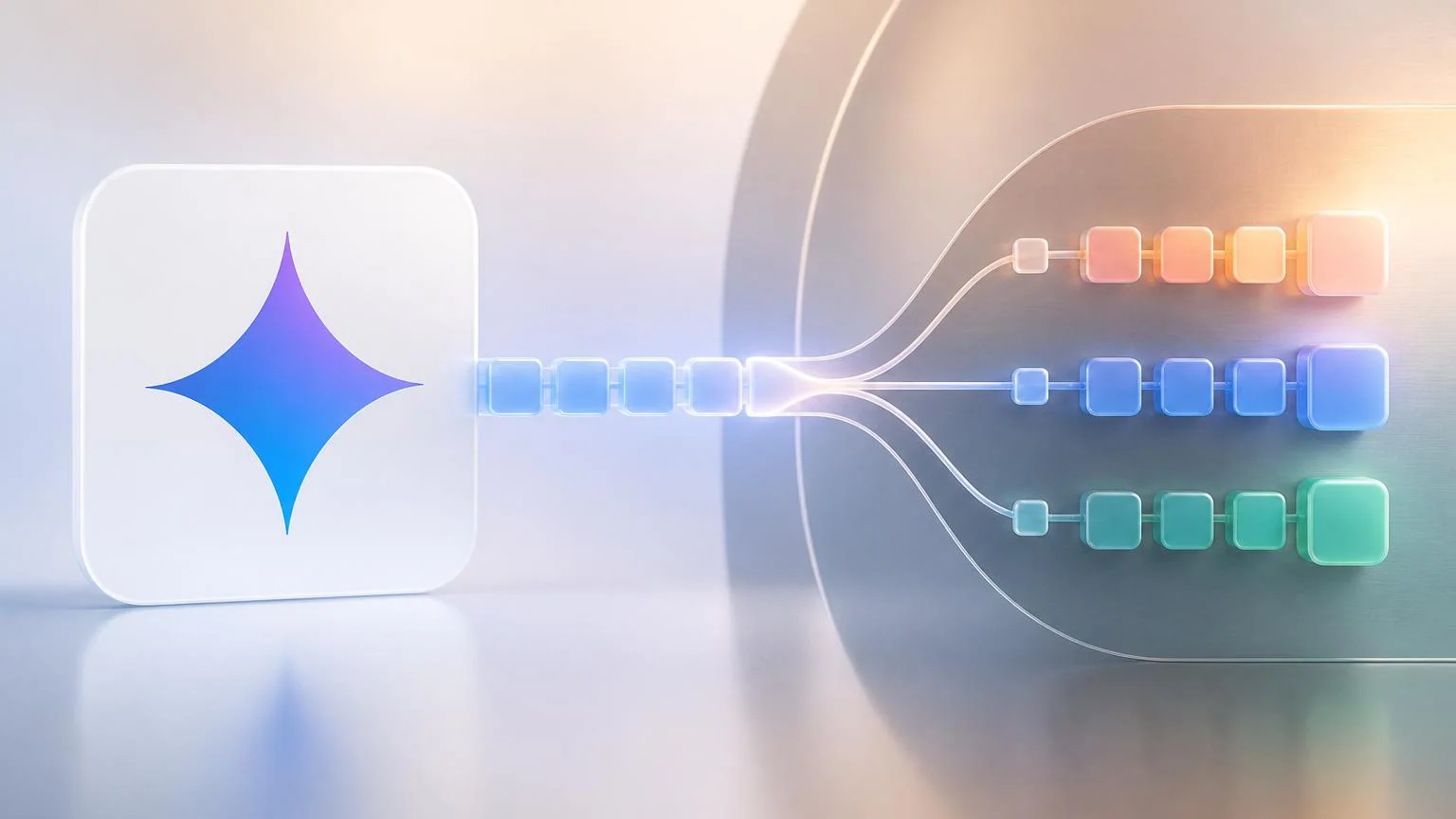
The biggest structural shift is simple to describe and easy to underestimate: Gemini Interactions responses no longer center on a flat outputs array. Google is moving to a steps array that records a fuller turn-by-turn execution timeline, including user input, model output, thoughts, function calls, and server-side tool activity.
Google’s migration guide says the new shape is designed to support future capabilities such as mid-flight steering and asynchronous tool calls. In practice, that means the response format is being pushed closer to an agent runtime trace than a basic text-generation payload.
The second breaking change is around output configuration. Google is consolidating output controls into a polymorphic response_format structure and removing the older response_mime_type pattern. That affects teams doing structured outputs, image generation, or multimodal response handling through the Interactions API.
Why this matters more than a field rename
For simple prototypes, changing response parsing from outputs to steps may sound manageable. But production agent systems rarely stop at plain text. They inspect tool calls, stream partial events, track search results, handle citations, and persist execution history across multiple turns. Those are exactly the places this change reaches.
Google’s updated schema turns function calls and server-side tool activity into distinct execution steps instead of mixed content items. Streaming also changes: older event names are replaced by step-based lifecycle events, and function-call arguments can arrive as streamed partial deltas rather than one complete object. That pushes builders to treat Gemini Interactions less like a chat endpoint and more like an evented workflow surface.
This is also strategically important because Google’s own migration guide positions Interactions as the standard interface for new Gemini development. Google says new models beyond the core mainline family, along with new agentic capabilities and tools, will launch on Interactions going forward. So the migration is not only about avoiding breakage. It is also about staying on the path where new Gemini agent features will actually show up.
The migration window is short
Google has given developers a narrow but explicit timetable. REST users can opt in to the new behavior now with the Api-Revision: 2026-05-20 header. On May 20, the new schema becomes the default. Until June 6, teams can temporarily force the legacy behavior with Api-Revision: 2026-05-06. After June 6, the legacy schema is gone.
There is an additional practical warning in Google’s migration guide: features shipped after May 7 will only appear in steps responses. Teams that stay on the old shape during the grace period will not just delay cleanup work. They will also miss newer capabilities while they wait.
- Response parsing must move from outputs logic to steps logic.
- Streaming clients must handle new step-based event names and status updates.
- Tool-using workflows must expect function calls and tool results as typed execution steps.
- Structured output and media generation flows must adapt to the new response_format model.
Business impact for AI agent teams
The timing matters because many companies are now using frontier APIs as the control surface for multi-step automations, internal copilots, and customer-facing agents. In that world, a schema break is not a cosmetic issue. It can disrupt logging pipelines, orchestration code, observability dashboards, and any downstream service that expects a stable payload shape.
There is a more important long-term signal here as well. Google is clearly reshaping Gemini around typed execution traces, background work, and server-managed state. That is good news for teams that want more observable and governable agent behavior. But it also means vendor APIs are becoming closer to workflow runtimes, and those runtimes can change underneath applications faster than many enterprises are used to.
The practical implication is straightforward: if your product strategy depends on AI agents, vendor migration readiness is now part of platform engineering. Teams that abstract model responses cleanly and isolate parsing logic will handle changes like this far better than teams that hardcode around one response object and hope the provider stays still.
What to watch next
The next milestone is May 20, when the new Gemini Interactions schema becomes the default. The bigger date is June 6, when the legacy structure disappears entirely. Between now and then, expect more developers to discover hidden dependencies in stream handlers, tool wrappers, and analytics systems that were built against the older response model.
The broader takeaway is that agent infrastructure is maturing into a faster-moving layer than classic REST integrations. Google’s May 7 update is a reminder that the winning AI teams will not just pick strong models. They will build systems that can survive model, tool, and API evolution without turning every upstream change into a production incident.
For businesses building AI agents, automation, and enterprise workflows, that is the real story: resilience is becoming a core product feature.