
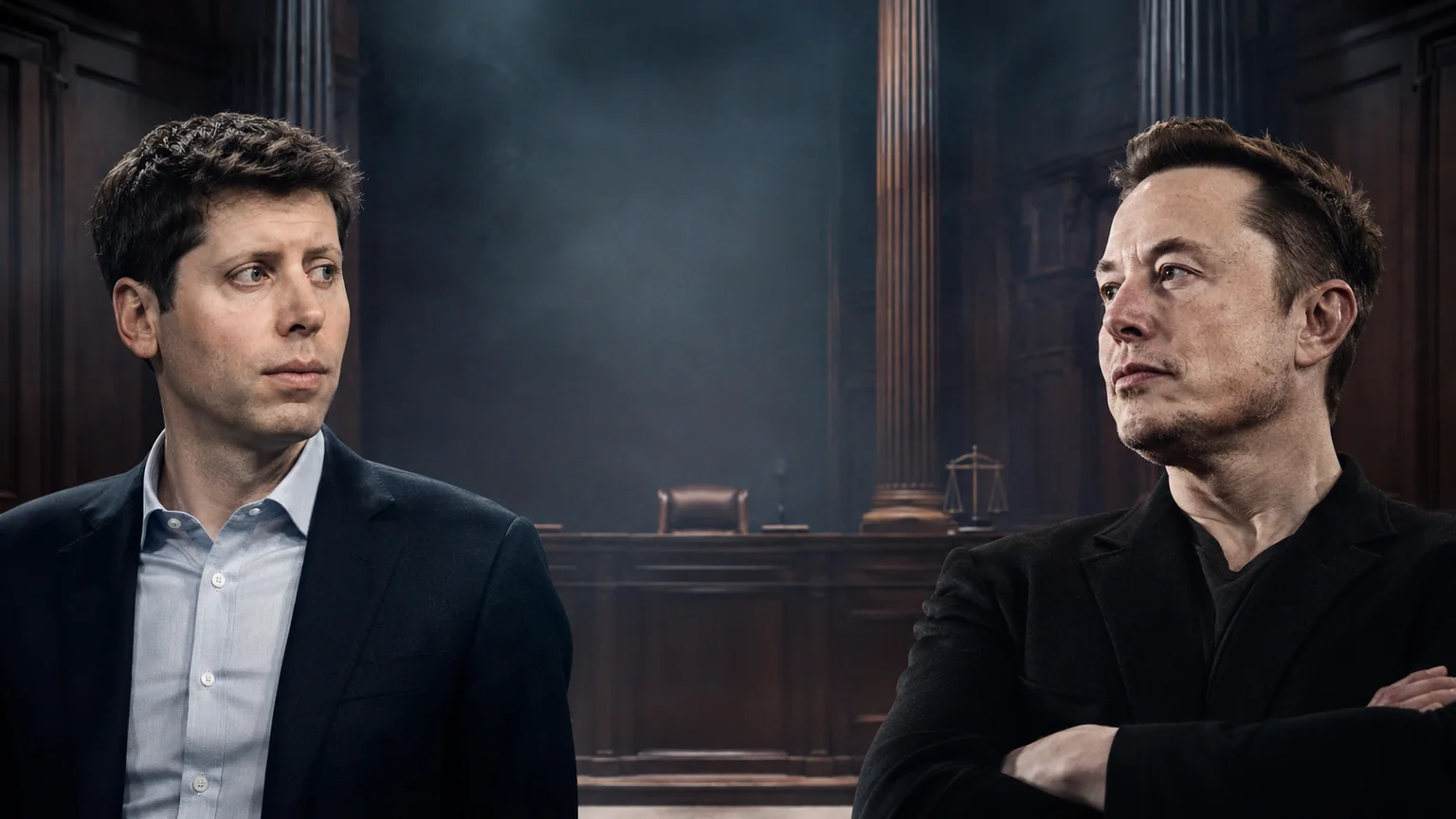
One of the strangest details from the first day of opening arguments in Musk v. Altman was not a benchmark, valuation, or corporate filing. It was the judge telling two of the most visible AI executives in the world to stop turning the trial into a social-media fight. On April 28, 2026, The Atlantic reported that Judge Yvonne Gonzalez Rogers admonished Elon Musk and Sam Altman about their tendency to post about the trial, and both agreed to limit it. That moment may sound like theater, but it captures a real governance problem in AI.
Frontier AI companies are not only shaped by boards and contracts. They are shaped by founder narratives, public feuds, platform posts, investor expectations, and personality-driven trust. When the people steering AI labs also command huge public audiences, their online conduct becomes part of the control environment. The Musk-Altman trial makes that visible in a courtroom.
What Actually Happened
The Atlantic reported that as jury selection began, Musk posted repeatedly on X and referred to Altman with a mocking nickname. Before opening arguments on April 28, Judge Gonzalez Rogers reportedly asked Musk and Altman to limit their social-media activity about the trial. The same report framed the conflict as the AI boom's founding feud, with implications beyond either executive.
The courtroom itself became a collision between legal process and online influence. Musk and Altman are not normal litigants. They lead or shaped companies that influence capital markets, developer ecosystems, public policy, and the way millions of people understand AI. Their public messages do not sit outside the dispute. They can shape recruiting, customer trust, investor sentiment, and political pressure around the case.
Why This Detail Matters
The judge's warning is interesting because AI governance often focuses on model behavior while ignoring executive behavior. But organizational trust is not created by safety documents alone. It is created by the people, incentives, and communications around the system. If the public story around a frontier AI company is driven by personal conflict, customers and regulators have reason to ask whether the control structure is strong enough to withstand ego, rivalry, and market pressure.
This is not only an OpenAI or xAI issue. The broader AI market is full of founder-led companies where product direction, public positioning, model policy, and capital strategy are closely tied to a small number of executives. That can create speed. It can also create fragility. When a founder's feed becomes part of the company's operating surface, governance has to account for narrative risk.
The Business Lesson
- Executive communication is AI risk management. Public claims about capability, safety, openness, and control can become legal and reputational exposure.
- Founder-led speed needs checks. Strong boards, documented policies, and independent review matter more when the company is personality-driven.
- Trust requires consistency. Customers judge AI vendors by behavior, not only by technical documentation.
- Internal AI deployments need the same discipline. Teams should define who can speak for an AI system, approve actions, and override outputs.
The Nerova Take
The posting reprimand is a small courtroom moment with a large lesson. AI workforces need boundaries. So do the humans who control them. A business deploying AI agents should not rely on vibes, promises, or the charisma of a single operator. It should rely on documented roles, permissions, approvals, and logs.
As AI systems become more capable, the companies behind them need communication discipline and operational discipline. The Musk-Altman feud shows what happens when the story around AI becomes inseparable from the people fighting over it. Businesses should take the opposite path: make the system legible, governable, and resilient enough that trust does not depend on one person's public feed.