
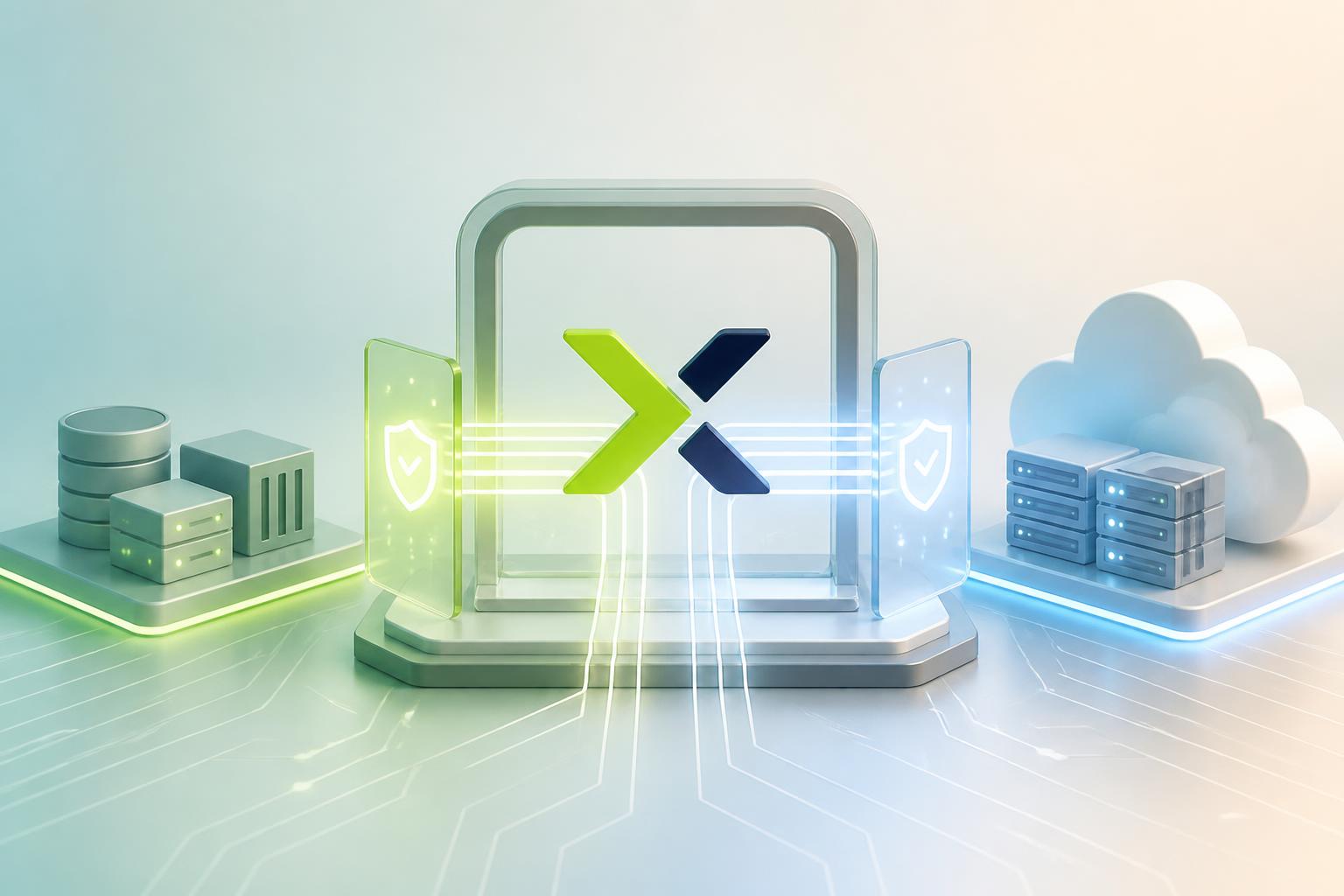
On May 26, 2026, Nutanix said its new Agent Gateway is now generally available as part of Nutanix Enterprise AI 2.7. The release is aimed at a problem that becomes obvious once companies move beyond a few demos: as more agents touch more models, tools, and business systems, token spend, permissions, and auditability start to sprawl fast.
Nutanix is positioning Agent Gateway as a governed layer between agents, large language models, and enterprise tools. In practical terms, the company says it adds centralized policy enforcement, token usage visibility, audit logs, and a unified API across public hosted models and self-hosted models. That makes this a more important infrastructure move than a normal feature drop, because it targets the operational mess that shows up after agent pilots begin scaling.
What Nutanix actually launched on May 26
According to Nutanix, Agent Gateway is now available to Nutanix Enterprise AI customers through the 2.7 release. The company says the product is designed to manage traffic from agents to models and to govern how agents reach business tools and data sources.
The launch centers on a few concrete controls. Nutanix says Agent Gateway gives teams centralized token observability, granular token-based rate limiting, audit logging, and a unified API for both external provider models and self-hosted models. It also pitches the product as a control point for Model Context Protocol access, including policy enforcement and tool-level filtering around agent connections to enterprise systems.
That matters because many enterprise agent rollouts no longer fail at the model layer first. They fail when organizations cannot clearly see who is using which model, which tools an agent can touch, or why costs suddenly rise after more workflows go live. Nutanix is trying to make that governance surface part of the platform instead of something buyers bolt on later.
Why the bigger story is agent operations, not model hosting
Nutanix had already been building in this direction. On March 16, 2026, the company used its broader Agentic AI launch to introduce Nutanix Enterprise AI 2.6 with an AI Gateway for unified policy control over cloud-hosted and private LLMs. The new May 26 release changes the framing in a more important way: the control layer is no longer presented mainly as a model gateway. It is now explicitly an agent gateway.
That change says a lot about where enterprise AI infrastructure is moving. Model access is becoming table stakes. The harder problem is governing autonomous or semi-autonomous systems that can call tools, spawn subagents, route work across multiple models, and operate across hybrid environments. Once that happens, cost control and permission control stop being finance-side details and become core runtime requirements.
Nutanix is also clearly leaning into the idea that enterprises will not want a single-vendor AI stack for everything. Its pitch depends on hybrid routing across hosted and self-hosted models, plus the ability to shift workloads when cost, privacy, or sovereignty requirements change. For buyers, that makes Agent Gateway less about one more AI feature and more about whether a neutral governance layer becomes necessary as multi-agent deployments spread.
Where the business impact is likely to land first
The first impact should show up with platform, infrastructure, and security teams that are being asked to support agent rollouts without losing control of spend or access. Nutanix is effectively selling a way to centralize several messy questions that otherwise get scattered across different tools.
- Infrastructure teams get a clearer handle on token usage, rate limits, and workload placement across hosted and self-hosted models.
- Security and governance teams get a stronger policy and audit layer around agent access to enterprise tools and private data.
- Developer teams get a unified path to use different models without rebuilding the access and governance layer each time the stack changes.
The timing also fits a broader enterprise shift. Nutanix argued in March that the real bottleneck in agentic AI is no longer just building individual agents, but operating thousands of AI services, agents, and concurrent users at scale. The May 26 Agent Gateway release narrows in on that exact problem. It turns token economics, tool permissions, and hybrid routing into features that infrastructure buyers can evaluate directly.
One important caveat remains. Nutanix’s May 26 blog notes that some MCP-server-related functionality is still marked tech preview. That means the launch is meaningful, but buyers should still separate what is fully production-ready today from what is part of Nutanix’s near-term roadmap.
What to watch after Enterprise AI 2.7
The next question is whether buyers start treating agent governance layers as required infrastructure rather than optional extras. If they do, Nutanix’s launch will look less like a niche platform update and more like an early signal of a new buying category.
Three things matter next. First, whether Nutanix can turn its MCP-related governance story into a fully production-hardened capability. Second, whether enterprises decide a vendor-neutral control layer is better than relying only on the governance controls bundled by individual model or cloud providers. Third, whether cost visibility becomes a decisive factor in agent platform selection as more organizations discover that cheaper tokens do not automatically mean cheaper operations.
For AI agents and automation teams, the practical takeaway is straightforward: the enterprise stack is shifting again. The next competitive layer is not only model quality or agent UX. It is the runtime governance layer that decides which agents can act, which tools they can reach, what those actions cost, and how safely the whole system can scale.