
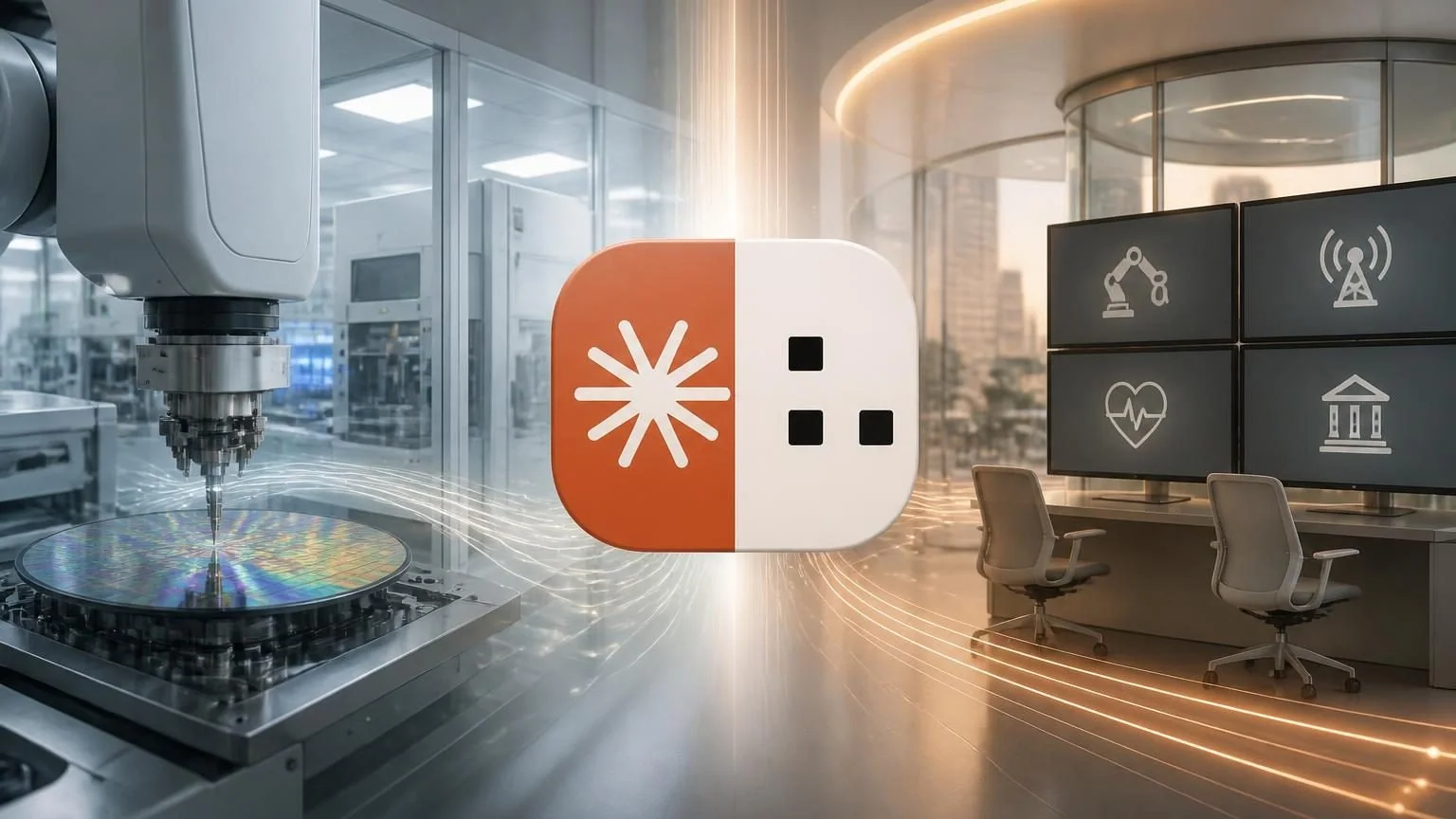
On July 9, 2026, Anthropic said it is partnering with UST to bring Claude into engineering environments and train 20,000 employees worldwide. UST’s July 8 announcement says the alliance will embed Claude into the platforms, engineering work, and operational workflows behind industries where accuracy, compliance, and reliability matter. Anthropic announcement · UST press release
What Anthropic and UST actually announced
The headline is not just that Claude is being used internally. UST is putting Claude into the systems it builds and runs for clients, including its engineering environments and industry platforms. Anthropic says the work spans semiconductor, automotive, manufacturing, telecom, embedded, IoT, healthcare, and banking workflows.
That matters because the use case is not a simple chatbot. In UST’s physical AI pipeline, Claude Code reads chip pinouts and hardware schematics, writes and runs regression tests, and compares live equipment data against digital twins to flag firmware and signal-integrity issues earlier. UST says its iDEC validation pipeline already cuts cycle times by 50% to 70%, compressing standard four-day turnaround work into 48 hours.
- Engineering: test generation, validation, regression, and design review.
- Operations: faster fault detection and fewer manual handoffs.
- Training: 20,000 UST employees are being trained on Claude worldwide.
Why this matters for enterprise AI buyers
For business leaders, the important signal is that AI is moving deeper into the operating system of the company. Anthropic and UST are describing a rollout model built around domain expertise, human approval steps, and audit controls, not a free-for-all automation push.
That is the real enterprise lesson. The companies most likely to win with AI are the ones that place models inside specific workflows, connect them to real systems, and define where humans stay in the loop. In this case, the use cases touch healthcare claims, telecom network operations, and banking case handling, which shows how quickly AI is being pushed into high-stakes environments.
What "physical AI" means in practice
Anthropic defines physical AI as intelligence built into the equipment and engineering processes that produce real-world products. That is a wider category than robotics demos or screen-based copilots. It includes the systems that verify chip designs, catch faults before a factory run, and support field service after products ship.
In other words, this is AI that shortens the path from decision to action in the physical economy. If it works, the upside is not just faster text generation; it is fewer validation delays, lower rework, better uptime, and less time spent separating signal from noise.
Where the pattern could spread next
Expect more system integrators and industry platforms to package AI as a reasoning layer inside regulated workflows. The strongest buyers will not ask, "Can the model answer questions?" They will ask, "Where can it safely read data, take action, and stop for approval?"
That is the question Nerova customers should be asking now, too. The next wave of enterprise AI is likely to reward teams that can map approvals, bottlenecks, and integration points before they buy tools.