
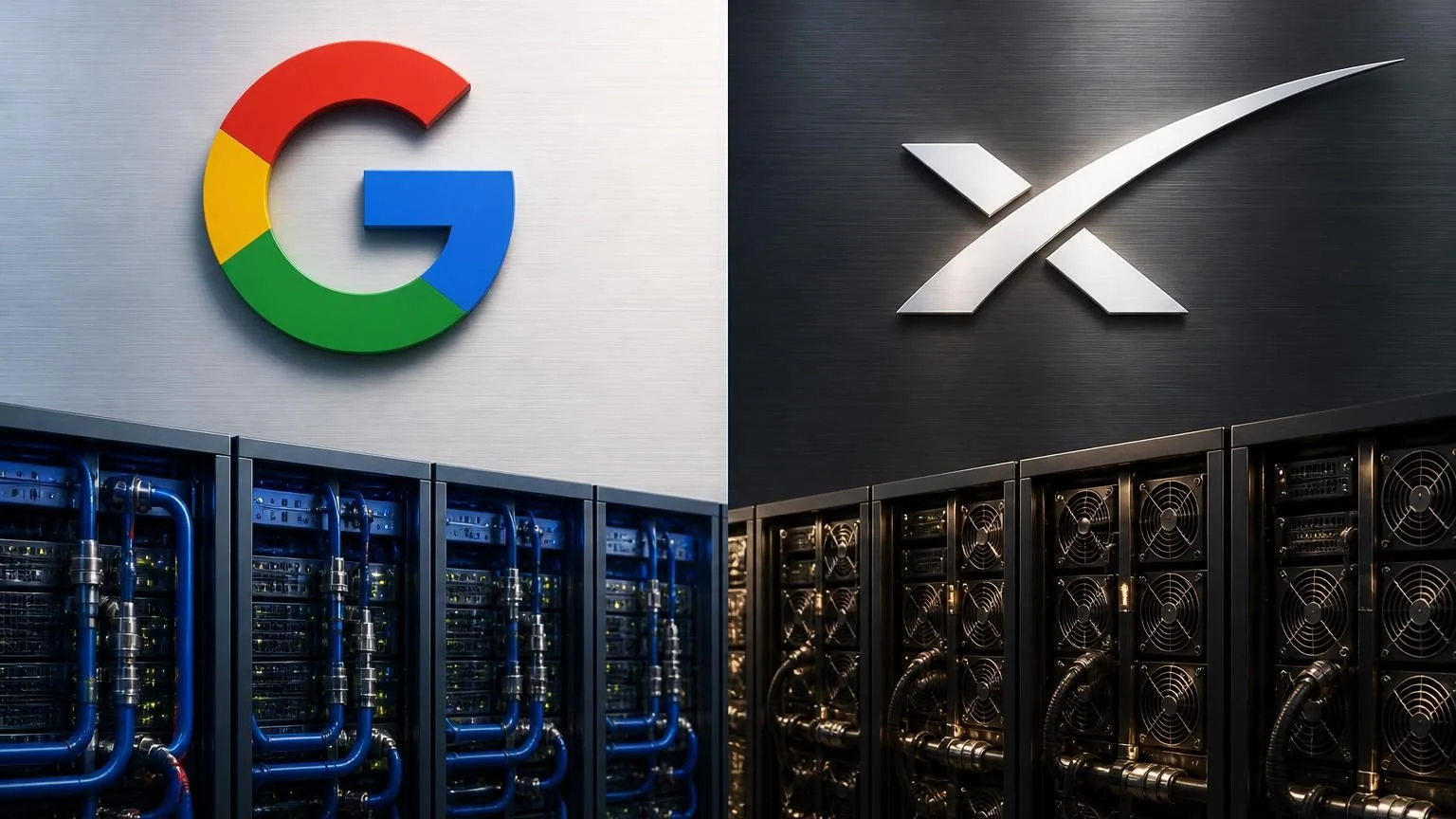
On June 5, 2026, SpaceX disclosed in an SEC filing that Google signed a multi-year cloud service agreement for access to about 110,000 Nvidia GPUs and related compute components, with Google set to pay $920 million per month from October 2026 through June 2029. Google separately described the arrangement as short-term bridge capacity for stronger-than-expected demand for its agent platform and Gemini Enterprise. That makes this more than a late-stage IPO disclosure for SpaceX: it is a fresh sign that the AI capacity race is still tighter than the market narrative sometimes suggests.
What Google and SpaceX disclosed
The June 5 filing lays out unusually specific commercial terms. SpaceX said Google’s capacity would ramp through September 2026 at a reduced fee before the full monthly rate starts in October. If SpaceX fails to deliver the committed GPU capacity by September 30, Google can terminate after a one-month grace period or accept less capacity with a corresponding fee reduction.
The agreement is also not fully locked for its entire duration. After December 31, 2026, either side can terminate with 90 days’ notice. SpaceX also said Google will retain ownership of its content, AI models, and related data, which matters for a deal that appears aimed at production AI workloads rather than a simple overflow hosting arrangement.
Why this is bigger than another compute lease
Google is not a startup scrambling for its first serious cluster. Alphabet had already announced on June 1 that it planned a massive capital raise tied to AI infrastructure and global compute, and by June 3 that fundraising target had been upsized to $84.75 billion. In the same press materials, Alphabet said Google now has more than 8.5 million developers building with its models each month and that its first-party model APIs are processing 19 billion tokens per minute.
That context is what makes the SpaceX deal notable. If a company at Google’s scale still needs outside bridge capacity to cover demand, the market has moved beyond a story about frontier labs buying more GPUs for research. This is increasingly about enterprise product demand, customer uptime, and how quickly hyperscalers can turn AI usage growth into reliably available infrastructure.
It also shows how blurred the old competitive lines are becoming. Companies that compete on models, cloud platforms, and agent frameworks are still willing to buy capacity wherever it is available when demand spikes faster than owned infrastructure can catch up.
Business impact for AI agents and enterprise AI
The immediate signal lands in enterprise deployment. Google explicitly tied the deal to surging demand for its agent platform and Gemini Enterprise, which suggests that capacity pressure is no longer confined to training runs or flashy consumer launches. The bottleneck is now touching the commercial products businesses actually buy.
- Capacity is becoming part of the product story. Reliability, latency, and reserved access matter more when companies are rolling out agents for real workflows instead of pilots.
- Infrastructure sourcing is becoming more flexible. Even large platforms may mix owned data centers, cloud partners, and externally rented GPU estates to keep pace with adoption.
- Enterprise buyers should expect rollout economics to stay fluid. When supply is this tight, pricing, regional availability, and feature timing can all be shaped by infrastructure access rather than model quality alone.
For Nerova’s audience, the practical implication is straightforward: agent rollout strategy increasingly depends on runtime and capacity decisions as much as model selection. The closer AI moves to long-running, multi-step business work, the more infrastructure predictability matters.
What to watch next
The first date to watch is September 30, 2026, when SpaceX is supposed to have delivered the committed GPU capacity. After that, the bigger question is whether this remains truly temporary bridge capacity or whether external compute leasing becomes a more permanent part of how major AI vendors serve enterprise demand.
It is also worth watching whether more AI vendors start making similar disclosures. If the market keeps seeing giant external compute deals from companies that are already spending aggressively on their own infrastructure, the next phase of the AI race will look less like a pure model contest and more like a live market for scarce execution capacity.
For businesses building with AI agents, automation, or enterprise copilots, this is the deeper takeaway from June 5: access to dependable compute is becoming a competitive layer of the product itself. That changes how fast agent systems can move from demo to production, and who can serve that demand without interruption.