
Automation Anywhere’s EnterpriseClaw launch on May 19, 2026 was easy to miss in a crowded week of AI announcements. That is exactly why it is still worth covering now. The company did not just introduce another agent framework at Imagine 2026. It used EnterpriseClaw and a broader platform update to argue that the next enterprise AI fight is not about whether claw-style agents can act inside browsers, desktops, terminals, and business apps. It is about whether those agents can do that work under centralized orchestration, identity controls, local execution rules, and continuous evaluation.
That timing matters more in late May because the story quickly became larger than one product name. On May 20, Automation Anywhere tied the launch to concrete operational use cases, including new Autonomous Service Desk enhancements and department-level agentic solutions for IT and finance. In other words, the company tried to move the conversation from agent novelty to governed production work.
What Automation Anywhere actually launched on May 19
The core launch was EnterpriseClaw, a new capability now in preview with general availability expected later in 2026. Automation Anywhere said it is designed to let organizations run claw-style AI agents across cloud platforms, desktops, on-premises systems, and secured behind-the-firewall environments while keeping centralized control over access, activity, governance, and observability.
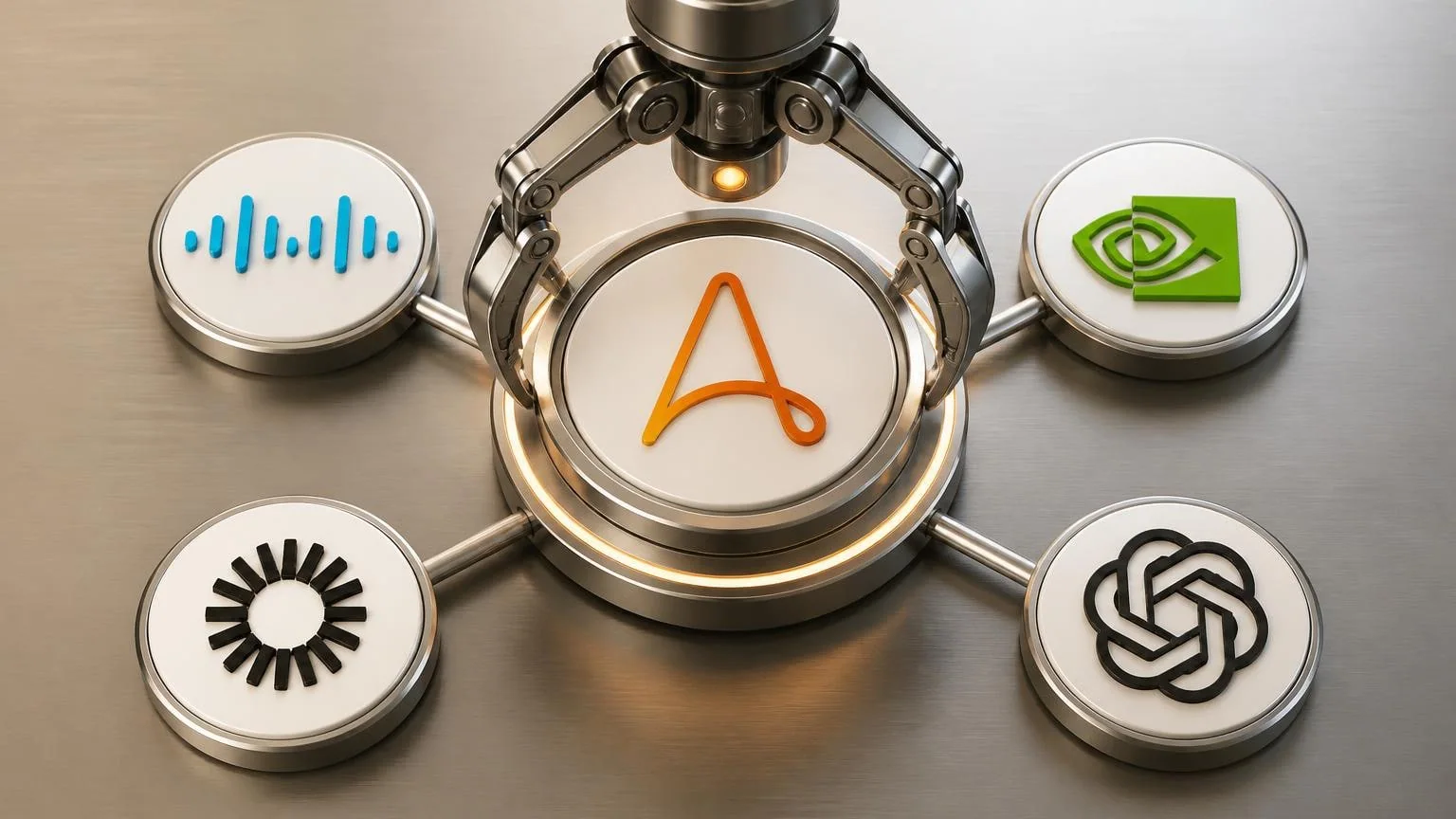
The partner stack was part of the message. Automation Anywhere positioned Cisco for agent security, NVIDIA for the OpenShell runtime plus NIM microservices and Nemotron models for on-premises deployments, Okta for cross-agent identity and authentication controls, and OpenAI models such as GPT-5.5 for enterprise workflows. That is a notable mix because it tries to answer several objections buyers already have about autonomous agents: where they run, how they are authenticated, how they are monitored, and how they stay useful in regulated environments.
EnterpriseClaw was only one piece of the May 19 update. Automation Anywhere also announced a wider 2026 platform expansion for its Agentic Process Automation stack, including universal orchestration, the low-code AAI Code builder, Context Intelligence Graph, generally available AI Evaluations, and a new process simulation and testing layer. Read together, the company was not selling one agent surface. It was trying to sell a full operating model for AI-driven business processes.
Why this still matters after announcement week
The real reason this announcement has search value beyond the event day is that it lands on top of a bigger market shift. In March, NVIDIA had already framed OpenShell as an open runtime for autonomous, self-evolving agents with policy-based security, privacy, and network guardrails. Okta, also in March, argued that enterprises need a new identity model for agents built around three questions: where are my agents, what can they connect to, and what can they do? EnterpriseClaw matters because it tries to combine those ideas into one deployment story for enterprise operations.
That makes this more than branding around the word claw. Consumer and developer enthusiasm around OpenClaw-style systems pushed the market toward agents that can operate directly inside software, not just answer inside chat windows. But that same shift exposed the problem enterprise buyers care about most: the more directly agents can act, the harder they become to trust. Computerworld captured the tension well on launch day, noting that EnterpriseClaw targets enterprises that want autonomous agents without exposing sensitive systems to uncontrolled AI behavior.
This is also why the official feature list is more revealing than the product name. Automation Anywhere says EnterpriseClaw can deploy agents in managed containers, support parallel execution, expose telemetry and audit logs through existing control infrastructure, and work with third-party frameworks such as OpenClaw, LangChain, and CrewAI. The important signal is not that one more vendor now supports agents. It is that the automation layer wants to become the control plane for where agents execute and how enterprise work gets governed.
Business impact lands first in legacy and regulated workflows
The strongest use cases here are not the flashy ones. They are the slow, messy workflows that still break most enterprise AI rollouts: legacy applications, on-prem systems, sensitive internal documents, approval-heavy operations, and desktop-bound work that cloud-first agents cannot safely reach.
Local execution becomes a buying feature
Automation Anywhere’s pitch is strongest wherever cloud-only agents are not enough. Its own examples center on work such as claims investigations that span desktop apps, internal documents, on-premises systems, and cloud platforms while keeping regulated financial, healthcare, or operational data inside secured enterprise environments. That is a materially different buying conversation from a generic copiloting pitch.
For enterprise AI teams, this means local execution is becoming a product category, not an implementation detail. The question is no longer just which model is smartest. It is which runtime can operate across the actual systems your business depends on without forcing sensitive work into the wrong environment.
Evaluations and context move closer to the execution loop
The broader platform story may matter just as much as EnterpriseClaw itself. Automation Anywhere said its new Context Intelligence Graph is built to retrieve the right context for each task or decision instead of flooding every step with excess enterprise data. In the company’s internal evaluations, agents using its Process Reasoning Engine with Context Intelligence Graph showed more than 30% higher accuracy than agents operating without it.
Just as important, AI Evaluations are already generally available. That matters because enterprises are moving past pilot-stage optimism and asking harder questions: Did the agent use the right tool? Did it follow the right path? Did it reach the right outcome? A platform that can test design-time and runtime behavior is much closer to real operations than one that only makes it easy to build demos.
What changed after the launch, and what to watch next
The May 20 follow-up announcements made the story look bigger. Automation Anywhere said its Autonomous Service Desk had fulfilled more than 1 billion IT service requests and that, across its analysis of millions of requests, its AI agents were resolving more than 80% of employee service requests on average. Those are company-provided figures, not independent benchmarks, but they matter because they show how quickly the vendor tried to connect EnterpriseClaw and its orchestration stack to measurable business outcomes.
There are still real reasons for buyers to stay cautious. EnterpriseClaw is in preview, not general availability. Some of the surrounding stack is also still in preview or scheduled for later in the year. There is also a fair strategic question about differentiation: NVIDIA already pushed OpenShell and NemoClaw earlier this year, so Automation Anywhere still has to prove why its orchestration and governance layer is the better enterprise control point rather than just another wrapper around the same agent trend.
Still, the missed-news takeaway is clear. EnterpriseClaw matters because it turns a chaotic market signal into a more concrete enterprise thesis: claw-style agents will only become real business systems if vendors can package execution, context, identity, evaluation, and governance into one operable layer. That is why this May 19 launch is still worth watching on May 29. It is not just a product story. It is a sign that the automation layer is trying to own the most valuable part of the enterprise agent stack.