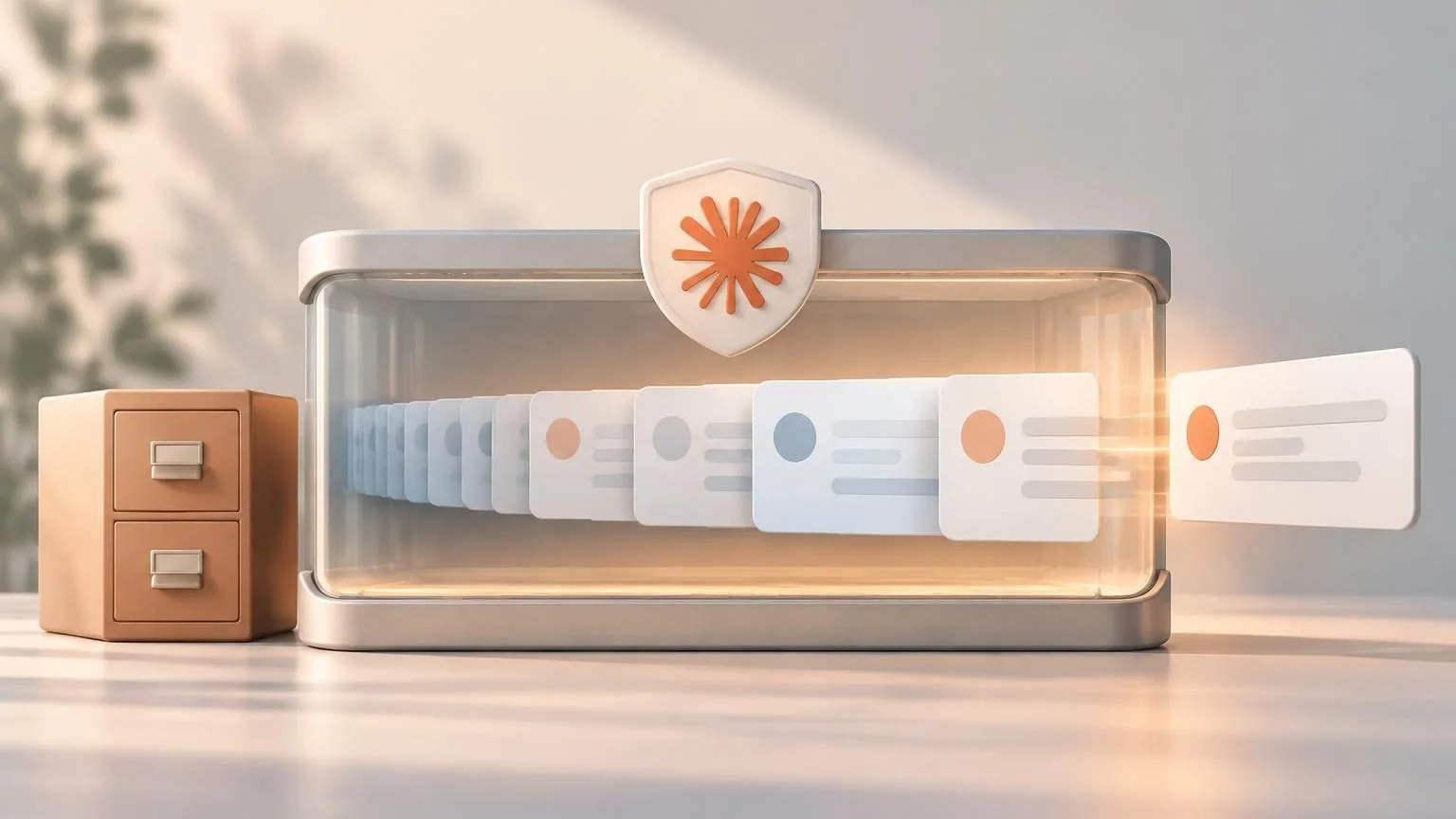
Anthropic added message threads to the Messages API in beta on November 2, 2026. The feature reduces the amount of conversation material an application sends on later turns and targets a lower, steadier time to first token in long agent loops.
The mechanism is simple at the product level. An initial request establishes a server-held conversation, and later requests send new messages with a reference to the preceding response. Developers can evaluate it as a change to request handling inside an existing application.
Why long conversations are a useful target
An agent that performs several steps accumulates tool results, user messages and earlier responses. Repeatedly uploading that material adds work before the next output begins. Message threads give the API a way to reconstruct the current conversation using retained context and newly supplied turns.
Our operational reading is that the feature should be evaluated against the waiting time a user experiences. Compare a representative loop with and without threads, using the same task, tool behavior and output checks. Measure the complete interaction as well as the time until a response starts.
A short lifetime shapes recovery
Anthropic documents a five-minute idle lifetime, with deletion no more than one hour after last use. A continuation can fail when the thread is no longer available. The application therefore needs its own conversation record and a way to create a fresh thread from that record.
A useful recovery test includes a pause that outlasts the thread. Resume the assignment and inspect whether the application restores the required messages, instructions and tool definitions. The result should make it clear to the user whether work resumed successfully or needs another input.
Review supported platforms and data handling
The beta is documented for the Claude API, Claude Platform on AWS, Anthropic-managed Claude Models on Google Cloud and Microsoft Foundry. Anthropic’s message-thread guide lists the required beta header and current feature limitations.
The guide also states that message threads are ineligible for Zero Data Retention and HIPAA use. An engineering team with a controlled-data workflow should confirm those conditions before enabling the feature for that workflow. Availability through a cloud provider does not replace the feature’s own data-handling requirements.
Treat continuity as an application responsibility
A pilot should include process restarts, interrupted streams and ordinary user follow-ups. Keep the saved conversation consistent with the outcomes of any tools the agent invokes. When a task resumes, the application needs enough evidence to know which actions already completed.
The practical benefit to look for is a faster conversation with recoverable state. Record latency, continuation failures and recovery time, then inspect whether successful recovery preserves the user’s requested outcome. That gives teams a basis for choosing where the beta improves their agent loop and where an existing request path remains preferable.