
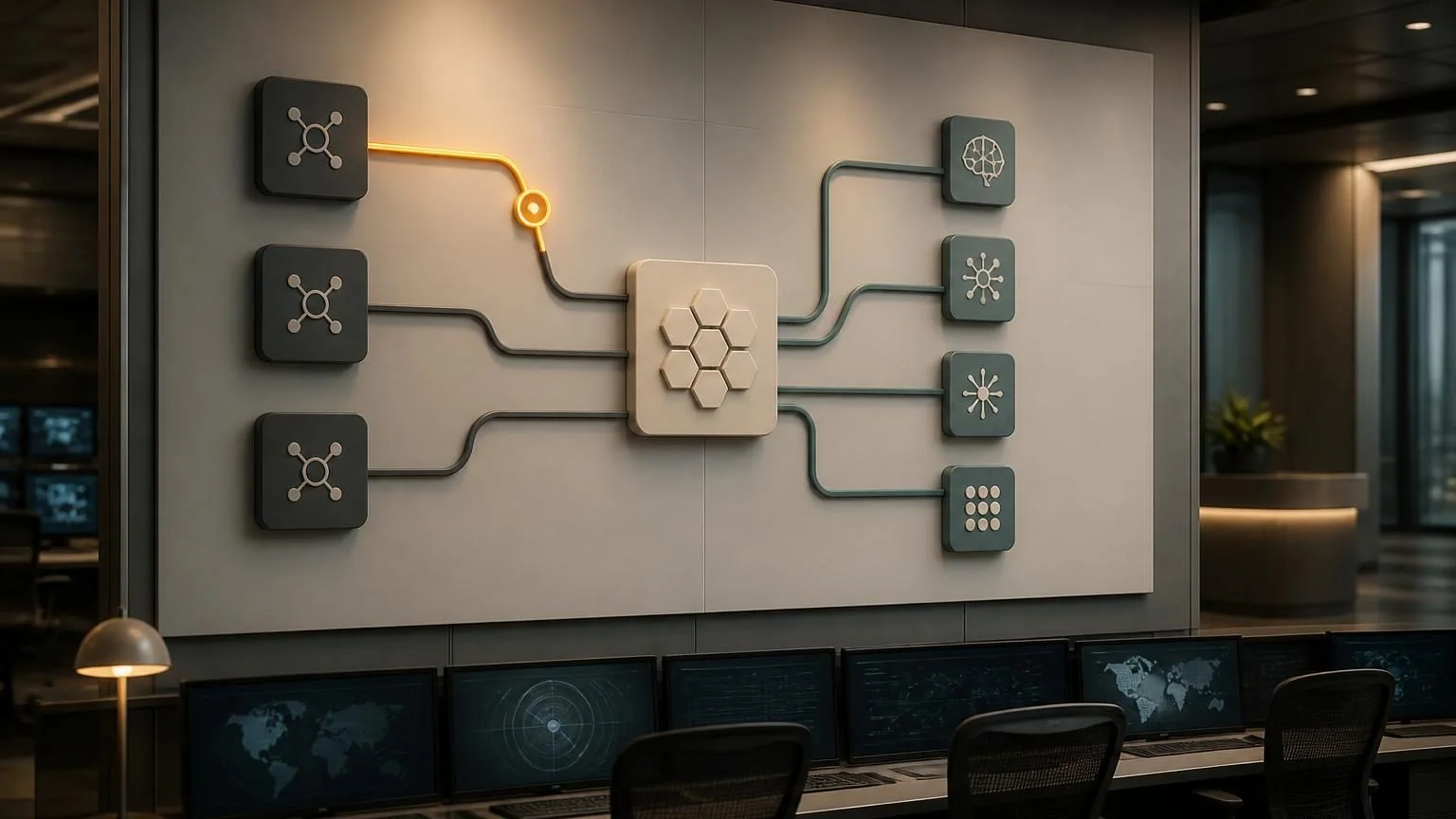
GSA’s current artificial-intelligence page carries a notable alert: it says the agency will remove system integrations with Anthropic by August 27, 2026. For public-sector teams, contractors, and any enterprise watching the market, the immediate issue is continuity. The broader issue is architecture.
This is not GSA’s first change involving Anthropic this year. In February, GSA said it was removing Anthropic from USAi.gov and its Multiple Award Schedule. In April, GSA said a preliminary injunction paused that action and that it would restore Anthropic technology to the prior status quo. The current site alert creates a new operational date for teams that rely on Anthropic-connected systems.
Why this matters beyond one provider
Most organizations do not use a model in isolation. They embed it in assistants, retrieval workflows, approval chains, internal tools, customer service systems, and agentic processes. Replacing a provider can affect authentication, prompting, tool calls, safety settings, evaluation thresholds, data controls, and procurement terms.
That means a model switch is rarely a simple configuration change. It is a test of whether the organization designed its AI stack for portability from the start.
What a practical exit plan includes
- Provider abstraction: keep business logic and tool permissions separate from a single model SDK where possible.
- Reusable evaluations: maintain task-specific test sets for accuracy, safety, latency, and cost before a forced migration.
- Fallback workflows: identify which automations can pause safely and which need an alternate model immediately.
- Data and compliance review: verify retention, residency, authorization, and audit requirements for every replacement path.
The operational takeaway
The strongest AI programs do not bet that vendors will never change, disappear, or become unavailable in a specific channel. They make change manageable. Whether this GSA deadline affects your organization directly or not, it is a useful prompt to map every workflow that depends on a single provider and decide what happens if that connection has to move.
For agent deployments, portability should not mean every model performs identically. It means the team knows which tasks can move, which require revalidation, and who owns the decision when a dependency changes.