
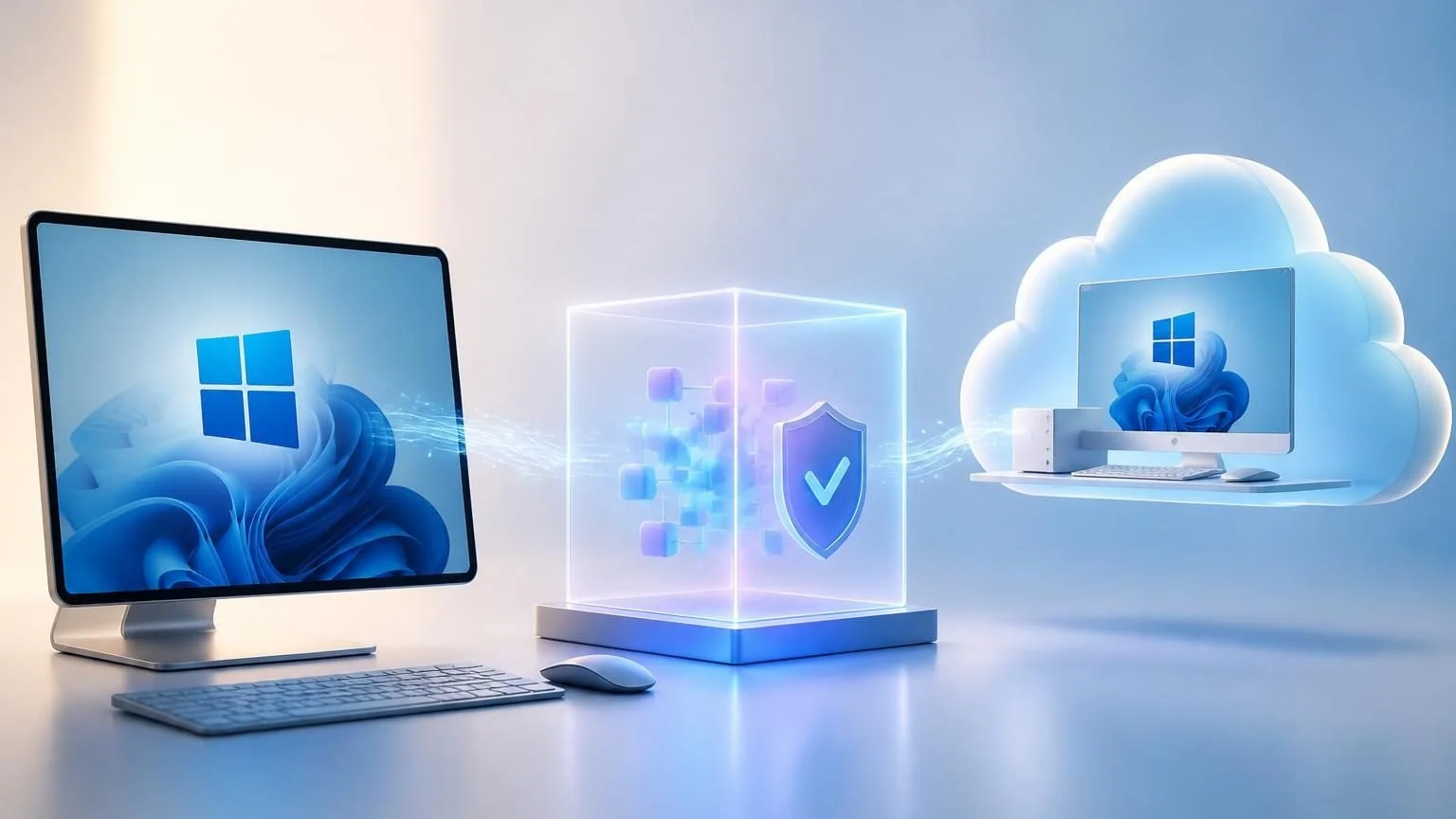
On June 2, 2026, at Microsoft Build 2026, Microsoft introduced a new set of Windows capabilities aimed directly at AI agents: the early-preview Microsoft Execution Containers (MXC) SDK, new Aion 1.0 local models, and general availability of Windows 365 for Agents within Agent 365. Taken together, the announcement was less about one new model or one new SDK and more about Microsoft trying to make Windows the place where agents can run, act, and be governed.
That matters because the current enterprise agent problem is not just model quality. Teams also need containment, identity, session control, local compute, and a fallback execution environment for workflows that still depend on full desktop or browser interaction. Microsoft’s June 2 message was that Windows should now cover that whole stack.
What Microsoft launched at Build 2026
The most important new piece was Microsoft Execution Containers (MXC), which Microsoft described as a policy-driven execution layer for agents across Windows and WSL. The idea is that developers define what an agent can access, such as files or networking, and Windows enforces those boundaries at runtime. Microsoft framed MXC as the containment layer for local agents, with different isolation options depending on workload and risk.
Microsoft also said Agent 365 will integrate with MXC so security and IT teams can bring Defender, Entra, Intune, and Purview protections into local agent execution. That integration is slated to enter preview in July, which is a key detail because it shows Microsoft is not treating this as only a developer convenience feature. The company is explicitly tying local agent runtime to enterprise governance tooling.
On the model side, Microsoft introduced Aion 1.0 Instruct and Aion 1.0 Plan. Aion 1.0 Instruct is positioned as a smaller, faster local model for summarization, rewriting, accessibility, and other everyday text tasks, with preview access starting now in Edge Insider channels and open weights planned for July. Aion 1.0 Plan is the more strategically important model for agent builders: Microsoft says it is a 14-billion-parameter reasoning and tool-calling model with a 32K context window that ships in-box on capable Windows devices and can manage files, invoke tools, and orchestrate sub-agents locally.
Microsoft also widened the surrounding local-AI layer. The new Speech Recognition API is entering public preview for on-device speech-to-text, and Edge is adding on-device language detection, translation, and Aion 1.0 Instruct preview support. That expands the number of agent-like tasks that can stay on-device instead of making a cloud call for every interaction.
The cloud-side complement is Windows 365 for Agents. Microsoft said the service is now generally available within Agent 365, giving computer-using agents managed Cloud PCs to execute enterprise workflows such as opening apps, navigating interfaces, entering data, and handling multi-step tasks in a controlled environment.
Why this is bigger than another Windows AI update
Many AI announcements focus on the model or the demo. Microsoft’s Build 2026 announcement was more ambitious because it linked together four layers that are usually announced separately: local models, runtime containment, enterprise policy controls, and cloud execution for no-API work.
That combination is what makes the news more commercially relevant than a normal developer-event release. Enterprises do not just need smarter agents. They need a practical answer to questions like where the agent runs, how much authority it gets, what happens when it touches files or browsers, and how administrators can monitor or constrain behavior across many machines and workflows.
Aion 1.0 Plan addresses part of the cost and latency problem by shifting more reasoning and orchestration onto the device. MXC addresses part of the trust problem by giving Windows a native containment story. Windows 365 for Agents addresses the execution problem for workflows that still require a real desktop environment rather than an API. Microsoft is effectively trying to package those pieces into one Windows-native agent operating model.
This also gives clearer context to the company’s broader Windows and Agent 365 strategy. Microsoft has already been pushing computer use, cloud PCs for agents, and governance tooling. Build 2026 made the next step more explicit: Windows is no longer just the user endpoint in the AI story. Microsoft wants it to be a governed runtime for autonomous software.
Business impact for enterprise AI and automation teams
For application teams, the immediate takeaway is that Microsoft is lowering the barrier to building hybrid agent systems. Simpler reasoning, text handling, translation, and speech tasks can move onto the device, while heavier or GUI-dependent workflows can move to Windows 365 for Agents. That split could reduce cloud spend for high-volume agent interactions while still preserving a path to execute tasks in legacy software.
For IT and security teams, the bigger significance is control. If Microsoft can make MXC, Agent 365, Intune, Entra, Defender, and Purview work together in practice, Windows becomes more than a developer platform. It becomes a policy surface for agent deployment. That is a stronger enterprise pitch than asking teams to stitch together third-party agent frameworks, sandboxes, identity, and observability on their own.
For businesses trying to automate real operations, the most practical impact lands in no-API and mixed-environment work. Many promising agent use cases still break at the point where software requires a browser session, a desktop action, or a managed OS context. Microsoft is now giving those workflows a more official place to run.
There is still an important rollout nuance, though. Microsoft’s Build announcement says Windows 365 for Agents is generally available within Agent 365, but public Microsoft Learn documentation still describes the broader Windows 365 for Agents feature as public preview and notes U.S.-only availability. That suggests buyers should pay attention to exactly which product surface, partner path, and region they are evaluating rather than assuming every part of the stack is equally mature today.
What to watch after Build
The first thing to watch is whether Microsoft’s July preview for MXC-linked security integrations arrives with enough depth to matter. Announcing that Defender, Entra, Intune, and Purview will be part of the local-agent story is important. Proving those controls are usable in real deployments is more important.
The second is whether developers actually adopt the Windows-native containment model. Microsoft highlighted OpenClaw on Windows and pointed to support for local agent scenarios, but the broader market test will be whether coding agents, desktop agents, and enterprise workflow builders decide Windows now offers a better trust and execution layer than a patchwork of external tools.
The third is whether on-device agent economics improve enough to change architecture decisions. If Aion 1.0 Instruct and Aion 1.0 Plan perform well on capable hardware, more teams may reserve frontier cloud models for high-value steps and keep routine agent loops local. That would change both cost models and product design.
The practical implication for Nerova’s audience is straightforward: Microsoft is trying to make secure agent execution a platform feature. If that works, the next competitive edge in AI automation will come less from flashy demos and more from choosing the right split between local reasoning, governed execution, and cloud-based workflow coverage.