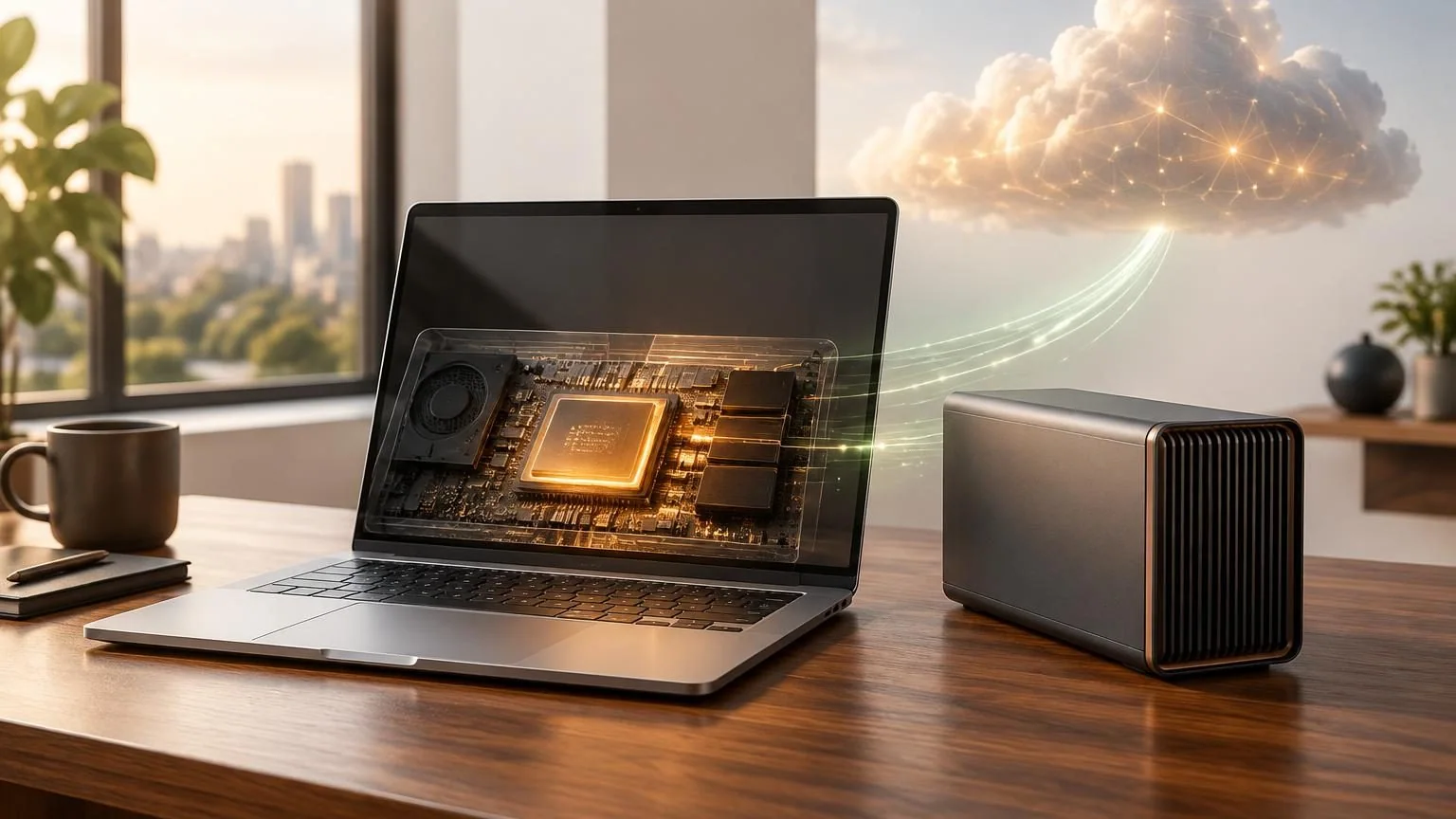
Microsoft and NVIDIA announced a new Windows AI push on October 7, 2026, combining RTX Spark PCs with local models, cloud routing, and agent containment. For deployment teams, the important change is not simply more compute on a desk. It is a platform attempting to coordinate where AI runs and how its actions are restricted. NVIDIA's announcement describes the hardware and software collaboration.
RTX Spark laptops arrive before the full software rollout
RTX Spark laptop preorders opened October 7, with availability scheduled for October 16. NVIDIA describes configurations with up to 128GB of unified memory and previewed DGX Station for Windows for heavier workloads. These are announced capabilities and schedules, not independent evidence of production performance.
The software calendar is separate. Microsoft says HydraFusion local/cloud routing will enter experimental preview later in October across the GitHub Copilot app, CLI, and Visual Studio Code. Broader Copilot hybrid-intelligence features on Copilot+ PCs are expected to begin rolling out in the coming months, with availability varying. As of October 12, the announced laptop availability date is still ahead. Microsoft's Windows announcement provides those rollout distinctions.
Local inference does not make an agent offline
Microsoft's developer explanation separates model selection, inference, and tool execution. A locally running model can still participate in a session that uses network services. Planned Copilot options include automatic local/cloud orchestration and explicit local-model selection.
Memory also needs a workload-level test. Model weights share available capacity with the operating system, applications, runtime, and context cache. A model fitting into memory does not establish consistent responsiveness across an entire coding task. Microsoft's technical walkthrough explains these constraints.
Agent permissions require their own enforcement boundary
Microsoft Execution Containers, or MXC, is now generally available. Developers declare permitted resources, and a containment backend enforces the boundary outside the agent's control. Microsoft lists process, session, and WSL options; its MicroVM backend remains experimental. Additional Entra and Intune capabilities are described as forthcoming, not universally available today. The MXC announcement documents those limits.
Copilot's technical post adds a useful caveat: built-in file tools and remote MCP servers do not inherit the same OS-enforced child-process isolation as sandboxed shell commands. Review the actual tool path rather than assuming that one sandbox setting covers every action.
What to test before expanding a Windows agent pilot
Our recommendation is to choose one reversible workflow, such as producing a repository report, and evaluate three things independently: task quality, data destinations, and action permissions. Record cloud calls and tool connections, measure complete-task latency, and deliberately test denied file and network access.
Set a success threshold before comparing hardware configurations. Include retries, human review, and operating costs rather than relying on peak compute claims. This announcement makes a hybrid pilot worth investigating; it does not establish that a new PC is the right purchase for every team.