
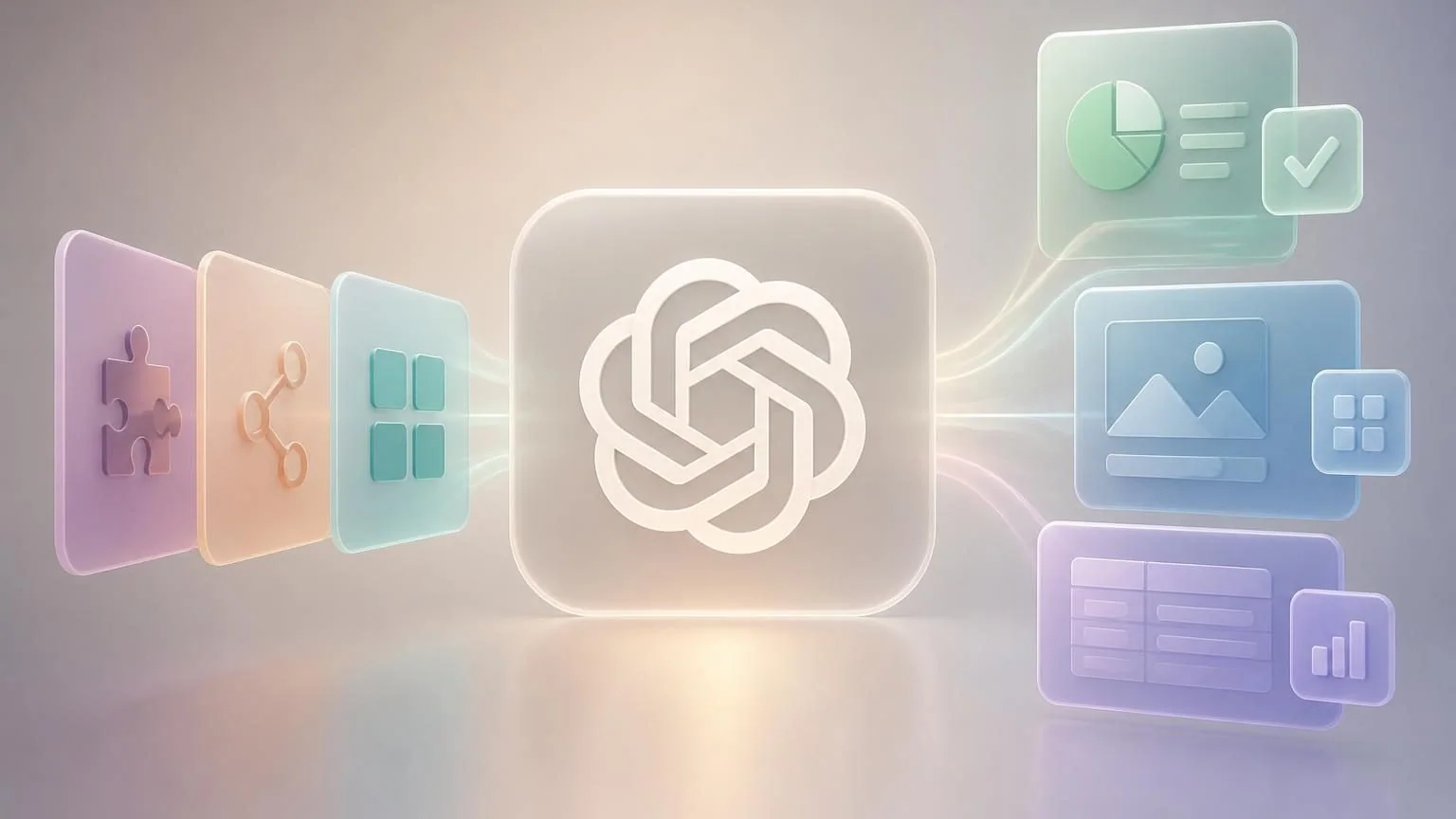
On June 2, 2026, OpenAI announced a major Codex expansion that adds six role-specific plugins, preview access to shareable Codex Sites for Business and Enterprise workspaces, and annotation tools that let users revise specific parts of documents, slides, spreadsheets, and websites. The move broadens Codex from a software-development product into a wider knowledge-work system for teams that want AI to create, refine, and share real work outputs.
OpenAI said more than 5 million people now use Codex every week, and that non-developers already make up about 20% of its user base and are growing more than three times as fast as developers. In a separate June 2 report, the company said Codex usage is up more than 6x since the desktop app launched in February, with growing use in research, data analysis, workflow automation, and artifact creation such as reports, spreadsheets, presentations, and contracts.
What OpenAI launched on June 2
The most concrete product change is a new set of six role-specific Codex plugins designed to package workflows around actual business jobs instead of generic prompts. OpenAI said the plugins collectively include 62 apps and 110 skills.
- Data analytics: built around tools such as Snowflake, Databricks Genie, Hex, and Tableau.
- Creative production: aimed at marketing and design work with tools including Figma, Canva, Shutterstock, Picsart, and Fal.
- Sales: designed for account prep, follow-ups, record updates, and deal review with tools including Salesforce, HubSpot, Slack, Outreach, Clay, Rox, and Actively.
- Product design: focused on prototypes, user-flow audits, and turning screenshots or URLs into interactive work.
- Public equity investing: built around market and company research using sources such as Moody’s, Daloopa, Datasite, FactSet, LSEG, S&P, PitchBook, and Hebbia.
- Investment banking: aimed at pitch materials, comps, diligence, and client-ready outputs.
OpenAI also introduced Sites, a preview feature that lets Business and Enterprise customers have Codex generate and share interactive hosted websites and lightweight internal apps by URL inside a workspace. The company positions Sites as a way to turn plans, analysis, and internal materials into living dashboards, review hubs, planners, project boards, and other collaborative surfaces instead of static files.
The third big addition is annotations. OpenAI says users can now point Codex at a specific part of a document, spreadsheet, slide, or site and request a targeted change there, extending a workflow that had previously been used more heavily for code, Markdown, and websites.
Why this is bigger than another Codex feature drop
The June 2 release matters because OpenAI is no longer framing Codex mainly as a coding assistant. It is packaging Codex as a role-aware work layer that can sit on top of existing business systems, pull context from those systems, and turn that context into outputs other teams can actually use.
That is a meaningful product shift. A generic AI assistant answers questions. A role-specific agent system is expected to understand the apps, file formats, approval loops, and artifacts that define the work itself. OpenAI’s plugin structure pushes Codex toward that second model. Instead of asking users to stitch together tools manually, it is increasingly bundling apps, skills, and instructions around a job to be done.
Sites push the same strategy further. If Codex can create a workspace-internal dashboard, scenario planner, launch hub, or customer review site and then keep it updated, the product starts to look less like an assistant and more like a lightweight execution surface for teams. That matters for enterprise AI because the competitive fight is moving away from raw model quality alone and toward workflow packaging, permissions, and operational fit.
Business impact for enterprise AI teams
For operators, the near-term takeaway is not that every team suddenly needs Codex. It is that enterprise AI products are starting to converge on the same expectation: AI has to be connected to real systems, shaped around specific roles, and able to produce shareable work products instead of one-off answers.
OpenAI’s own examples show the direction clearly. It says non-technical teams inside OpenAI use Codex to build internal apps, prepare executive materials, create dashboards, and turn briefs into design-constrained outputs. It also cited Zapier using Codex across tools such as Slack, Google Docs, and Coda for postmortems, incident response plans, and feature tickets, and NVIDIA using Codex to accelerate research workflows.
The governance details matter too. OpenAI’s help documentation says plugin access in Business and Enterprise or Edu workspaces follows workspace app controls, and Enterprise or Edu admins can use RBAC to manage access. The same documentation says Sites are in preview for eligible Business and Enterprise workspaces, and that Codex usage is available through the Compliance API across local and cloud-supported surfaces. OpenAI also says that, by default, it does not use business-user inputs or outputs from products such as ChatGPT Business, ChatGPT Enterprise, Education, and the API to improve its models.
That combination of workflow packaging plus admin controls is what makes this launch more relevant to enterprise AI buyers than a normal feature drop. The buying question is shifting from “Can the model do this?” to “Can the system do this inside our tools, with our permissions, and with outputs people will actually use?”
What to watch next
OpenAI says more role-specific plugins are coming, including Corporate Finance, Private Equity Investing, Marketing Strategy, Strategy Consulting, and Legal. It also says it is building toward a broader partner ecosystem where external partners can create and deploy plugins directly in Codex and ChatGPT.
If that expands quickly, Codex could become a broader front end for role-based AI work, not just for engineering but for finance, operations, design, GTM, and research teams. That would put more pressure on competing agent platforms to offer stronger workflow bundles, cleaner governance, and better internal distribution of AI-generated work.
For businesses building AI agents and automation systems, the practical implication is simple: the market is moving toward AI workers that are judged by how well they fit a role, connect to the right systems, and produce usable artifacts for a team. June 2 did not just add features to Codex. It raised the bar for what a production-ready business AI worker now looks like.