
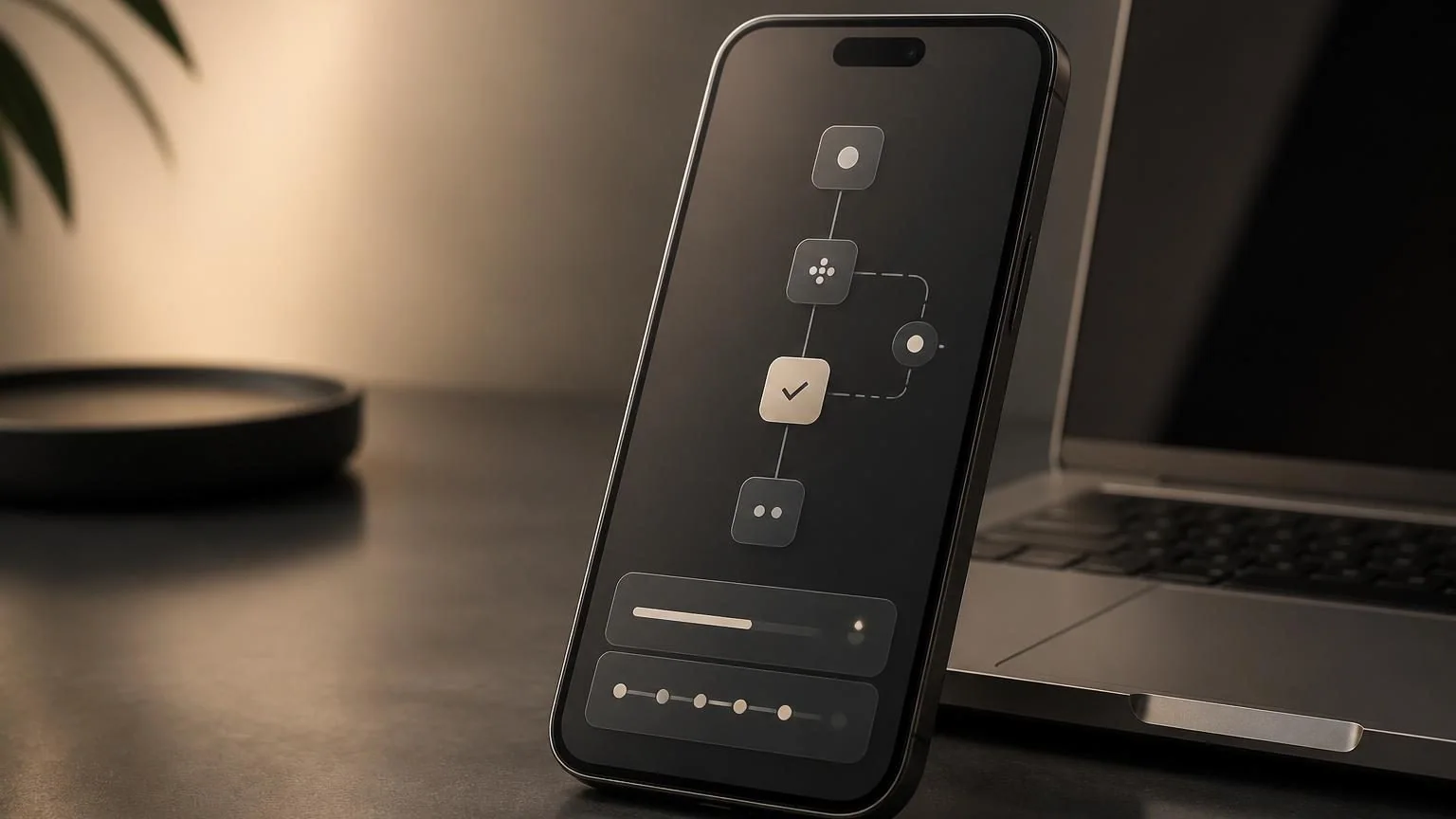
OpenAI’s August 18 update to ChatGPT for iOS adds a setting to open directly into Codex Remote, support for standard MCP forms, editable Messages approvals, and a set of reliability fixes for task workflows.
That may sound like routine release-note material. It is more revealing than a flashy benchmark: the agent race is increasingly about whether work can survive real operating conditions, including handoffs, approvals, interruptions, large responses and a user stepping away from a laptop.
What changed in the iOS app
Codex Remote can now be the app’s opening destination. The update also adds support for standard Model Context Protocol forms and editable approvals in Messages. OpenAI lists multiple task-flow improvements, including more reliable voice behavior from existing task composers, improved handling of large task responses, a retry action for messages that fail to load, and fixes for tasks that disappear or remain unavailable after idle time or reconnecting.
None of these changes promise that an agent will autonomously deliver perfect production code. They do make a more grounded promise: users should be better able to inspect, steer and resume work when a task does not proceed cleanly.
Why forms and approvals matter
Agent workflows become useful when they move beyond a chat response and interact with systems, repositories or services. At that point, a workflow needs structured inputs and clear moments for a person to approve, edit or stop an action. Forms reduce ambiguity. Editable approvals give the operator a chance to correct a proposed action before it proceeds.
For teams, this is the difference between treating an AI coding tool as a clever autocomplete feature and treating it as a supervised worker. The phone is not necessarily where complex software should be designed. It can be a practical control surface for checking status, resolving a request and keeping a task moving.
Reliability is the product feature
Long-running AI tasks are judged less by their best demo than by their failure modes. Can a user return after a connection change? Can a stalled request be retried? Does the interface preserve enough context to let someone take control? OpenAI’s update focuses on those unglamorous questions.
That is a useful signal for anyone deploying AI agents internally. Model quality still matters, but production adoption also depends on operational design: permissions, approvals, recoverability, clear ownership and a usable way to supervise work away from the desk.
What teams should do next
Do not assume mobile access means every workflow is ready for mobile execution. Instead, identify the moments where mobile supervision has real value: approving a bounded action, responding to an exception, reviewing a progress update or redirecting a task. Keep high-impact actions behind explicit approval and make the task state understandable before expanding autonomy.
OpenAI’s iOS changes point to a practical next phase for agent software. The winning experience may not be the one that talks the most. It may be the one that lets people reliably keep work moving when they are not at their desk.