
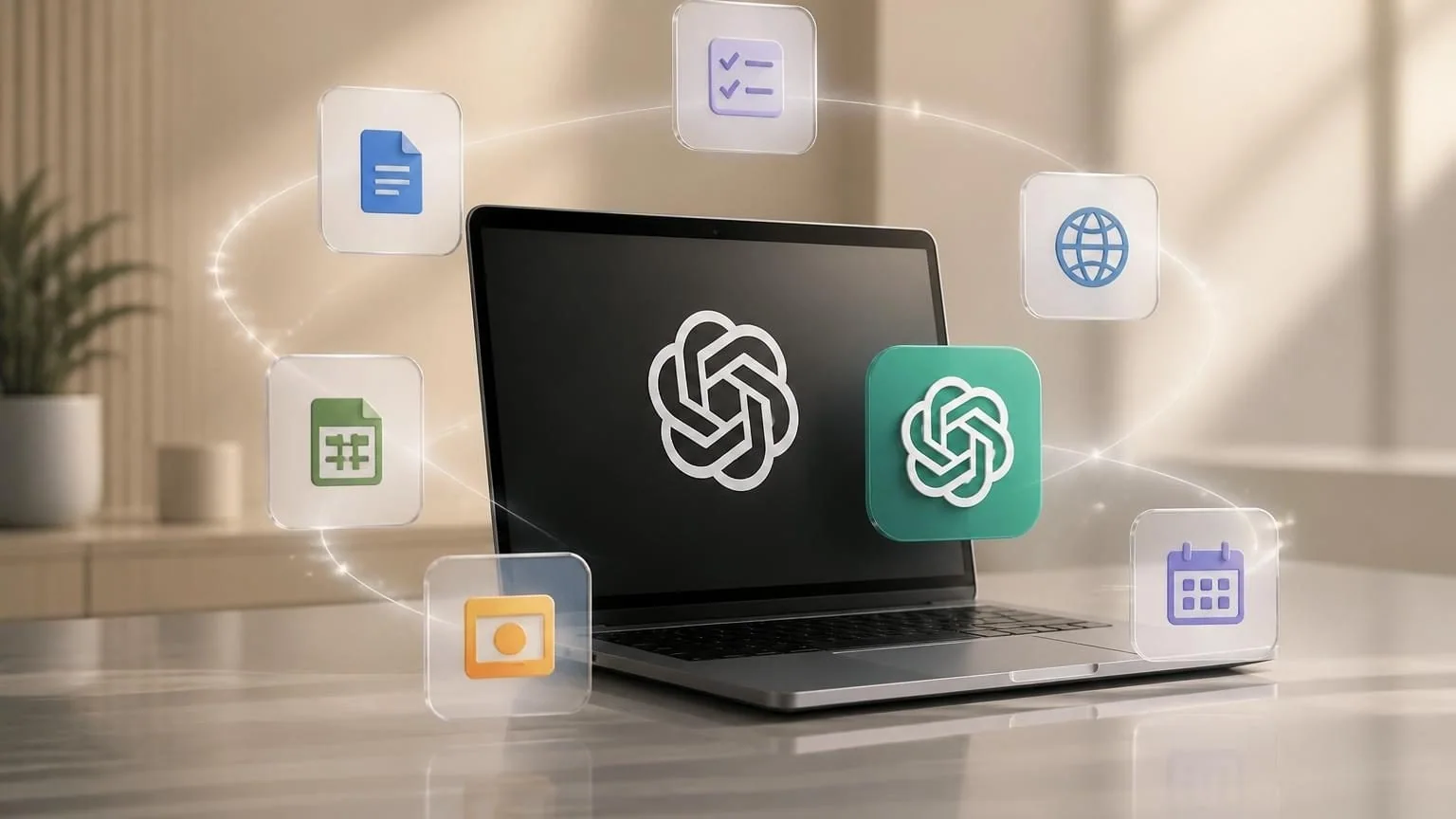
OpenAI’s July 9 launch was bigger than a normal model update. The company released the GPT-5.6 family and paired it with ChatGPT Work, an agent meant to gather context from apps and files, stay on a project for hours, and turn goals into finished work.
That matters because the center of gravity in business AI is shifting. The question is no longer only which model is smartest. It is now which model can finish work across the tools your team already uses.
What OpenAI actually shipped on July 9
GPT-5.6 arrived as a family: Sol, Terra, and Luna. OpenAI describes Sol as the flagship model, Terra as the balanced everyday option, and Luna as the lowest-cost choice. The company also introduced higher-capability modes for the hardest tasks, including an ultra setting that coordinates multiple agents across parallel workstreams.
OpenAI says GPT-5.6 is built to deliver more intelligence from every token, stronger performance per dollar, and better results on coding, knowledge work, cybersecurity, and science. It is available across ChatGPT, Codex, and the API.
Why ChatGPT Work changes the story
The more important announcement for business users may be ChatGPT Work itself. OpenAI says it can pull information from apps and workflows, create sheets, slides, docs, and web apps, and continue longer projects with scheduled tasks and desktop support.
That means the launch is not just about better outputs. It is about orchestration. A model that can reason is useful; a model that can also move through files, browser tabs, and team systems is much closer to a business execution layer.
OpenAI’s own examples point to month-end budget variance analysis, campaign briefs, sales meeting prep, customer research, lead review, and launch checks. In other words, the first obvious wins are not flashy consumer tasks. They are the repetitive, cross-tool workflows that already eat up analyst, sales, ops, and finance time.
Why this matters for business automation
The strategic shift is simple: companies will start buying fewer isolated AI tricks and more end-to-end workflows. Once a model can read context, draft the artifact, move between apps, and wait for approval, the bottleneck moves from generation to process design.
That is good news for teams with clear SOPs, connected systems, and defined approval gates. It is weaker news for organizations that still depend on tribal knowledge and scattered files. The better your workflow is already documented, the easier it becomes to automate.
It also changes how leaders should evaluate AI vendors. Instead of asking only about benchmark scores, ask whether the system can operate safely across your stack, whether it respects approval boundaries, and whether it can be governed once it starts taking actions instead of just drafting text.
What to watch next
Reuters reported that OpenAI’s broad GPT-5.6 rollout followed a delay tied to U.S. government requests, which is another reminder that frontier model launches are now entangled with policy, safety, and access decisions. For businesses, that means adoption timing, governance, and change management matter almost as much as raw capability.
If you are responsible for AI strategy, the practical move is to identify one workflow that is repetitive, document-heavy, and already approval-driven. Those are the best candidates for a first agent rollout, especially when the model can keep context across apps and tasks.
OpenAI’s July 9 release makes the direction of travel hard to miss: business AI is moving from chat to execution.
Bottom line
GPT-5.6 is the headline. ChatGPT Work is the real product shift. Together they show that the next phase of enterprise AI is about finished work, not just better answers.