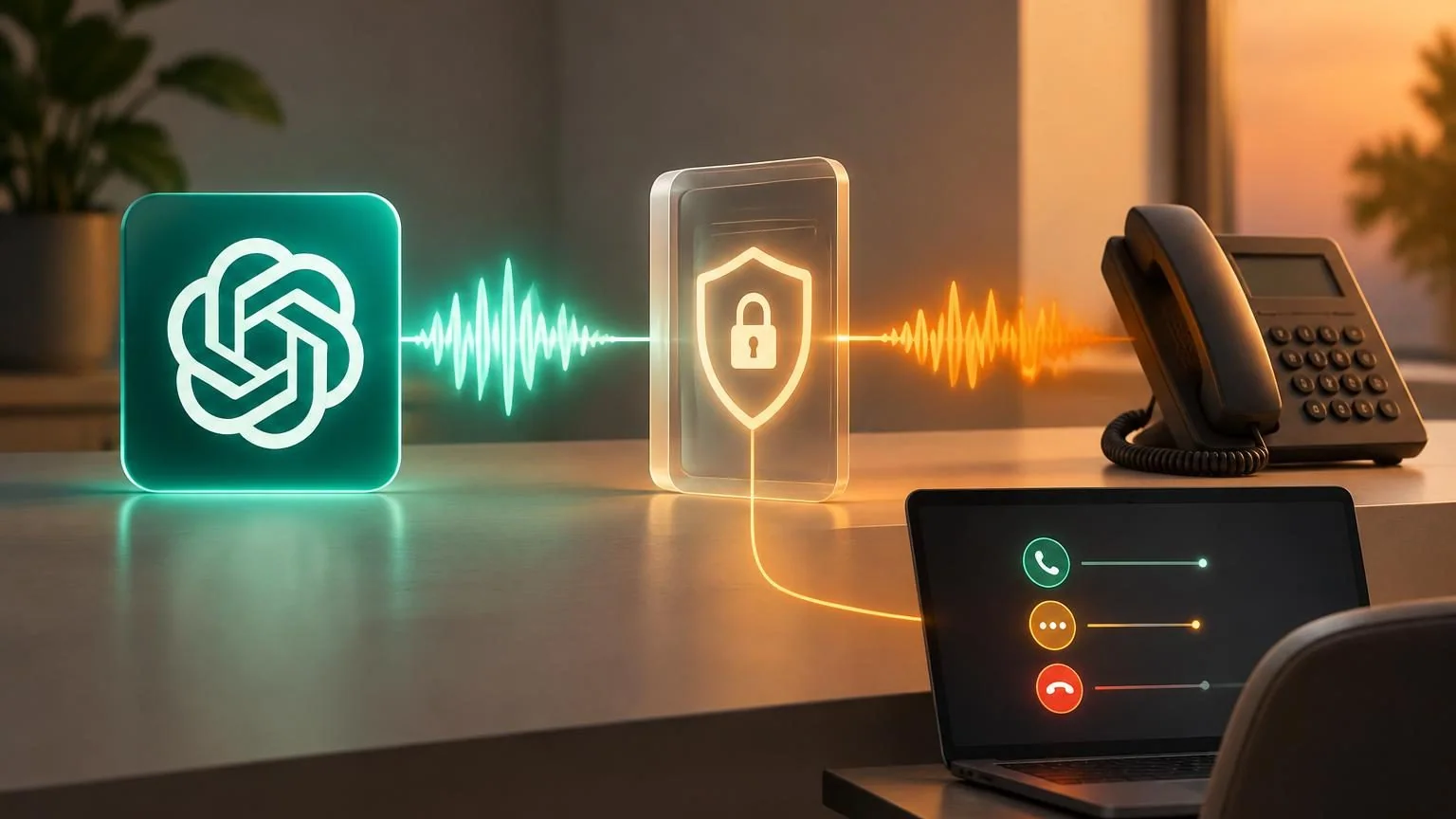
OpenAI made outbound SIP calling available to all organizations through the Live API on November 2, 2026. Developers can connect GPT-Live to a telephone number through their SIP provider, expanding the options for voice agents that need to start a call.
The release is relevant to workflows such as a customer-requested callback or an appointment confirmation. The integration has several stages, including session creation, call setup, the conversation itself and the final application record. Each stage gives a team a different result to verify.
Where the phone provider fits
OpenAI’s telephony guide describes a provider trunk using TLS signaling and protected media. The application supplies the destination and trunk configuration when it creates a Live API session. Provider credentials belong on the server.
For an engineering team, the immediate prerequisite is a provider arrangement suitable for the intended numbers and calling region. A successful test should confirm that the chosen caller number is presented correctly and that the destination can receive the resulting call through that provider.
Observe the call beyond session creation
The API guide distinguishes session initialization from the destination answering. Call progress arrives through events such as ringing, answered and failed. A backend sideband connection can observe progress and handle delegated work while SIP carries the audio.
Our practical reading is that a job should have a completion condition tied to the business outcome. For a callback, that could include whether the intended person was reached, whether the requested information was exchanged and whether a follow-up was required. A session identifier alone is an intermediate record.
Keep application actions under one owner
A voice assistant can generate events while a backend is also tracking call state. Decide which component is responsible for each lasting action, such as saving a note or creating an appointment. The provider guide recommends deduplicating replayed events and assigning one handler to each side effect.
This becomes especially important when a connection is interrupted. A useful test includes a temporary backend disconnect and a replayed event, then checks that the application records the intended result once. The visible transcript and the saved business record should agree about what happened.
A contained starting point
An initial pilot can place calls to a small set of consenting test participants. Choose a task with an easily checked result and include unanswered calls, failed setup, an interrupted conversation and a request for a human handoff. Review the full lifecycle alongside the agent’s spoken responses.
For customer-facing use, the organization should establish its calling permissions, disclosure and opt-out process for the relevant region. Those requirements depend on the use case and should be settled with the team responsible for communications policy.
The November change supplies a general outbound transport option. Its value in a finished voice workflow comes from connecting that transport to a reliable application process, so that progress, user choices and completed actions can all be inspected after the call.