
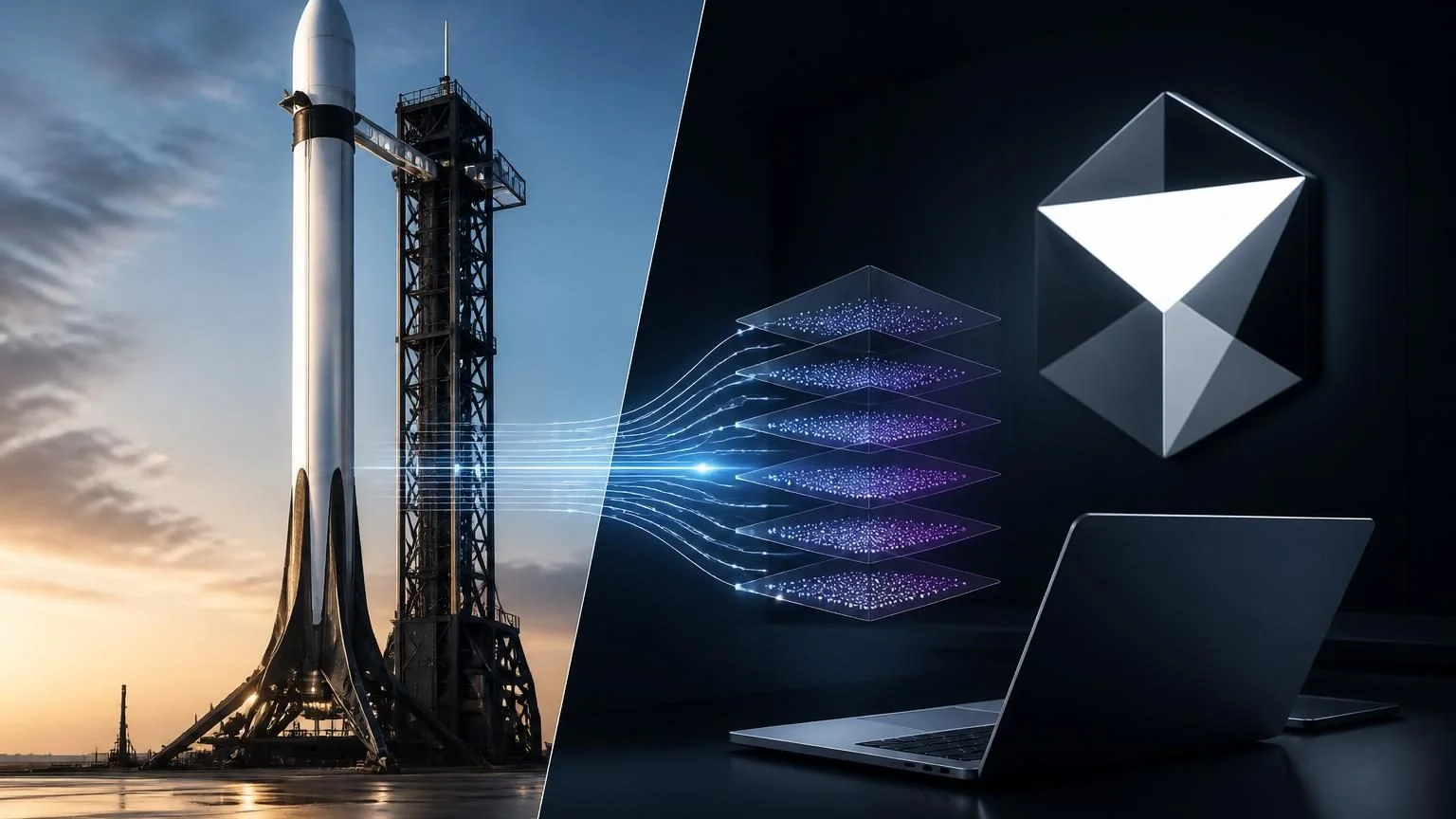
SpaceX said on June 16, 2026 that it signed a merger agreement to acquire Anysphere, the company behind Cursor, in an all-stock deal that values Cursor at $60 billion. If the transaction closes as expected in the third quarter of 2026, Cursor will become a wholly owned SpaceX subsidiary. That is the headline. The more important signal is what kind of market this turns AI coding into.
Cursor is not just another model wrapper, and this is not just another Musk-era splashy acquisition. SpaceX is trying to combine large-scale compute, frontier-model ambitions, and one of the most visible AI coding surfaces in the market. That matters because coding agents are quickly becoming one of the clearest commercial proving grounds for business AI: high usage, fast feedback loops, structured data, and direct workflow impact.
What SpaceX actually agreed to buy
According to SpaceX’s June 16 Form 8-K, SpaceX, merger subsidiary X67 Inc., and Anysphere entered into an Agreement and Plan of Merger. The filing says Cursor shareholders will receive SpaceX Class A stock based on a $60 billion implied equity value and a seven-trading-day volume-weighted average price before closing. SpaceX said it expects the deal to close in the third quarter of 2026, subject to regulatory approvals and other closing conditions.
This did not come out of nowhere. In SpaceX’s earlier IPO filing, the company disclosed that it had already entered into a compute agreement and option agreement with Cursor in April 2026. SpaceX framed that relationship as strategically important because software development creates high-frequency, mission-critical AI usage and produces rich feedback data that can improve models over time.
Why Cursor matters more than another startup acquisition
Cursor already sits in a valuable place in the market: directly inside developer workflow. That is different from only owning a foundation model or only owning raw compute. When an AI product lives inside the editing, reviewing, refactoring, and iteration loop, it captures more than user demand. It captures repeated feedback on what developers accept, reject, change, and ship.
That position is exactly why the product has mattered in the wider rise of so-called vibe coding. AP notes that Cursor became one of the best-known AI coding assistants in the market and competes with tools such as Anthropic’s Claude Code and OpenAI’s Codex. In other words, SpaceX is not just buying talent or revenue. It is buying a distribution layer and a workflow surface where model quality gets tested continuously under real usage.
Why this changes the coding-agent race
The coding-agent market is now looking less like a simple model leaderboard and more like a stack battle. The strongest players increasingly want all four layers: compute, model capability, workflow distribution, and enterprise trust. SpaceX already had the compute story and broader xAI ambitions. Cursor gives it a much stronger application and distribution position.
That matters for rivals too. OpenAI, Anthropic, Microsoft, GitHub, and other major vendors have all been pushing to own more of the day-to-day work surface where coding agents actually operate. SpaceX’s move makes that pressure more visible. If one company can tie model training, inference capacity, product distribution, and user feedback together more tightly, it may improve faster than a vendor that owns only one layer.
There is also a more practical business implication here: AI coding is becoming a platform decision, not just a productivity add-on. Buyers may care less about a single benchmark jump and more about questions like workflow control, approval paths, model optionality, deployment flexibility, auditability, and how much future leverage they are handing to one vendor.
What enterprise AI teams should take from this
For businesses, the immediate takeaway is not that everyone should switch coding stacks. It is that AI coding should now be evaluated the same way other strategic workflow software is evaluated. The winning products are likely to be the ones that combine strong models with strong execution surfaces, clear governance, and a believable long-term infrastructure story.
That is especially true for companies moving beyond experimentation. A coding agent is no longer just a nicer autocomplete tool. It can become part of the system that creates internal software, automations, integrations, tests, and operational tooling. Once that happens, lock-in risk, compliance, and process design matter more than feature novelty.
SpaceX’s Cursor deal is a sharp reminder that the market is moving in that direction quickly. The next phase of enterprise AI competition will not be decided only by who has the smartest model. It will also be decided by who owns the workflow where high-value work actually happens.