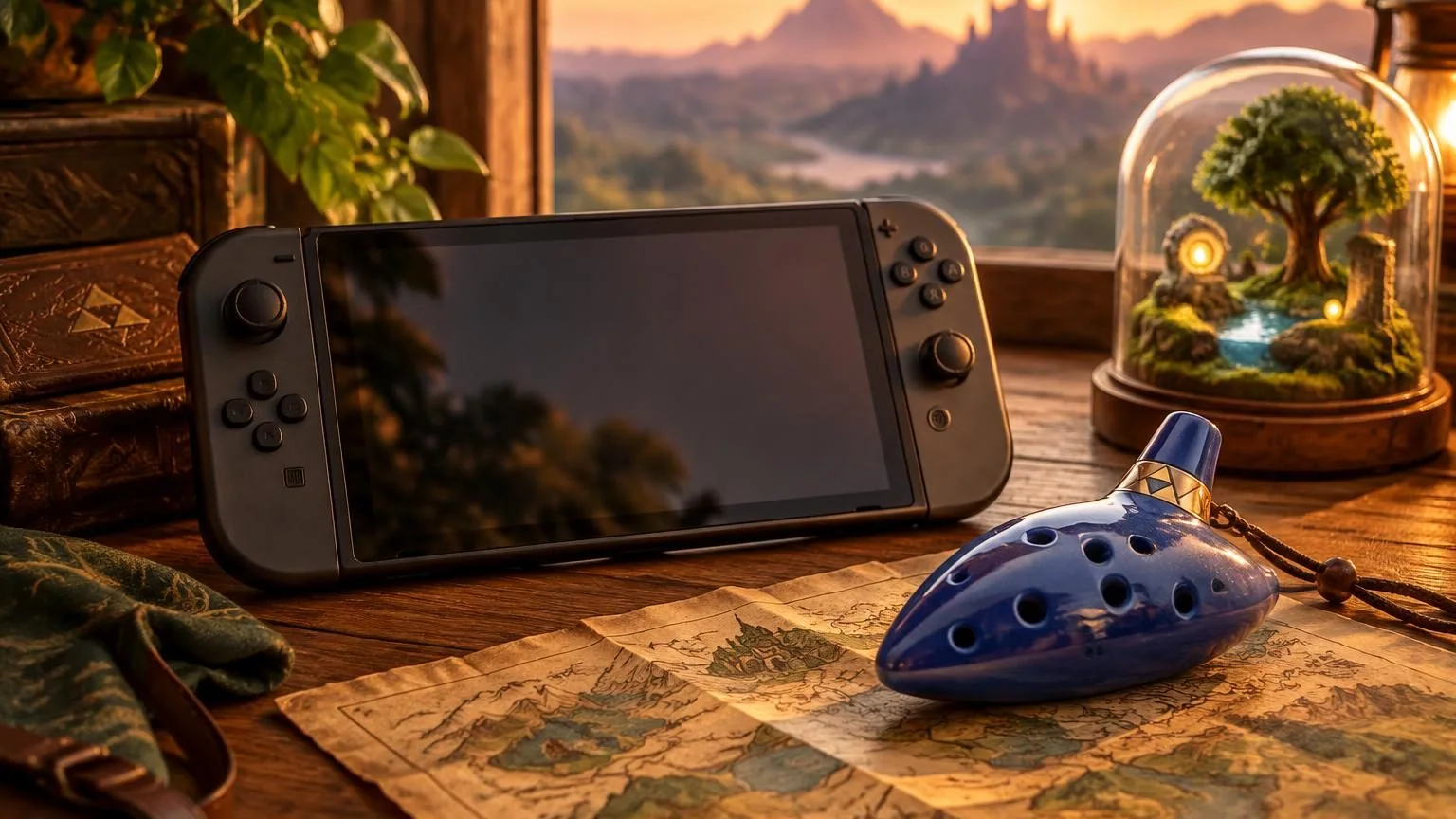
Nintendo released its remake of The Legend of Zelda: Ocarina of Time on November 5, 2026, exclusively for Nintendo Switch 2. The launch turns an earlier anniversary announcement into an available game and brings a familiar adventure into a substantially revised presentation.
What Nintendo changed
Nintendo’s announcement describes rebuilt visuals, fully voiced cutscenes, expanded character dialogue, orchestral music, and revised camera and movement controls. These are meaningful changes to how an established game is experienced, even when its underlying adventure remains recognizable. This article covers the release and documented features; it is not a hands-on review.
The anniversary hardware has a separate timeline. Nintendo announced the themed Switch 2 console and accessories for October 29. The November 5 milestone is the game’s release, rather than the first appearance of that console design. Local stock and regional offers remain separate from the software’s published release date.
A companion experience and a launch update
The official product page describes ZELDA NOTES inside the Nintendo Switch App on compatible smart devices. It includes location challenges, a game-knowledge quiz, activity records, and an ocarina feature. Account, connectivity, regional availability, and membership requirements apply to the relevant functions, so the companion should be evaluated separately from the console game.
Nintendo’s support page lists version 1.1.1, released November 4, with companion support and gameplay fixes. It says an update is required for the game’s internet features and preserves existing save data. Owners can check the installed version and request the update through the console’s software menu.
Why this remake matters for game design
Our interpretation is that a remake of a widely remembered game has two audiences with different expectations. Returning players may care most about whether the rhythm and spatial identity survive. New players may judge the camera, movement, explanations, and navigation against games made for current hardware.
Those goals can conflict. More explicit dialogue can clarify an objective while changing a scene’s pacing. A more flexible camera can improve readability while altering how a puzzle reveals itself. The useful critical question is how the changes affect play, rather than whether a familiar location looks more detailed in a still image.
What to check before buying
Confirm that the purchase is for Switch 2, choose the appropriate regional edition, and review the current storage and accessibility information. Check the display features supported by the actual television or handheld setup. A feature listed for compatible equipment does not mean every screen will show the same result.
The release is a major gaming event in this week’s technology coverage because it combines a prominent catalog revival with new hardware and companion software. Its long-term reception will depend on how those pieces serve the adventure, something launch specifications alone cannot settle.