
Direct answer: Yes. AI can turn prompts, scripts, images, or existing footage into clips and can assist with editing, captions, dubbing, effects, and cleanup. A usable video still needs a clear purpose, shot planning, continuity, rights clearance, sound work, and final human review.
Start with the deliverable, not the generator
Decide the audience, channel, duration, aspect ratio, message, call to action, factual claims, and deadline. A six-second atmospheric clip, a product demonstration, a training lesson, and a documentary require different evidence and control. AI is most predictable when each shot has one subject, one action, one camera instruction, and one visual constraint.
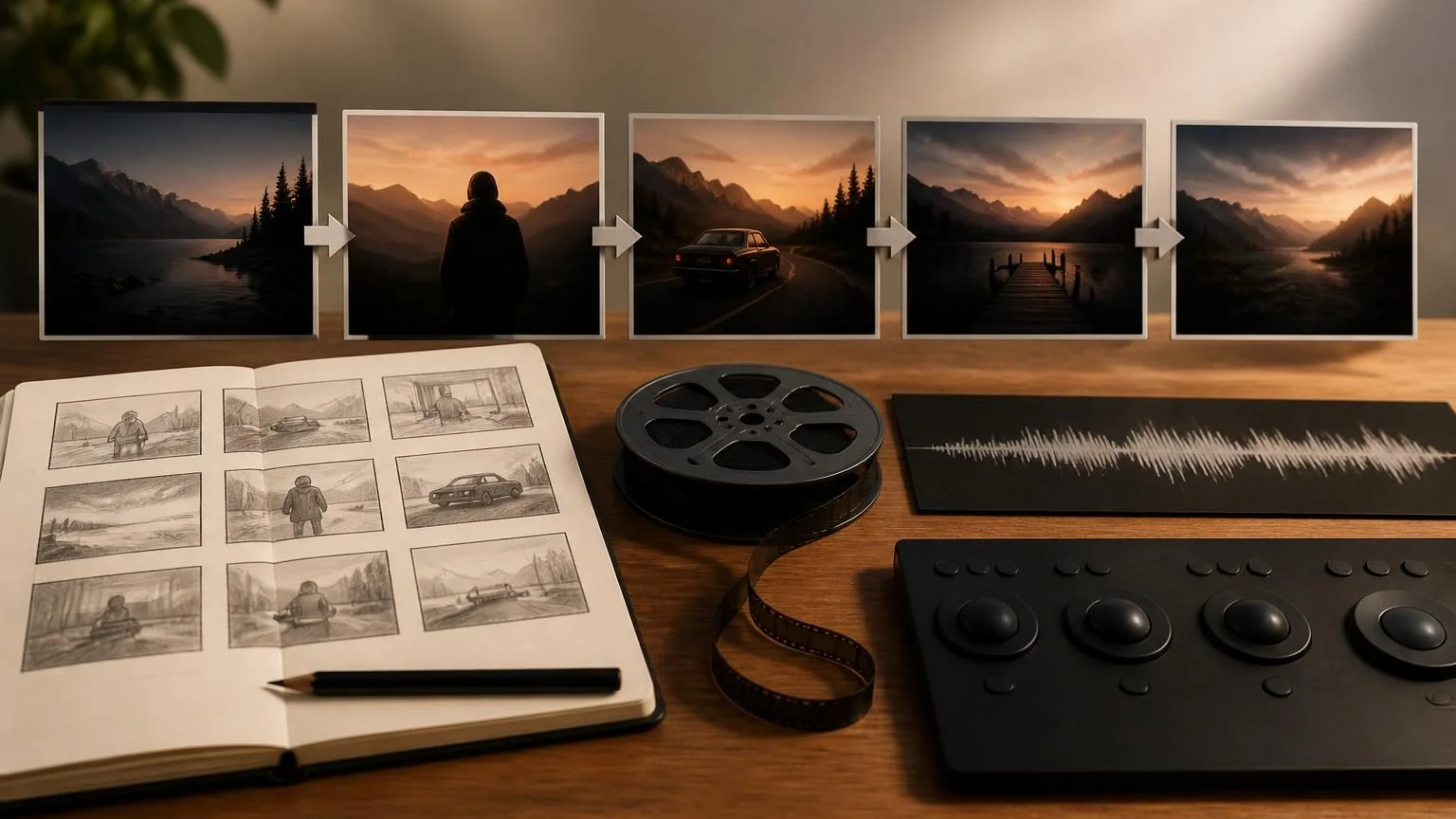
Write a short treatment and shot list before generating footage. Use reference images only when you have permission. Lock recurring characters, wardrobe, locations, palette, and camera language in a continuity sheet. Generate short takes and assemble them in an editor; asking one prompt to deliver a polished multi-minute story usually produces drift and expensive retries.
AI supports several distinct production jobs
Text-to-video invents a scene, image-to-video animates a supplied frame, and video-to-video transforms existing motion. Other tools remove objects, extend shots, create backgrounds, transcribe speech, generate captions, clean audio, translate dialogue, or propose rough cuts. Selecting the narrow capability that matches the task gives more control than replacing the entire production pipeline.
Generated narration and music need separate review for pronunciation, pacing, rights, and disclosure. Captions should be checked by a person, especially for names, numbers, safety instructions, and technical language. Keep editable project files and isolated audio tracks so one correction does not force regeneration of the full video.
Continuity and physics remain common failure points
Inspect faces, hands, object permanence, logos, reflections, shadows, lip movement, camera direction, and the relationship between consecutive shots. A product may change shape, a doorway may move, or a person may acquire different clothing between frames. Motion that feels plausible at normal speed can reveal impossible geometry when paused.
Use consistent seeds or references when available, but do not treat them as guarantees. Build an acceptance checklist for every shot and reserve time for conventional editing, compositing, color, and sound. If factual demonstration matters, film the actual product or process rather than generating an attractive approximation.
Clear every input and depicted identity
Confirm rights for scripts, footage, photographs, voices, music, fonts, characters, trademarks, and reference material. Platform terms do not erase third-party rights. A tool may grant rights in its output while leaving you responsible for what you uploaded and whether the result imitates protected or misleading material.
Do not clone a person’s voice or appearance without appropriate consent. Digital-replica and publicity rules differ, and deceptive impersonation can cause serious harm even when copyright is not the issue. For employees, actors, clients, or customers, define the approved context, duration, territory, editing scope, and withdrawal process in writing.
Disclose synthetic scenes when context demands it
Entertainment often signals fiction through context. Advertising, education, journalism, politics, testimonials, and product demonstrations require greater clarity because viewers may rely on what they see and hear. Follow current platform labeling rules and place a meaningful disclosure where the audience encounters the claim, not only in hidden metadata.
Provenance standards can help carry origin and edit information, but they do not prove that every claim is true. Keep prompts, source licenses, consent records, shot approvals, and final exports. If a generated scene illustrates rather than documents an event, say so plainly.
Budget by accepted seconds, not generated seconds
Generation prices hide iteration. Estimate how many attempts produce one acceptable shot, then add upscaling, storage, editing, voice, music, captions, review, and human labor. A conventional shoot may be cheaper when realism, exact products, or long continuity matter. AI may be strongest for concepts, impossible scenes, variations, and low-risk supporting shots.
Run a small proof with the hardest shot before committing the campaign. Review it at delivery resolution on the intended device, test captions and loudness, clear rights, and obtain final approval. Archive the project so later corrections remain possible. The finished video is a production decision, not merely the latest generated file. Keep a correction budget after release: names, dates, prices, translations, and platform specifications can change, and a flattened AI video may be harder to revise than an ordinary project with editable layers. Measure completion by an approved, accessible master in every required format.