
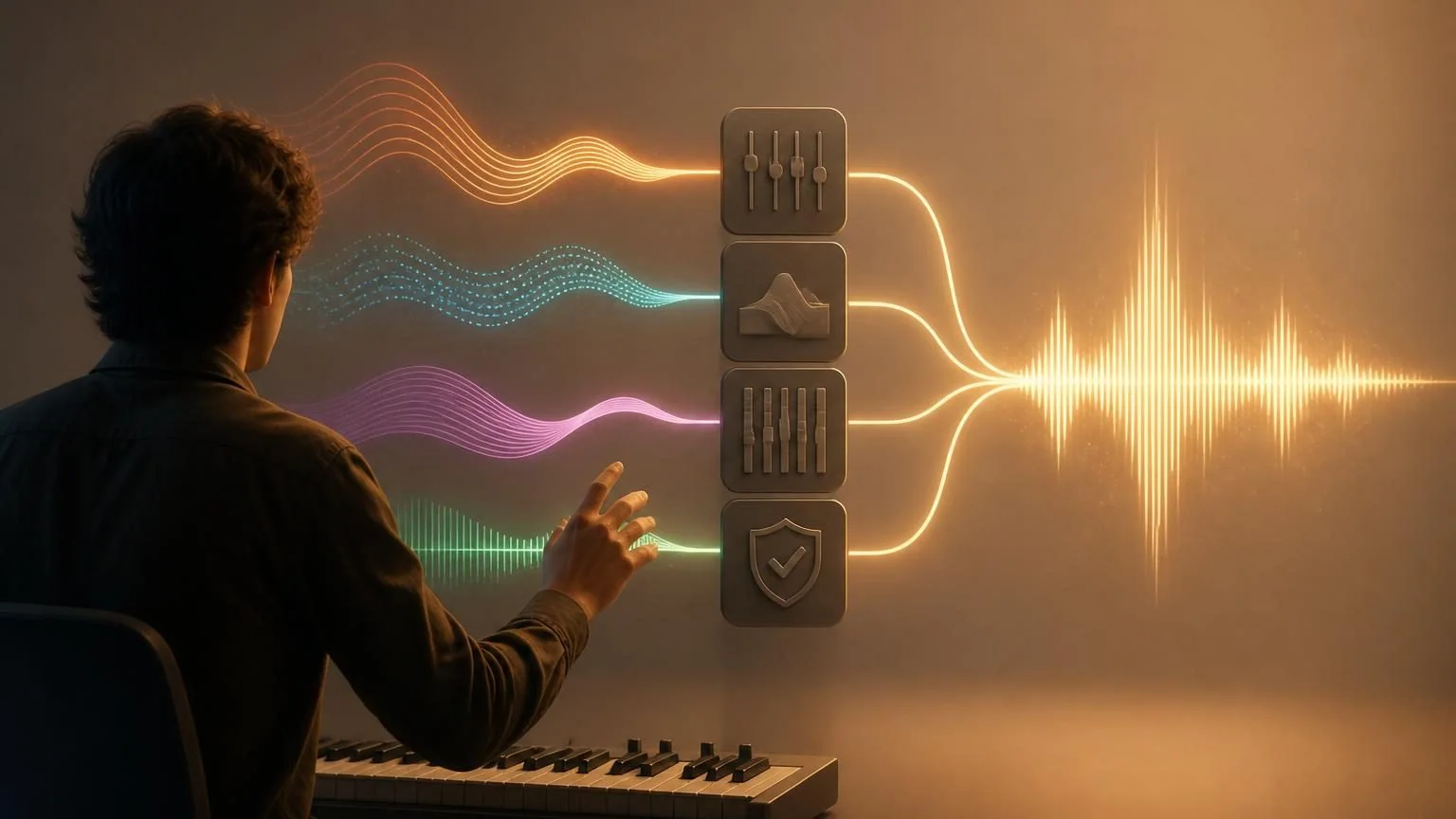
Direct answer: Yes. AI can generate melodies, harmonies, lyrics, arrangements, instrument parts, vocals, and complete tracks, or assist with cleanup and mixing. Release requires more than a good output: document your human contribution, review similarity, respect voice and likeness rights, and follow distributor terms.
Choose whether AI is assistant, instrument, or generator
An assistant can suggest chords, separate stems, remove noise, align timing, or create variations from your material. An instrument responds to detailed performance choices. A generator may create most of a track from a prompt. These modes affect creative control, credit, reproducibility, and potential copyright protection, so decide the intended role before production.
Begin with a human brief: mood, structure, tempo range, instrumentation, lyrical subject, audience, and references described as musical properties rather than a demand to copy a living artist. Keep drafts that show selection, rewriting, performance, arrangement, editing, and mixing choices.
Generate components when a whole song is hard to control
Short instrumental ideas, percussion textures, transitions, sound design, or alternate arrangements are easier to evaluate than a finished song delivered at once. Export stems when possible and rebuild the track in a conventional audio workstation. This lets you correct harmony, timing, lyrics, balance, and form without repeatedly regenerating unrelated sections.
Listen on headphones, speakers, and mono. Inspect clipping, phase, abrupt ambience, malformed words, inconsistent singer identity, and artifacts hidden by dense production. Verify every lyric and spoken name. A catchy result can still include nonsensical language or unintended resemblance.
Similarity deserves a deliberate check
Music can implicate composition, lyrics, sound recording, performance, voice, and publicity interests. A prompt that requests a specific artist’s exact style or cloned voice raises different concerns from a broad genre and instrumentation description. Avoid confusing “the service generated it” with “no one else can have a claim.”
Search memorable lyrics and compare distinctive melodic, rhythmic, and production features with known works. Automated matching can help but is not a legal clearance. For important commercial releases, use qualified music counsel or clearance professionals, especially when the output resembles a named performer or incorporates uploaded recordings.
A synthetic voice needs real permission
A voice can identify a person even when no original recording is copied into the final master. Obtain explicit consent for voice models and define the songs, territories, duration, compensation, credit, editing boundaries, and revocation terms. Do not create deceptive endorsements, impersonations, or intimate content.
If a session performer, employee, or collaborator supplies training material, a vague recording release may not address model creation and reuse. Discuss it separately. Label a synthetic performance when listeners could reasonably believe the depicted artist participated or when a platform, contract, or law requires disclosure.
Copyright protection depends on human authorship
The U.S. Copyright Office states that AI assistance does not disqualify a work, but protection attaches to human-authored expression rather than material generated entirely by a machine. Prompts alone generally do not provide sufficient control. Human-written lyrics, performed parts, selection, arrangement, and creative modification may be protectable when sufficiently original.
Registration and ownership vary by country and fact pattern. Preserve project files and identify generated material honestly when required. Also read the tool’s output license, training terms, and commercial-use limits, plus distributor and collecting-society rules. A copyright position and a platform eligibility decision are separate.
Prepare a release package, not only an audio file
Keep the brief, prompts, generated versions, source recordings, collaborator agreements, licenses, project session, stems, lyrics, credits, disclosure decision, and final master. Confirm artwork and video rights separately. Enter accurate songwriter, performer, producer, and recording ownership information rather than assigning the model a human credit.
Before release, compare the track for similarity, verify explicit content and factual claims, check technical specifications, and review the distributor’s current AI policy. AI can dramatically widen musical experimentation. Sustainable use comes from adding human direction and accountable rights practice, not from treating generated audio as ownerless material. Decide who can authorize remixes, stems, synchronization, samples, and model reuse before a collaborator or customer asks. Keep lossless masters and clearly labeled instrumental, clean, and alternate versions so later delivery does not depend on regenerating the same performance. Recheck every credit before delivery.