Researchers at the ELLIS Institute Tübingen and the University of Tübingen have published an explanation of how AI is changing scientific modeling. The November 6 guest essay on Anthropic’s research site separates three jobs: choosing a model, fitting it to observations and interpreting what it says about the world.
The essay, by Jakob Macke, Daniel Gedon and Stefan Wahl, uses models of nerve-cell activity to explain why reproducing measurements is insufficient on its own. Several mathematical explanations can fit the same observations. Scientific progress also requires understanding which assumptions matter and what further observations would distinguish competing explanations.
A distribution of explanations
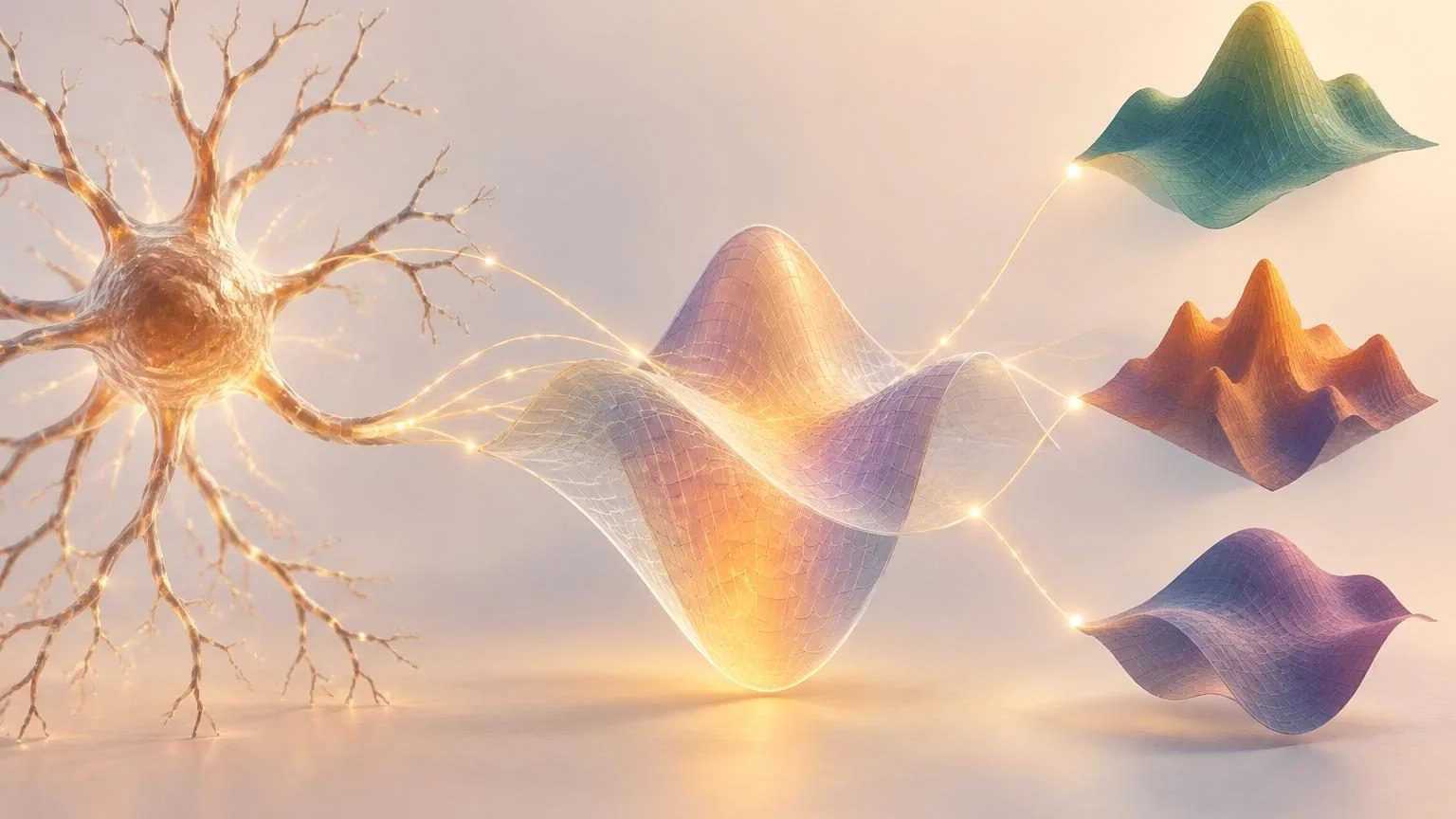
One method discussed is simulation-based inference. Researchers generate examples by running a simulator with different parameters, then train a network to infer which parameter settings could explain observed data. The result can represent a range of plausible explanations rather than a single preferred fit.
The accompanying interactive illustration lets readers explore parameter constraints in a Hodgkin–Huxley neuron model. The publication presents a research perspective and explanatory examples; it does not launch a new general-purpose scientific assistant or establish that AI has solved scientific model discovery.
Why this distinction is useful
Our assessment is that the framework gives research teams a better way to specify what they need from an AI tool. Finding parameters for an established simulator is a different task from proposing a new equation. Explaining why the equation should generalize is another task again. Combining them into one request can hide where uncertainty enters the result.
A practical workflow can preserve those boundaries. First record the observations and assumptions available. Then compare candidate models and their fits. Finally ask which new experiment would produce different predictions under the remaining explanations. Each stage produces an artifact that another researcher can inspect.
This approach also clarifies evaluation. A model-building system should be tested on predictions beyond the measurements used to select it. An inference system should be checked for whether its uncertainty is calibrated. An interpretation tool should connect its explanation to the actual structure of the model, rather than adding a plausible story afterward.
The distinction matters outside neuroscience as well. Whenever a team uses a simulator or an equation to explain observations, it faces the same risk of confusing a good fit with a good explanation. AI can make the search faster while leaving that conceptual problem intact.
The essay’s contribution is a clear map of where AI assistance can enter scientific modeling. It points toward tools that expose alternatives and uncertainty, helping researchers decide what to measure next as well as what to calculate.