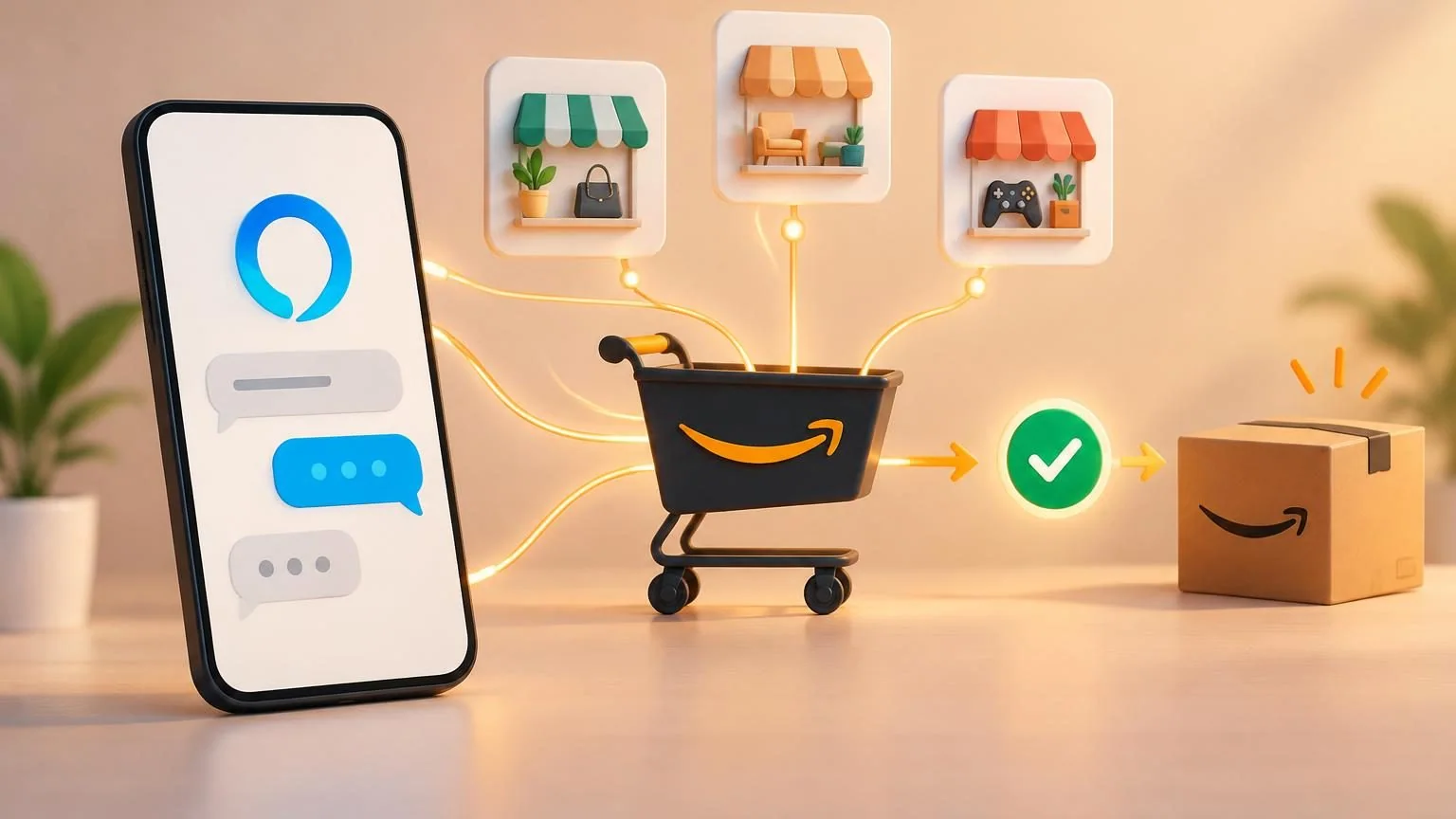
Amazon announced two additions to its shopping ecosystem this week: a Shop Direct Merchant Workspace on November 4, 2026, and text messaging with Alexa for Shopping on November 6. Together they extend where a shopping request begins and which stores can provide the resulting products.
SMS access starts with invitations
The texting option initially reaches a small invited group in the United States, with a wider rollout planned over the following weeks. Amazon says participants accept terms and link a phone number. Customers without an invitation can register interest; that is not the same as immediate access.
Amazon describes research, comparisons, grocery requests, photos of desired items, price alerts, and order updates through the conversation. Its reorder example includes purchase approval. These capabilities make the interaction more consequential than a search response because the assistant can progress toward an actual transaction.
A route for stores outside Amazon’s marketplace
The new Merchant Workspace is a free self-service portal for eligible Shop Direct participants. Merchants can submit existing product feeds, manage participation, and see which products are active. The announcement names established feed providers as connection options.
Shop Direct can lead a customer to the merchant’s own website, with notice that they are leaving Amazon. For eligible items, Buy for Me offers a separate route in which a customer confirms order details through Amazon before the agent completes a purchase on the merchant site. Those paths should not be confused with listing a product for ordinary sale in Amazon’s marketplace.
Amazon says merchants retain control of pricing, inventory, fulfillment, and customer service. Participation does not guarantee a position in search or a sale, and the portal’s launch does not establish eligibility for every country or storefront.
What shoppers should verify
Our consumer analysis is to keep the transaction state explicit. A request for recommendations, adding something to a cart, and confirming a purchase are different steps. Check the item variant, total price, destination, delivery estimate, and cancellation route before allowing a purchase to proceed.
Text messaging also makes authentic entry points important. Use the service’s official enrollment route rather than treating an unsolicited shopping message as proof of an authorized Amazon conversation. Review the account associated with a linked number, especially on a shared phone.
What merchants should test
For retailers, the quality of the catalog is a practical control. Outdated stock, ambiguous size options, missing shipping restrictions, or inconsistent prices can turn product discovery into a failed checkout. Test representative items against the live store and decide who owns feed corrections.
Keep checkout security controls intact when evaluating agent purchases. A convenient discovery channel is not a reason to weaken fraud checks or treat every automated browser session as trusted. Measure completed orders and customer-service outcomes alongside referred traffic.
The broader shift is a shopping interface that spans conversation, catalogs, and payment. Its value will depend on accurate product data and clear customer decisions at the point where advice becomes an order.