
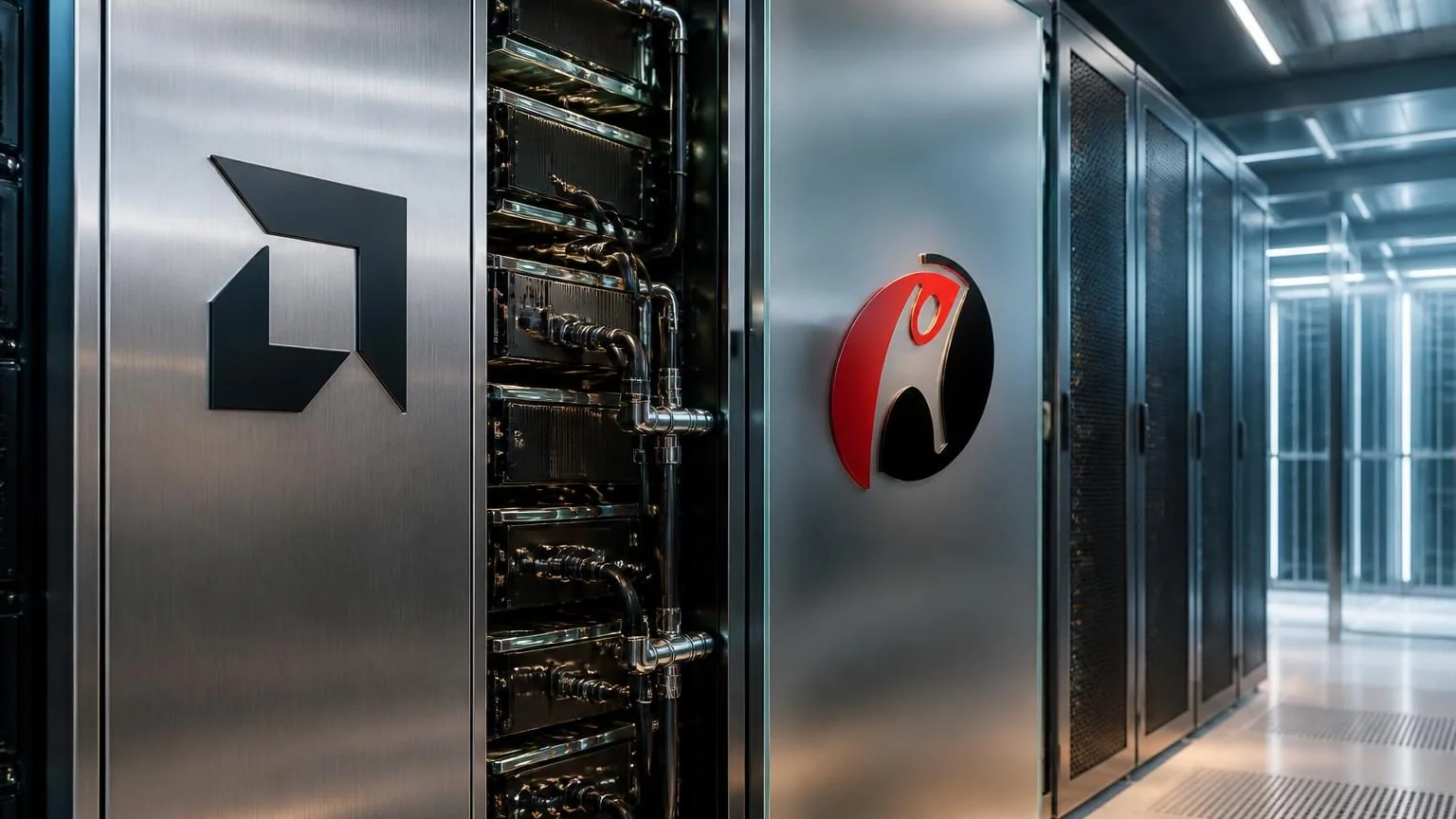
AMD and Rackspace Technology announced a definitive agreement on June 16, 2026, to deploy an initial 30 megawatts of AMD-based AI compute across Rackspace’s global data centers from late 2026 through 2028. On its face, that looks like another infrastructure-capacity headline. The more important signal is the operating model behind it: both companies are trying to turn governed enterprise AI infrastructure into a clearer product category for regulated and sovereign workloads.
That matters because many enterprise AI buyers do not only want access to accelerators. They want a stack that is accountable for security, performance, compliance, and day-two operations once models move from demos into production workflows.
What AMD and Rackspace actually signed on June 16
According to Rackspace’s June 16 release, the agreement operationalizes the memorandum of understanding the two companies announced on May 7. Rackspace said the plan covers an initial 30 MW footprint dedicated to AMD-based compute deployments across its data-center footprint, beginning in late 2026 and extending through 2028.
The release says the architecture will combine AMD Instinct GPUs, including MI355X and MI350P, with AMD EPYC CPUs inside Rackspace’s Enterprise AI Cloud design. Rackspace is positioning that stack as a managed environment for regulated enterprises that want one operator responsible for the full path from silicon through inference and production operations.
There is also an important caveat in the announcement. While the companies say they have signed a definitive agreement, Rackspace also says individual deployment authorizations remain subject to separate execution and that some commercial terms, including pricing and financial parameters, still need further agreement. In other words, this is more concrete than the May framework, but it is not the same thing as fully installed and revenue-producing capacity yet.
Why the governed-infrastructure angle matters more than the megawatts
The AI infrastructure market has spent the last two years talking mostly about raw chip supply, training clusters, and who can secure more GPU capacity. Rackspace and AMD are making a different pitch. Their argument is that many enterprises, especially in healthcare, government, financial services, and other compliance-heavy settings, need a governed operating layer as much as they need compute.
That is why the June 16 announcement keeps stressing accountability, sovereignty, and managed delivery. The companies are not only selling hardware access. They are trying to sell a model in which the enterprise buyer does not have to stitch together separate vendors for bare metal, inference tooling, runtime operations, and compliance ownership.
If that resonates, the bigger competitive question is not only whether AMD can win more AI infrastructure share from NVIDIA. It is whether enterprise buyers increasingly prefer an operated, governed AI stack over the more common bare-metal rental model when the workload is sensitive, long-lived, or deeply embedded in business processes.
What this could change for enterprise AI buyers
A clearer alternative to raw GPU rental
The May 7 framework introduced four promised layers: Enterprise AI Cloud, Enterprise Inference Engine, Inference as a Service, and Bare Metal AMD Instinct. The June 16 agreement is the first stronger signal that Rackspace and AMD want to commercialize that full-stack packaging rather than leave it as partnership language.
For buyers, that could create a more practical middle ground between building everything internally and renting generic accelerator capacity from a hyperscaler or bare-metal provider. That middle ground is especially relevant for businesses that care about auditability, workload isolation, cost control, and operational accountability.
More enterprise leverage for AMD
AMD has already been pushing harder into AI infrastructure, but this deal gives it a more specific route into regulated enterprise deployments. Instead of competing only on chip performance, AMD gets tied to a managed delivery model that is easier for some enterprises to buy than a component-level story.
That may matter most for inference-heavy and agent-driven workloads, where uptime, governance, and service ownership can matter as much as peak training performance. If Rackspace can turn this into real customer wins, AMD gains a stronger enterprise wedge than a simple accelerator supply announcement would provide.
Compliance becomes part of the infrastructure product
The deal also reinforces a broader shift across enterprise AI: governance is moving down the stack. Buyers increasingly want compliance, sovereignty, and security handled as infrastructure features, not as policy documents added after deployment. Rackspace is effectively betting that this will be a durable buying requirement, not a temporary concern.
What to watch next
The next question is execution. Enterprises should watch at least four things over the next few quarters:
- Whether Rackspace discloses named customer wins tied to the AMD stack.
- Whether the four promised capabilities move from announcement language into clearly available products.
- Whether the deployment schedule from late 2026 through 2028 starts showing financed, authorized capacity in measurable stages.
- Whether regulated buyers actually choose this governed model over more common hyperscaler or bare-metal routes.
If those pieces start falling into place, the June 16 agreement may end up mattering less as a 30 MW headline and more as evidence that enterprise AI infrastructure is splitting into two different markets: raw compute supply on one side, and governed, outcome-oriented AI operating environments on the other.