
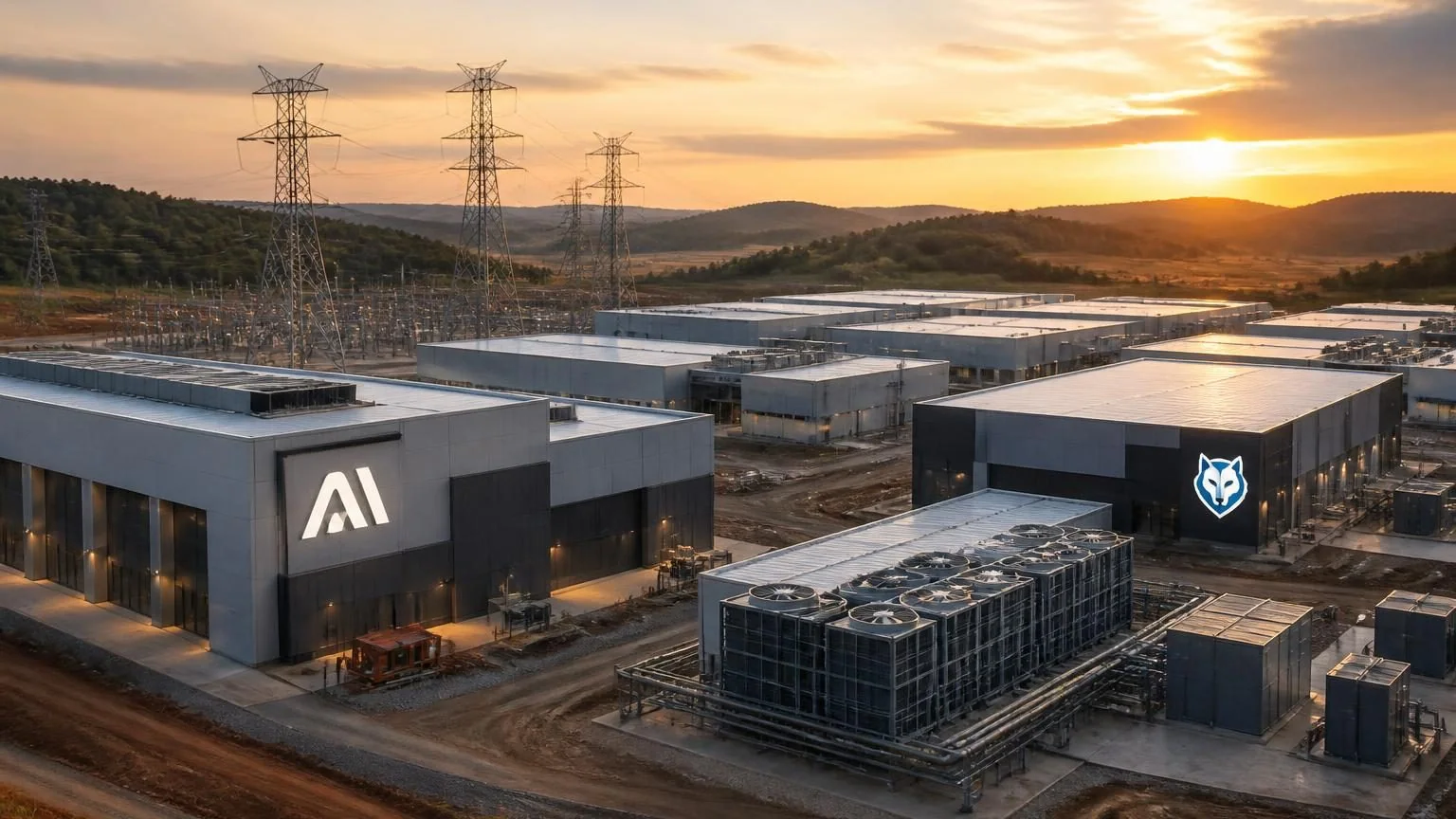
Anthropic’s July 6 lease with TeraWulf is bigger than a data-center headline. It shows frontier AI companies are now competing for power, land, and long-term infrastructure commitments at the same time they are racing on models and software.
What TeraWulf and Anthropic actually announced
TeraWulf said its subsidiary entered into a 20-year lease agreement with Anthropic for a purpose-built AI infrastructure campus at the Justified Data site in Hawesville, Kentucky. The company said the lease is expected to generate approximately $19 billion of contracted revenue over the initial term and that the campus will support about 401 MW of critical IT load in multiple phases, with initial capacity targeted for the second half of 2027 and full capacity planned for early 2028.
TeraWulf also said it entered into a separate deal to sell its 50.1% ownership interest in the Abernathy joint venture to an investor group led by Fluidstack. Taken together, the announcement reads like a capital-allocation shift toward wholly owned AI infrastructure at larger scale.
Why this is a bigger AI signal than a model launch
The obvious story is Anthropic demand. The deeper story is that frontier AI is increasingly gated by infrastructure that takes years to build, finance, permit, and energize. The important constraint is no longer only model capability. It is also power delivery, site control, and the ability to lock in capacity before the next wave of demand arrives.
That matters because the AI market is moving from experimentation to contracted deployment. Once a provider commits to long-duration compute capacity, the economics start looking less like software trials and more like industrial planning.
What business teams should take from it
For enterprise buyers, the lesson is not “buy more compute.” It is to treat AI as an operating decision, not just a software choice.
- Map the workflows that deserve real automation first.
- Separate quick wins from high-risk, high-governance use cases.
- Plan for agent access, escalation, and accountability before you scale.
- Build around business outcomes, not tool sprawl.
That is exactly where coordinated AI teams become more valuable than one-off demos: they turn a strategic idea into a repeatable operating model.
What to watch next
The next milestone is execution. Watch whether TeraWulf hits its phased delivery timeline, whether Anthropic keeps signaling similar infrastructure commitments, and whether other AI labs follow the same playbook for power and capacity.
For the rest of the market, the message is already clear: AI strategy now includes infrastructure strategy.
Primary sources: TeraWulf press release; TeraWulf July 6 8-K filing; Reuters report via Investing.com.