
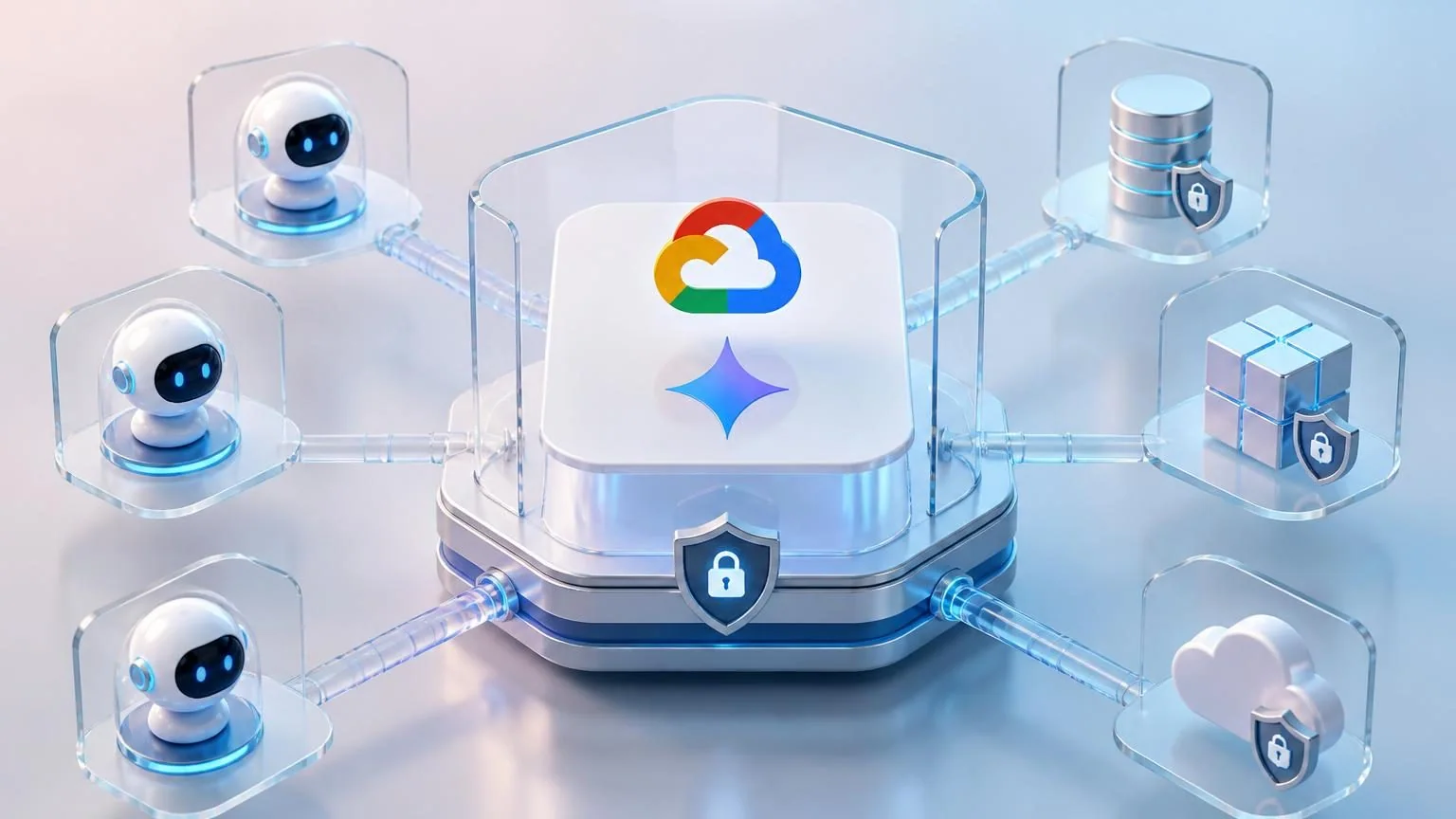
Google Cloud made an important agent-infrastructure move on June 30, 2026: it introduced a fully managed remote MCP server for Gemini Enterprise Agent Platform. On the surface, this looks like a developer convenience feature. In practice, it is a stronger signal that Model Context Protocol is moving out of the demo phase and into the enterprise control plane.
The launch matters because it gives external AI agents a standard, governed way to reach Google Cloud resources without every team building and babysitting its own connector layer. Google is explicitly positioning the remote MCP server as a secure bridge between outside agent tools and internal cloud assets. For companies trying to operationalize AI agents across multiple models, frameworks, and workflows, that is a much bigger story than a single product update.
What Google actually launched on June 30
The new release adds a remote MCP server inside Gemini Enterprise Agent Platform. That server lets external AI applications connect to Google Cloud resources through a managed HTTP endpoint instead of relying on local-only MCP setups or custom point-to-point integrations.
Google’s own examples are telling. The company says agents built in tools such as Claude Code or other external development environments can use the Agent Platform MCP server to interact with Google Cloud resources directly. That includes access paths for generation, prediction, notebooks, model endpoints, tuning, evaluations, and prompt-management workflows.
In other words, Google is not treating MCP as a side utility. It is turning MCP into a front door for agent access to cloud AI infrastructure.
The practical shift
That shift matters because many teams have already discovered the hard part of agent deployment is not getting a model to answer a prompt. It is connecting that model to the right systems, enforcing permissions, logging actions, controlling scope, and keeping the whole stack stable when multiple agents and tools are involved.
Google’s remote MCP approach aims directly at that problem. Instead of forcing every company to stand up its own server pattern, the company is offering a managed route into Agent Platform resources. That can reduce integration overhead and make external agent clients more usable in production environments.
Why this is bigger than one Google Cloud feature
The June 30 launch makes more sense when you place it next to Google Cloud’s earlier April 28 announcement that more than 50 Google-managed MCP servers were generally available or in preview. That earlier step expanded MCP coverage across Google Cloud services. The June 30 step makes the architecture more usable for teams that want external agent tools to work against those services under enterprise controls.
Together, those two moves point to a broader strategy: Google wants MCP to become a standardized connection layer across its cloud and agent ecosystem. If that works, businesses get a more portable way to connect agents to real tools and data, while Google strengthens its position as the governed runtime behind those agents.
This is also why the story matters outside Google’s customer base. The more major platforms normalize MCP as the interface between models and systems, the less agent builders will want to maintain brittle custom connectors for every internal workflow. That lowers the friction for multi-model stacks and raises the importance of infrastructure choices like registry, identity, observability, and policy.
What enterprises should pay attention to
The most important details in Google’s documentation are not flashy. They are the governance features.
Google says the remote MCP server uses OAuth 2.0 and IAM for authentication and authorization. It also documents fine-grained controls, centralized audit logging, and optional Model Armor protections. The documentation and launch materials also highlight IAM deny policies, which can restrict MCP access by principal, tool properties, and application identity.
That is the real enterprise angle. Companies do not just need agents that can act. They need agents that can act inside policy boundaries that security, platform, and compliance teams can understand.
Why governance now matters more than model novelty
Over the last year, the market has been flooded with agent announcements. What has been missing is a repeatable operating model for connecting those agents to production systems safely. Google’s remote MCP server does not solve every part of that challenge, but it addresses a central one: how to expose capabilities to agents through a standard interface while keeping access under cloud-native control.
That is especially relevant for enterprises running mixed stacks. A company may want one model for coding, another for support, and another for internal knowledge work. If Google Cloud can become the governed action layer beneath those choices, it becomes more valuable even when Google is not the only model provider in the workflow.
What this means for agent builders and operations teams
For builders, the immediate advantage is speed. A standardized remote endpoint can cut down on the custom glue code that usually slows down agent projects. For platform teams, the advantage is visibility. The more agent activity routes through managed infrastructure, the easier it becomes to monitor, audit, and constrain what those agents can do.
That creates a few concrete opportunities:
Development teams can connect external coding or ops agents to governed cloud resources faster.
Data and ML teams can expose prompts, models, notebooks, and evaluations through a more consistent interface.
Security teams get a clearer way to apply policy and logging to agent actions instead of treating every integration like a one-off exception.
There is also an important limit to keep in mind. Managed MCP infrastructure does not automatically produce useful business agents. Companies still need clear workflow definitions, access boundaries, escalation logic, and human review for higher-risk actions. The infrastructure is getting better, but the operational design work still matters.
The practical takeaway
The biggest takeaway from this launch is simple: the market is starting to compete on agent runtime and governance, not just on model quality.
Google Cloud’s remote MCP server is a meaningful step because it makes open agent connectivity look more operational and less experimental. If your team is building agents that need to touch real systems, this kind of release is more important than another benchmark win. It suggests the next phase of the agent race will be decided by who can offer the cleanest combination of interoperability, control, and production reliability.
For businesses, that means the question is shifting. It is no longer just, “Which model should we use?” Increasingly, it is, “Which platform will safely connect our agents to the work that matters?”