
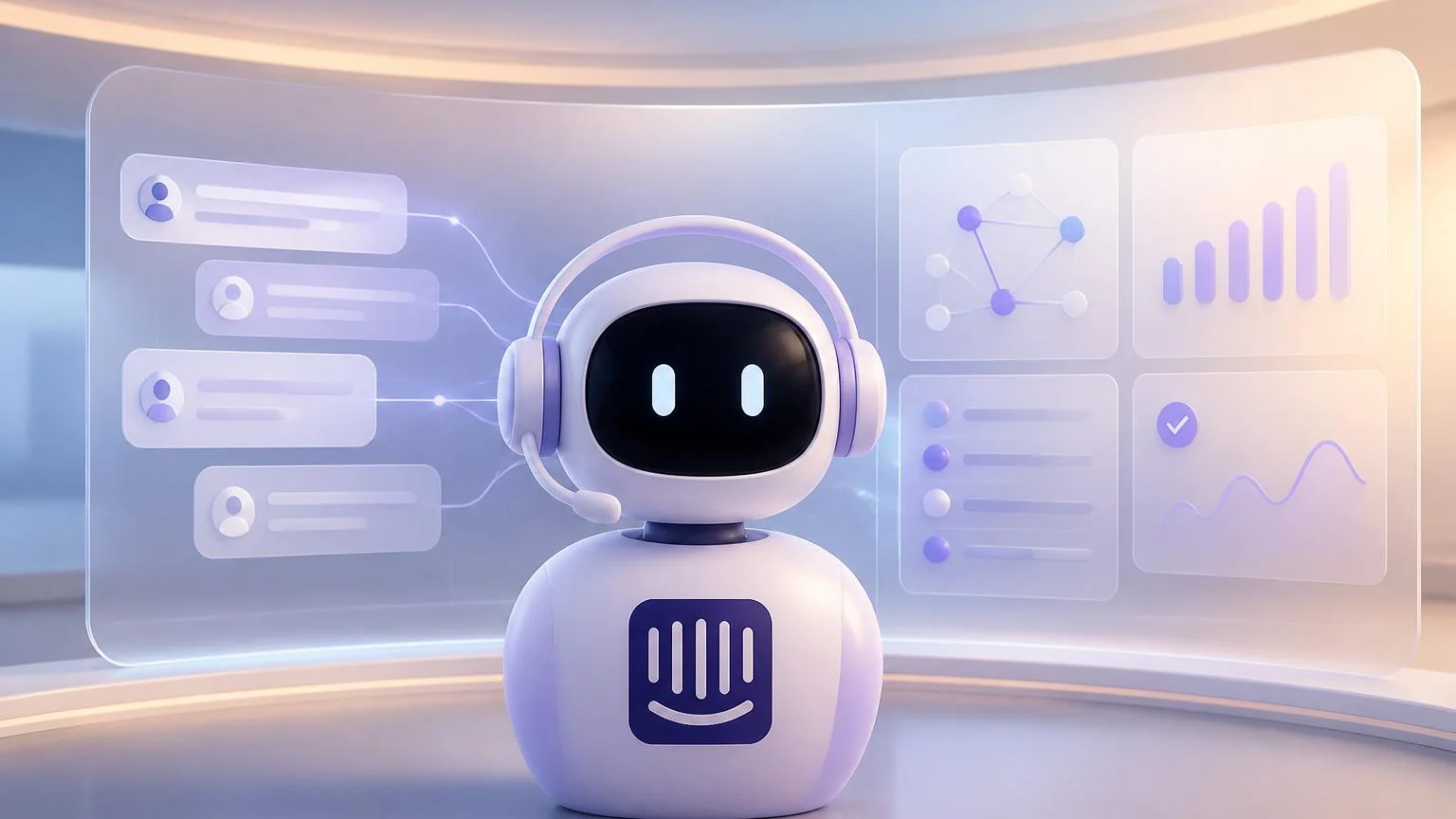
On May 15, 2026, Fin — the company formerly known as Intercom — announced Operator, an AI agent for customer operations that sits behind the customer-facing Fin agent and the Intercom helpdesk. The launch matters because it pushes support AI beyond answering customer questions and into the harder back-office work of analyzing performance, fixing knowledge gaps, tuning automation, and managing the humans and systems around the agent. Coming just three days after the company said on May 12, 2026 that it was renaming itself from Intercom to Fin, the release reads less like a feature drop and more like a company-wide operating model shift.
What Operator actually launched on May 15
Fin says Operator works across both Fin and the Intercom helpdesk to help teams manage customer operations. In practice, that means it can analyze support data, surface patterns in conversations, draft and update help-center content, build automation, debug where Fin handled a conversation poorly, and prepare changes for review before anything goes live.
The approval model is one of the most important details. Operator does not silently change production behavior. It creates proposals that show the diff, explain what is changing, and wait for a human to review, edit, and approve. That makes it a governed operations layer, not just a loose AI assistant with broad admin access.
Fin is also positioning Operator as more than a reporting tool. The product page and launch post frame it as a system that can identify automation opportunities, estimate where human teams are still spending time, and then help build the procedures, guidance, and monitoring needed to improve resolution rates over time.
Why the Intercom-to-Fin rename matters here
The May 12 rename gives the May 15 launch a bigger meaning. Intercom said the software platform name will remain, but the company itself is now Fin. That is a strong signal that management wants the market to read the business as an AI agent company first and a legacy helpdesk vendor second.
That matters because Operator extends the story beyond the frontline support bot. Fin is now arguing that the next valuable software layer is not only the agent customers talk to, but also the agent that manages the content, configuration, analysis, and continuous improvement behind that experience. In other words, the new category pitch is shifting from AI for support to AI for running the support operation itself.
Business impact for support leaders and AI builders
The practical takeaway is that customer-service AI is starting to look more like an operating system than a single bot. Once a company deploys a customer-facing agent, the hard part becomes keeping knowledge current, figuring out why automation fails, deciding what to automate next, and enforcing approval loops so fixes do not create new problems.
That is exactly where Operator is aimed. Fin says the system can chain more than 50 tools across more than 10 skills, but it is still bounded: the current FAQ says it cannot modify workflows, metadata, Fin settings, or channel settings, and it works with aggregate trends rather than individual customer records. Those limits are useful because they show where the product is already practical and where the full vision is still being built.
For AI agents and enterprise automation more broadly, this is the bigger signal. Buyers are moving past the question of whether an agent can answer a ticket. They are starting to ask who tunes the agent, who spots failures, how changes are reviewed, and what layer governs the whole loop. That is a healthier market question, and it is one more sign that agent operations is becoming its own software category.
Availability and what to watch next
Operator is available in early access now. Fin’s FAQ says access is currently limited to eligible workspaces with the Pro add-on and to US-hosted environments, while EU and AU regional availability remain on the roadmap. Early access is free for now, with pricing and packaging after that still to be finalized.
The next thing to watch is whether Operator becomes a durable product or mainly a strong launch narrative. If teams really use it to keep help content current, debug support failures faster, and increase automation without losing control, support operations software will start to inherit the same agentic improvement loop that coding, security, and enterprise workflow platforms are now chasing. For businesses evaluating AI agents, the lesson is simple: the customer-facing bot is only the first layer. The larger opportunity is building the governed system that keeps that bot improving.