
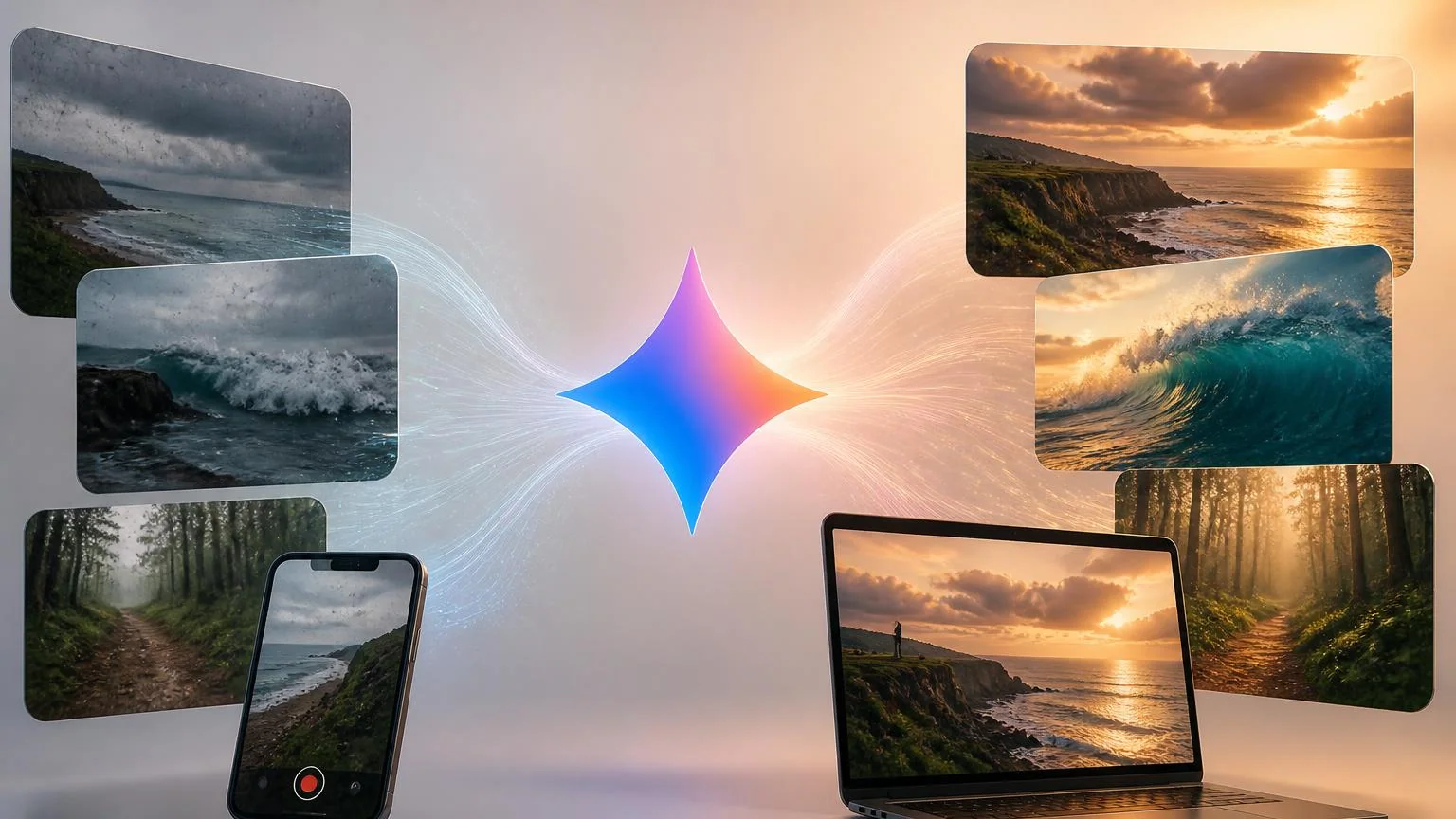
On May 19, 2026, at Google I/O 2026, Google announced Gemini Omni and began rolling out the first model in the family, Gemini Omni Flash, across the Gemini app and Google Flow, with YouTube Shorts and YouTube Create access starting this week. The headline is not just that Google has another video model. It is that Gemini Omni is designed to take text, images, video and some audio references, then keep editing the same project through natural language conversation. That pushes Google closer to a true multimodal creation stack for creative teams, marketers and media workflows.
That distinction matters. A lot of AI video launches still behave like one-shot generators that create a clip and force the user to restart when they want a different angle, background or action. Google is positioning Omni differently: as a model that can preserve continuity across revisions, draw on world knowledge and physics, and sit inside a broader creative system that includes Google Flow Agent, custom Flow Tools and mobile creation apps.
What Google actually launched with Gemini Omni
Google described Gemini Omni as a new model family where Gemini’s reasoning meets generative media creation, starting with video. The first release, Gemini Omni Flash, can combine image, video, text and audio references into a single video workflow, though Google says broader audio inputs and other output modalities like images and audio will come later. In practice, Google is launching Omni first as a product feature rather than just an API endpoint.
In the Gemini app, Omni is framed as a faster path from imagination to finished clip. Users can upload footage from a camera roll, apply templates, swap backgrounds, add cinematic zooms and even create videos with their own approved avatar. Google says Gemini Omni began rolling out on May 19 to Google AI Plus, Pro and Ultra subscribers worldwide.
In Google Flow, Omni Flash is paired with a wider creative operating layer. Google says Flow users can blend real-world inspiration with generated content, keep character identity and voice more consistent across scenes, and iteratively refine clips through conversation. Google also added Flow Agent, which can brainstorm, create variations, batch edit assets and organize materials, plus Flow Tools that let users build custom editing utilities and workflows in natural language. Google says Flow itself has already expanded to more than 140 countries, and Flow Music now brings Omni into music-video creation as well.
Why this is more important than another text-to-video release
The biggest product shift is editability. Gemini Omni is not being pitched as a prompt-in, clip-out system. Google is explicitly emphasizing multi-turn editing, where each instruction builds on the previous one instead of resetting the whole scene. That is a much better fit for real production work, where the bottleneck is often revision control, continuity and keeping the original creative intent intact while changing only one variable at a time.
Google is also leaning hard on multimodal input. Omni can start from raw footage, still images, sketches, written prompts and certain audio references, then turn those ingredients into one cohesive output. That matters for business users because most real media production does not begin from a blank prompt box. It begins with brand assets, reference footage, campaign concepts, existing edits, voice notes, product shots and music direction that need to be merged into one workflow.
Just as important, Google says Omni is grounded in Gemini’s world knowledge and improved understanding of physics, motion and cultural context. If that holds up in production, it could make Omni more useful for explainers, product demos, educational visuals and branded storytelling where coherence matters more than pure spectacle. Google is clearly trying to position Omni as a media model that can reason about a scene, not just decorate one.
Google is turning multimodal creation into an agentic workflow story
The broader Google Flow update is what makes the Gemini Omni launch more strategically interesting. Flow Agent is designed to act like a creative collaborator that can help with planning, dialogue ideas, variations and batch edits under user control. Flow Tools adds a no-code path for building bespoke media utilities and reusable creative workflows. Together, those features push Google beyond model demos and toward an agentic media-production stack.
That is the more important takeaway for Nerova readers. Agentic media production is not only about generating a better clip. It is about turning ideation, asset organization, style iteration, continuity management and editing into a coordinated system. Google is effectively saying that multimodal creation should work more like a guided production environment, where models, agents and user-defined tools can collaborate across a project instead of stopping at a single output.
Flow Music expands that same logic into audio-led workflows. Google says creators can now edit songs section by section, generate covers and direct music videos with Gemini Omni through conversation. That gives Google a more credible story for cross-modal production, where video, music and editing logic start to live inside the same workspace rather than being split across disconnected tools.
What businesses and AI builders should watch next
The immediate availability tells its own story. Google launched Gemini Omni first into consumer and prosumer surfaces like the Gemini app, Google Flow and YouTube creation products, while saying API and enterprise rollout will follow in the coming weeks. That suggests Google wants Omni proven inside high-frequency creative products before it becomes a broader developer platform feature.
For marketing teams, agencies and in-house content operators, the near-term opportunity is faster variant production: social clips, product explainers, campaign remixes, vertical edits, background swaps, character-consistent short videos and music-backed promo assets. For AI builders, the more meaningful signal is that media creation is becoming another agentic workflow category, with planning, editing, asset memory and reusable tools becoming just as important as raw generation quality.
There is also a governance layer here. Google says all videos created with Omni include SynthID watermarking, and generated videos can be verified through Gemini surfaces and Google Search. That will matter if businesses start using these workflows at scale for customer-facing media, training content and brand assets.
The bottom line is that Gemini Omni makes Google more competitive in multimodal creation not simply because it can generate cinematic video, but because it treats video editing as an ongoing conversation and wraps that capability inside Flow’s emerging agent layer. For AI agents, automation and enterprise creative ops, that is the real change: media production is starting to look less like isolated prompting and more like a managed, iterative workflow that software can help run.