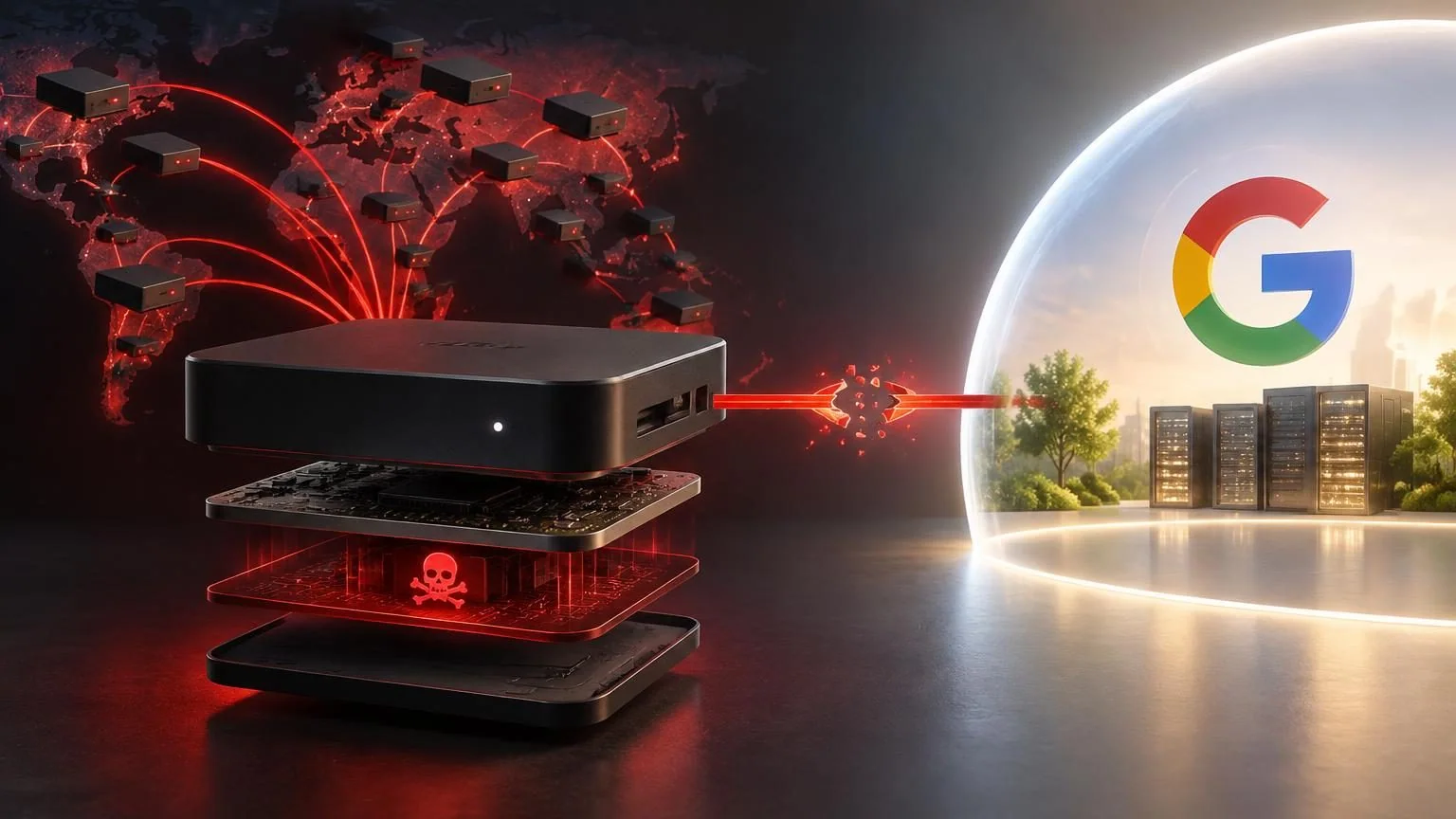
Google’s Threat Intelligence Group disclosed on November 2, 2026 that it and industry partners had disrupted XCPE, a backdoor enrolling more than 1.3 million set-top boxes in a botnet. The operation itself took place the previous week; November 2 is the public disclosure date.
The reported supply-chain failure
Google assesses with high confidence that manufacturer Videostrong intentionally developed and operated the backdoor for profit. According to its analysis, firmware-level access let affiliates load modules for advertising fraud, residential proxy services, and additional malware.
The investigation describes persistence in a firmware partition that could reinstall the backdoor after an apparent uninstall. Google says it cut ties with Videostrong, barred the company and future affiliates from making certified devices, and changed its review process. These are Google’s attribution and enforcement findings, rather than findings independently reproduced by Nerova.
Certification and protection are different checks
Google’s consumer documentation explains that Play Protect certification indicates a device passed Android compatibility testing and is eligible to include licensed Google applications. Certification is separate from Play Protect’s checks for harmful apps. A logo or the presence of an app store is therefore not a complete assessment of the software installed on a device.
The support guide describes checking certification through the Play Store profile menu, Settings, and About. It warns that uncertified devices may lack updates or secure backups. For device-specific repair instructions, it points users to their manufacturer. The XCPE disclosure should not be read as a promise that a generic reset or consumer malware scan removes this particular firmware-level persistence.
What procurement should change
Our analysis is that inexpensive connected hardware deserves a software-supply-chain review before it joins a trusted network. A set-top box in a meeting room, hotel, or home can become an unexpected source of traffic even when nobody is actively using it.
Record the actual model, firmware source, update policy, and support contact. For a managed environment, separate entertainment devices from administration interfaces and sensitive workstations. Confirm what outbound services a device needs and investigate traffic that does not match that purpose. Those measures reduce exposure without requiring a buyer to reverse-engineer every firmware image.
Where a specific model is implicated, obtain current vendor and security-team guidance before reconnecting it. Preserve the identifying information needed for investigation, and consider replacement when a trustworthy remediation path cannot be established. Installing an unofficial firmware image from a forum creates another supply-chain decision and should not be treated as a routine cure.
The durable lesson
Command-server disruption can interrupt abuse while leaving uncertainty about devices already distributed. The longer-term question is whether the hardware has a verifiable, maintained software origin. XCPE makes that question relevant to ordinary consumer electronics as well as enterprise equipment.