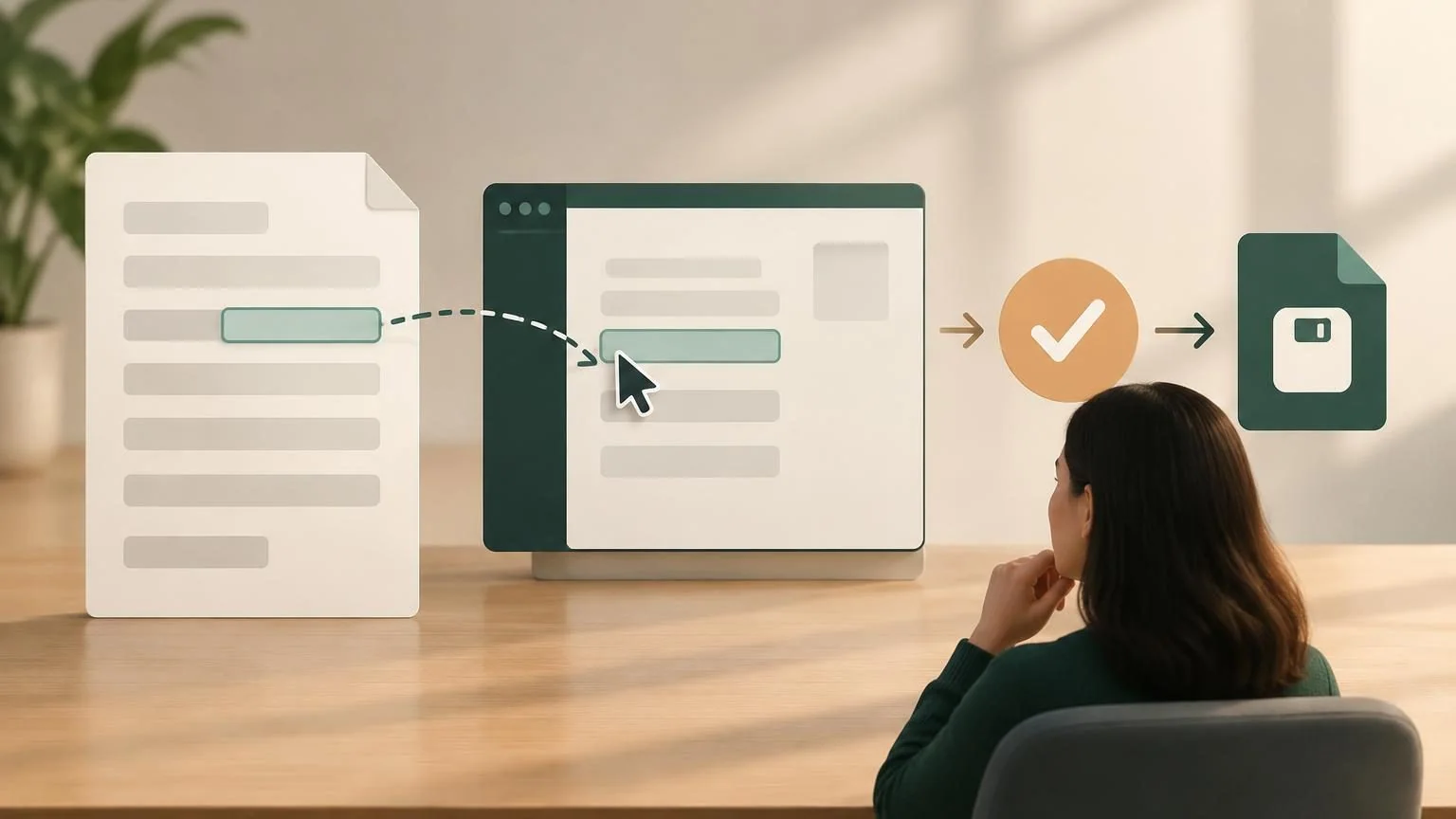
OpenAI launched GPT-6.1 Terra on October 26, 2026, combining visual reasoning, computer use, and writing at a lower API price than GPT-6.1 Sol. The release gives teams another model to evaluate for screen-based automation. Access conditions, supported interfaces, and action safeguards still determine which workflows it can serve.
What shipped—and what did not
OpenAI’s October 26 release notes label the launch GA, not preview. They confirm API availability as gpt-6.1-terra, alongside a phased rollout in ChatGPT Work and Codex across Plus, Pro, Business, Enterprise and Edu. A launch announcement does not mean every workspace received access immediately: availability depends on rollout progress, region, plan and permissions.
Overall subscription usage limits remain unchanged. Enterprise and Edu members need permission to use both Terra and the relevant Work or Codex experience. Businesses should therefore check the actual model list and administrator settings before scheduling a migration.
This is also not a downloadable-weights release. Epoch AI’s model record identifies Terra as closed weights, released October 26. Hosted API access should not be confused with permission or files for self-hosting.
The business change is cheaper visual action, not universal superiority
OpenAI positions Terra around work that connects interpreting images with operating software. Its launch announcement says standard API token prices are 50% lower than GPT-5.6 Terra and GPT-6.1 Sol.
The published model documentation lists standard rates of $1 per million input tokens, $0.05 per million cached input tokens and $5 per million output tokens. Those headline rates are not an all-inclusive workflow quote: the documentation separately specifies cache-write charges, long-context adjustments and a Fast-mode premium.
OpenAI reports 50.3% on Terminal-Bench 4.0 at maximum reasoning effort, compared with GPT-5.6 Terra’s published 21.5%. It nevertheless recommends Sol and Astra for the most complex coding tasks. These are vendor-reported results, not Nerova tests or a prediction of your application’s success rate.
API availability has concrete integration boundaries
The model page specifies a 1,050,000-token context window and up to 128,000 output tokens. Reasoning effort ranges from none through max, with medium the default. Tool calling requires the Responses API; changing a model name alone is not sufficient if an existing integration assumes another tool-calling interface.
Terra supports text input and output and image input. Native audio and video modalities are not supported, and fine-tuning is unavailable. Computer use is a supported tool, but that is different from supplying a complete business application, credentials and an approved execution policy.
The safety report qualifies the launch story
OpenAI’s October 26 system-card addendum treats Terra as Critical in cybersecurity capability and High in biological and chemical capability, applying the safeguards stack used for Sol and Astra. Those are OpenAI’s capability classifications, not security certifications for a customer deployment.
The addendum also reports higher rates of flags than Sol and Astra in several categories, including exfiltration, destructive action and inbound prompt injection. It warns that research or API evaluations can differ from production ChatGPT because prompts, tools and effort settings vary. Strong aggregate results do not establish that every agent action is safe.
What the release means for a bounded pilot
Our operational assessment: Terra’s launch justifies testing one verifiable screen-based task, rather than expanding an agent’s authority. For example, an invoice pilot could extract fields, prepare a draft accounting record and stop before posting or payment.
- Check the saved result: validate supplier identity, totals and duplicate records, not merely the agent’s completion message.
- Measure accepted work: include retries, tool execution and reviewer corrections when assessing cost and elapsed time.
- Keep an approval boundary: require review before irreversible changes and isolate credentials from untrusted documents.
As of November 1, the news is an available hosted model with promising vendor evidence—not open weights, universal account access or proven savings in an untested workflow. The next meaningful evidence is whether Terra completes a business’s own bounded task accurately enough to justify adoption.