
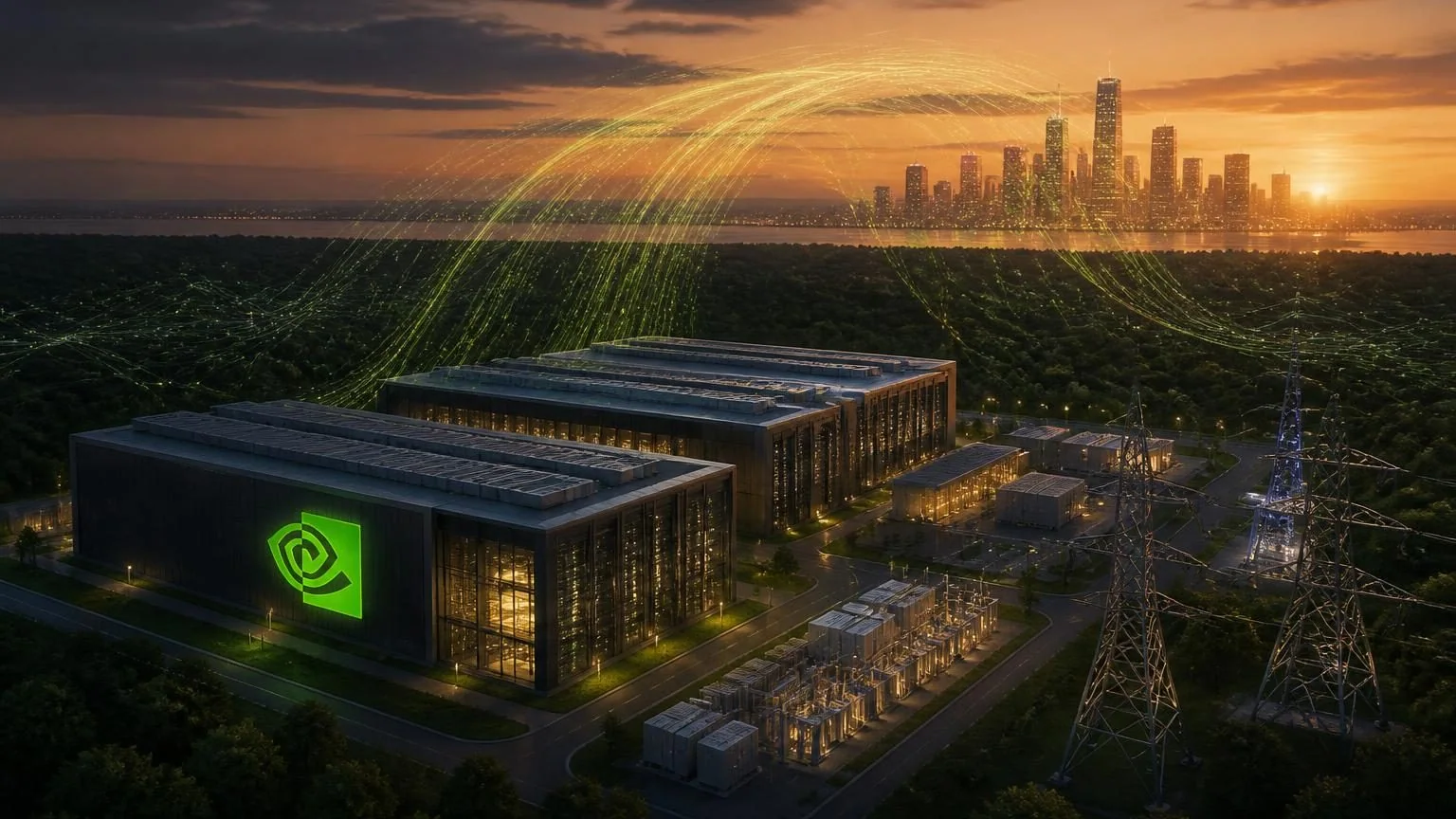
NVIDIA has announced partnerships with Apollo, BlackRock, Blackstone, Brookfield, Goldman Sachs and KKR to establish independent financing platforms designed to mobilize more than $500 billion of third-party capital for AI infrastructure over time.
The announcement matters because the AI buildout is becoming as much a financing challenge as a technology challenge. Training and serving advanced models requires data centers, networking, power capacity and accelerators at a scale that can strain even the largest cloud and technology companies.
From technology purchase to infrastructure asset
The stated goal is to help NVIDIA customers access compute at scale through long-duration capital. In practical terms, the move could make AI compute projects easier to fund through infrastructure-style vehicles rather than relying only on corporate balance sheets or conventional technology budgets.
That does not mean $500 billion has been deployed. It is a target for capital that the platforms could mobilize over time, and individual projects will still need viable customers, power, construction capacity and commercial economics.
Why enterprise teams should care
Most businesses will not directly participate in these platforms. But the structure could affect the market they buy from. If more developers and operators can finance capacity, compute supply may broaden beyond the few firms with the deepest pockets. It could also accelerate competition for electricity, sites, chips and skilled operators.
For AI leaders, this reinforces a basic planning rule: do not treat model access as the entire strategy. The availability, cost, reliability and governance of the infrastructure behind an AI workflow can shape whether an automation is sustainable in production.
What to watch next
- Which projects and operators receive financing first.
- How these platforms allocate risk among technology providers, infrastructure owners and capital providers.
- Whether additional capacity lowers constraints for enterprise AI workloads or mainly serves frontier-model demand.
- How power and grid timelines affect the pace of deployment.
The new partnerships signal that AI infrastructure is being framed less like a short-lived IT refresh and more like a long-lived industrial asset. That framing may unlock capacity, but it also raises the standard for proving that each deployment has durable demand.