
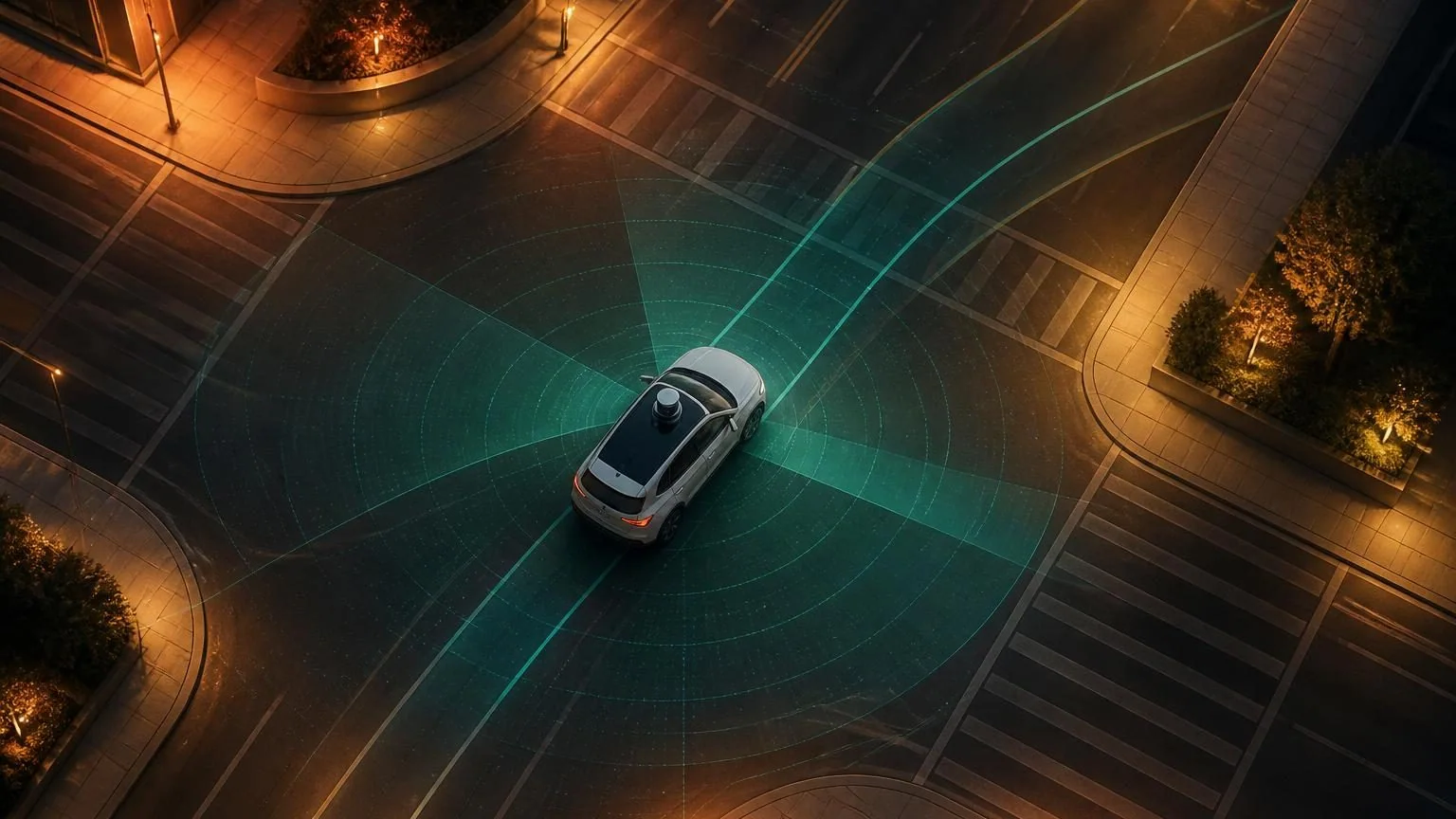
NVIDIA has made Alpamayo 2 Super commercially available for autonomous-vehicle development. The release matters because it gives robotaxi developers, automakers and suppliers a foundation model they can adapt to their own driving data and operating policies rather than treating core driving intelligence as a fully closed service.
The model is designed for autonomous-driving tasks that combine perception, reasoning and action. NVIDIA says it can generate driving trajectories and Chain-of-Causation reasoning traces, alongside uses such as scene questions and auto-labeling. Its code is available under Apache 2.0, while model weights use the OpenMDW-1.1 license, which NVIDIA describes as permitting fine-tuning, derivative models and commercial redistribution.
Why the license is the news
Autonomous-vehicle development is unusually constrained by proprietary fleet data, geographic operating limits and safety cases. A commercially usable model gives teams more control over where their data is processed, how the system is tuned and what evidence they retain for validation. That can reduce dependence on a single model provider when an organization needs a bespoke stack.
The operational gain is not simply access to a model. It is the ability to build a repeatable development loop: use driving data, inspect the model's outputs, create or improve labels, test changes in simulation and evaluate behavior against a defined operational design domain. The value will depend on the quality of that loop, not on model access alone.
Reasoning traces are useful, not a safety certificate
NVIDIA positions Alpamayo 2 Super around difficult, infrequent driving situations that are hard to cover with conventional training data. Explanatory traces may help engineers investigate a proposed trajectory and identify where a system's assumptions break. They can also make internal review more practical than relying on an opaque output alone.
But an interpretable trace should not be confused with proof that a vehicle is safe. Production AV programs still need rigorous scenario coverage, simulation, closed-course and road testing, monitoring, fail-safe behavior, cybersecurity controls and a certification strategy suited to their deployment. NVIDIA itself frames in-vehicle deployment alongside safety and certification planning.
What teams should decide next
For AV organizations, the release creates a practical build-versus-buy question. Teams with valuable fleet data and strong validation capability may see more upside from adapting an open model. Teams without those assets may find that integration, compute needs and safety engineering outweigh the benefit of owning the weights.
The most useful first step is to identify one bounded workflow, such as trajectory proposal analysis, rare-event labeling or simulator-based evaluation. Measure it against the current process for accuracy, review time, reproducibility and failure handling before expanding scope. In physical AI, a faster model workflow only matters if it produces a safer and more auditable engineering process.
Bottom line
Alpamayo 2 Super moves an advanced autonomous-driving model closer to the software ecosystem that businesses can adapt and commercialize. It may accelerate experimentation and customization, but the hard work remains: proving performance in the exact conditions where a vehicle will operate.