
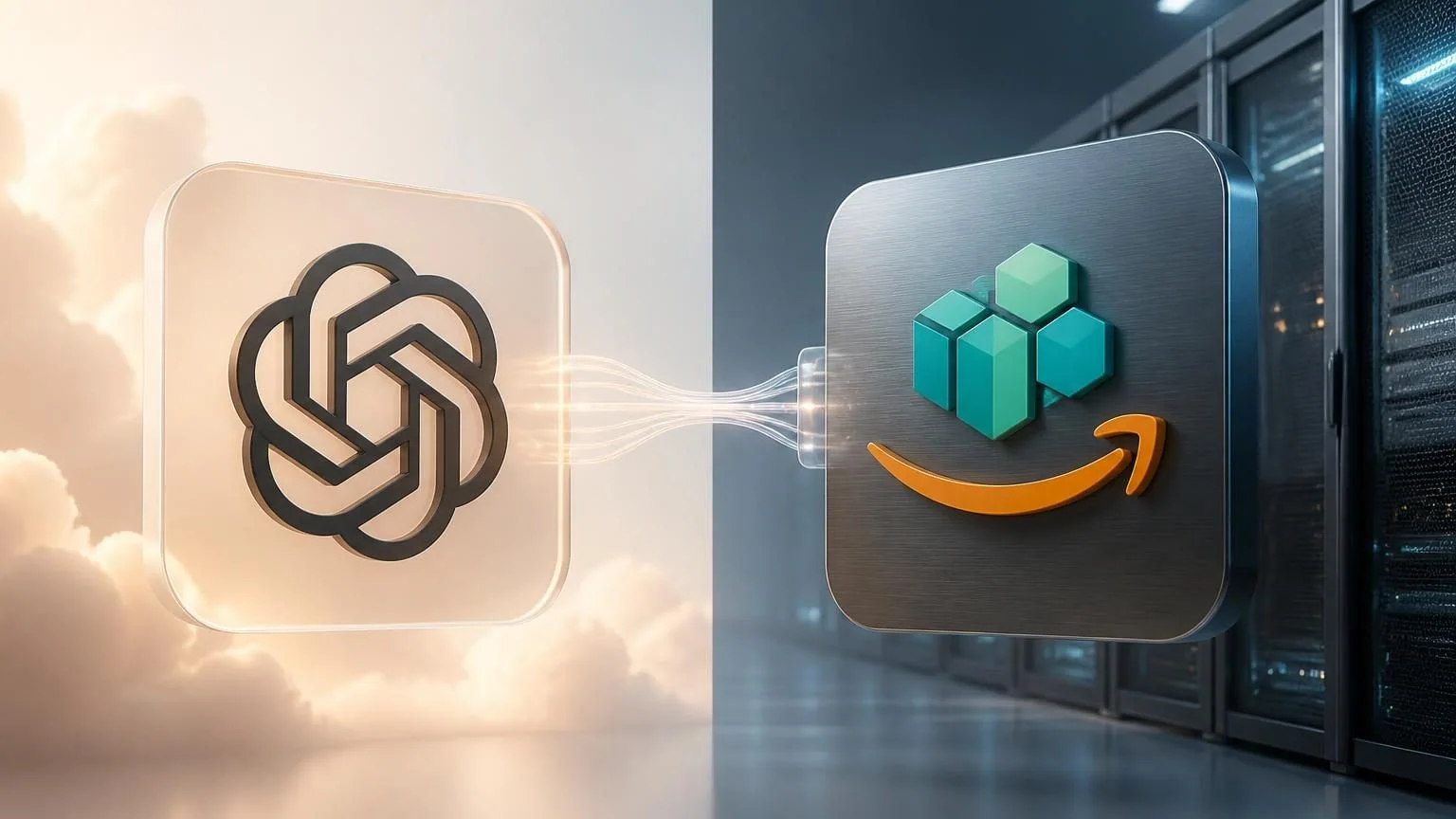
On April 28, 2026, AWS and OpenAI quietly announced a meaningful shift in enterprise AI distribution: OpenAI models, Codex, and Amazon Bedrock Managed Agents powered by OpenAI were coming to Amazon Bedrock in limited preview. That could have looked like one more cloud-partner headline at the time. On June 1, 2026, the story became harder to ignore when GPT-5.5, GPT-5.4, and Codex moved into general availability on Amazon Bedrock. Nerova did not cover the April 28 launch when it happened, but it is still worth covering now because it changes a central enterprise buying question: whether teams can put frontier OpenAI capabilities into production through the AWS controls, billing paths, and governance models they already use.
What AWS and OpenAI actually announced on April 28
The original April 28 announcement bundled three separate moves into one story.
- OpenAI models on Amazon Bedrock: AWS customers gained access to OpenAI frontier models through the same Bedrock service they already use for model access, fine-tuning, and orchestration.
- Codex on Amazon Bedrock: OpenAI’s coding agent became available through Bedrock for enterprise software development workflows, with access through the Codex CLI, desktop app, and Visual Studio Code extension.
- Amazon Bedrock Managed Agents, powered by OpenAI: AWS and OpenAI introduced a managed route for production-ready agents built on OpenAI’s agent harness inside AWS environments.
The bigger point was not just model choice. AWS was trying to turn Bedrock into a distribution and control layer for OpenAI capabilities, while OpenAI was trying to meet enterprises inside the infrastructure, security, procurement, and compliance systems they already trust.
Why June 1 changed the meaning of the missed story
General availability changed the April announcement from interesting preview news into a more practical deployment signal. On June 1, AWS said GPT-5.5, GPT-5.4, and Codex were generally available on Amazon Bedrock, and OpenAI framed the change as a faster path for enterprises to move from evaluation to real deployment.
That matters for a few reasons. First, it reduces the usual preview-stage hesitation around production use. Second, AWS said pricing for the OpenAI models matches OpenAI first-party rates, while Codex on Bedrock uses pay-per-token pricing with no seat licenses or per-developer commitments. Third, AWS said all Codex inference is routed through Amazon Bedrock, stays within the selected Region, and can fit existing AWS commitments, which makes the buying conversation less about a brand-new platform and more about extending an existing cloud operating model.
Just as important, the June 1 update did not put every part of the April launch into general availability. Models and Codex are live now, but Bedrock Managed Agents powered by OpenAI were described as coming soon. That leaves the most ambitious part of the original story still unresolved, which is exactly why the April announcement still has search value now.
Why this matters beyond another cloud-partner headline
For enterprise AI buyers, this is really a control-plane story. Many organizations want frontier OpenAI capability, but they do not want to rebuild procurement, identity, logging, network policy, or data-governance processes around a separate stack. The AWS route changes that calculation.
Software teams get a more realistic Codex path
Codex on Bedrock gives engineering teams a way to use OpenAI’s coding agent inside AWS-native governance, billing, and regional controls. That matters most for teams trying to modernize legacy applications, review and refactor code, generate tests, and push coding agents into real software delivery instead of isolated experiments.
Platform teams get a simpler model-procurement decision
Amazon is positioning Bedrock as a single service where teams can evaluate and deploy OpenAI alongside Anthropic, Meta, Mistral, Cohere, Amazon, and other providers. That is useful for organizations that want model choice without multiplying operational surfaces.
The agent story is moving from demos toward managed runtime expectations
The managed-agents piece is the part to watch most closely. AWS and OpenAI described a future setup where agents keep context, execute multi-step workflows, use tools, operate with their own identities, and log every action for auditability. If that matures as promised, the conversation shifts from “which model should we call?” to “which production workflows are safe enough and valuable enough to hand to managed agents inside our existing cloud controls?”
What changed for the business case, and what to watch next
The April 28 launch mattered because it gave OpenAI a serious AWS distribution route. The June 1 change matters because it validated that this was not just a preview experiment. Enterprises can now deploy GPT-5.5, GPT-5.4, and Codex through Amazon Bedrock in production settings, including GovCloud availability for the GA path that OpenAI highlighted.
The next checkpoint is whether Bedrock Managed Agents powered by OpenAI move from promise to broad availability and whether they deliver enough orchestration, identity, and auditability to justify using managed agents instead of stitching together the stack manually with Bedrock AgentCore and other services. Another important signal is future AWS availability for Daybreak and other specialized OpenAI capabilities, which would extend this partnership deeper into software security and governed enterprise workflows.
The practical takeaway is simple: the missed April 28 announcement is more important on June 1 than it was on launch day. What first looked like another partnership expansion now looks more like a real enterprise route for bringing OpenAI models and coding agents into production without forcing teams to abandon the AWS systems they already run.