
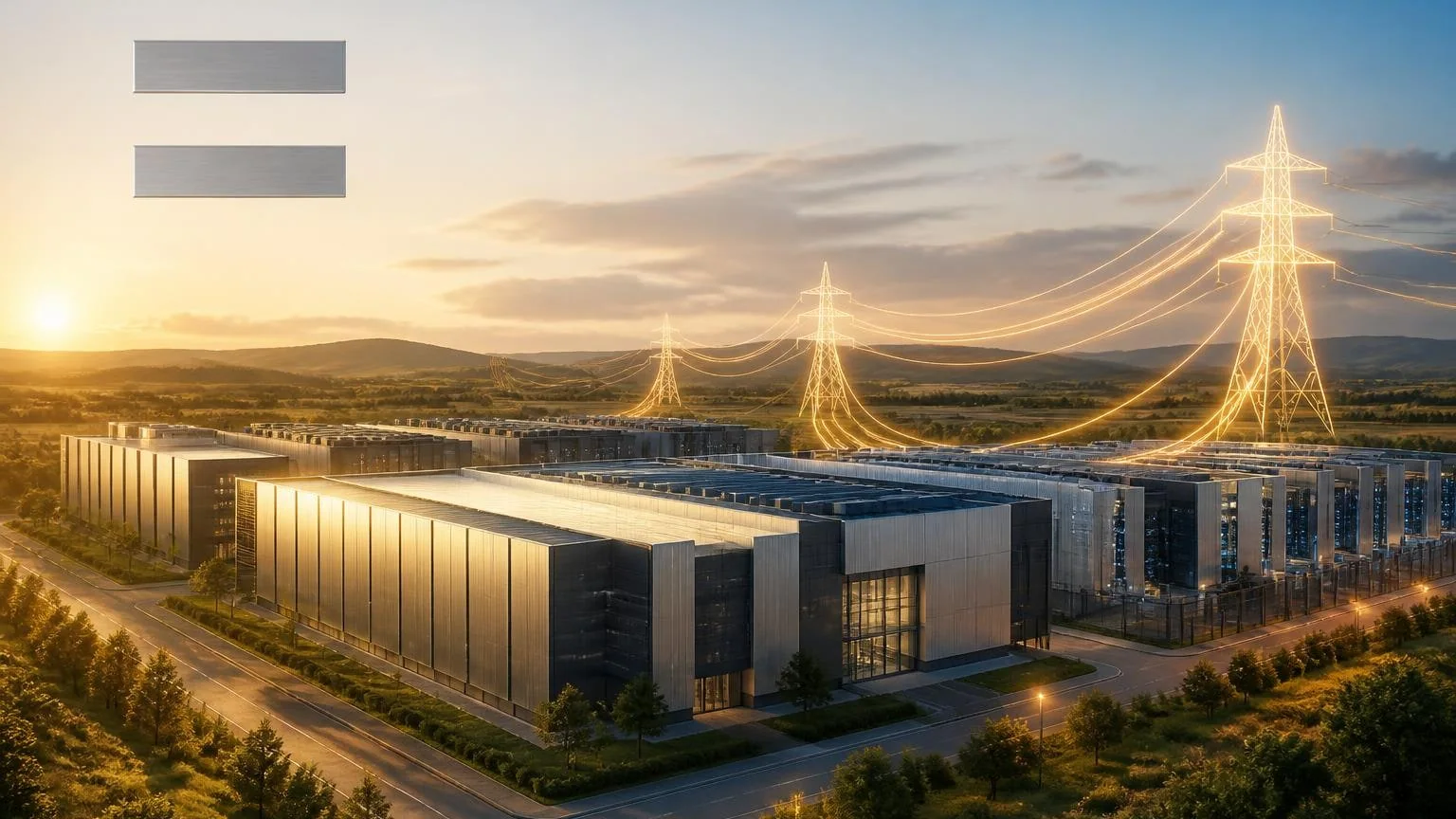
SoftBank Group said on May 31, 2026 that it will develop and operate 5 gigawatts of AI data center capacity in France, a commitment worth up to €75 billion. The company said the move reflects plans announced in Paris on May 30 as part of the 2026 Choose France summit, with a first €45 billion phase aimed at delivering 3.1 GW in the Hauts-de-France region by 2031.
That makes this more than another investment headline. SoftBank is trying to lock in the physical layer of the AI economy: power, land, prefabricated infrastructure, and long-horizon compute capacity. For Europe, the announcement is also a sovereignty play. For enterprises and AI platform builders, it is a reminder that the next bottleneck may be infrastructure deployment speed as much as model quality.
What SoftBank actually announced
The headline commitment is up to 5 GW of AI data center capacity across France. SoftBank said the first buildout phase will target 3.1 GW in Hauts-de-France, with named sites in Dunkirk, Bosquel, and Bouchain. The company described the project as its largest AI infrastructure investment in Europe.
- Up to €75 billion total planned investment
- €45 billion in the first phase
- 3.1 GW targeted in the initial buildout by 2031
- First named locations: Dunkirk, Bosquel, and Bouchain
- Additional sites planned later across France
SoftBank also tied the rollout to a manufacturing plan, not only a server-capacity target. In Dunkirk, it said it will work with Schneider Electric on an industrial production cluster that includes enclosure manufacturing and integration of data center power modules. That detail matters because AI infrastructure delays increasingly come from power equipment, deployment complexity, and supply-chain constraints rather than from chips alone.
A separate SoftBank announcement on the same day added that a joint venture with Sesterce has been selected to develop and operate a 1 GW AI data center campus in Bosquel. SoftBank said that campus is expected to create 400 long-term skilled roles once operational and will sit near several major European technology and economic centers.
Why France won this buildout
SoftBank’s announcement repeatedly framed France as an unusually strong host for large-scale AI infrastructure. The company pointed to grid capacity, industrial land, engineering talent, and national political support for AI. French officials also emphasized energy reliability and digital sovereignty as central advantages.
That combination helps explain why this announcement matters beyond France itself. AI data centers are no longer just real-estate projects. They are energy projects, industrial-policy projects, and eventually customer-acquisition projects for cloud, enterprise AI, and model companies that need guaranteed high-performance compute.
France has been trying to position itself as Europe’s most credible large-scale AI infrastructure base. SoftBank’s commitment gives that pitch more weight because it couples compute with manufacturing and regional buildout rather than promising only a future campus on paper.
Why this matters for the AI infrastructure race
The clearest signal here is that the AI race keeps moving down the stack. A year ago, many AI headlines were still dominated by models, benchmark claims, and assistant surfaces. This announcement is about land, substations, modular power systems, and multiyear capacity planning.
That shift matters for at least three reasons.
AI capacity is becoming a geopolitical asset
SoftBank explicitly linked the project to European technological sovereignty. That language is increasingly common because governments and enterprises do not want their next generation of AI workloads to depend entirely on foreign clouds or limited regional capacity.
Compute is becoming a long-cycle deployment issue
A 2031 first-phase horizon means this is not capacity that instantly appears for customers. It is a strategic buildout that will depend on permitting, power availability, equipment delivery, and sustained financing. Buyers should read this as a sign that future AI access will be shaped by who secures infrastructure early, not just by who releases the next model first.
Manufacturing is moving closer to the data center
The Schneider Electric partnership is one of the most important parts of the announcement. SoftBank is not only reserving places to put servers; it is trying to localize more of the deployment chain around those sites. That can matter for construction speed, energy efficiency, and resilience when supply chains tighten.
For AI agents and automation systems, this is especially relevant. Long-running agent workloads, enterprise orchestration, multimodal processing, and inference-heavy internal systems all depend on stable, economical compute. The companies that win those markets may be the ones with the best infrastructure access and rollout discipline, not only the best demo.
What to watch next
The headline numbers are huge, but the next questions are operational.
- How quickly the first Hauts-de-France sites move from announcement to construction milestones
- Whether SoftBank secures anchor customers for the earliest capacity
- How much the Schneider Electric manufacturing cluster actually accelerates deployment
- Whether France can turn one marquee commitment into a broader regional AI supply chain
- How European enterprises and model builders use the sovereignty argument in procurement
The Bosquel project is one early test. If the 1 GW campus advances on schedule and the local economic promises hold, it will give SoftBank’s broader 5 GW plan more credibility. If timelines slip, the announcement may still matter strategically, but more as a signal of intent than a near-term shift in usable compute supply.
The practical takeaway for businesses is straightforward: AI infrastructure is becoming a board-level operating question. As more agent systems move from pilots into production, the decision set expands beyond models and tooling into capacity, geography, energy, governance, and execution risk. SoftBank’s France move is one more sign that the next AI leaders want to own that entire stack.