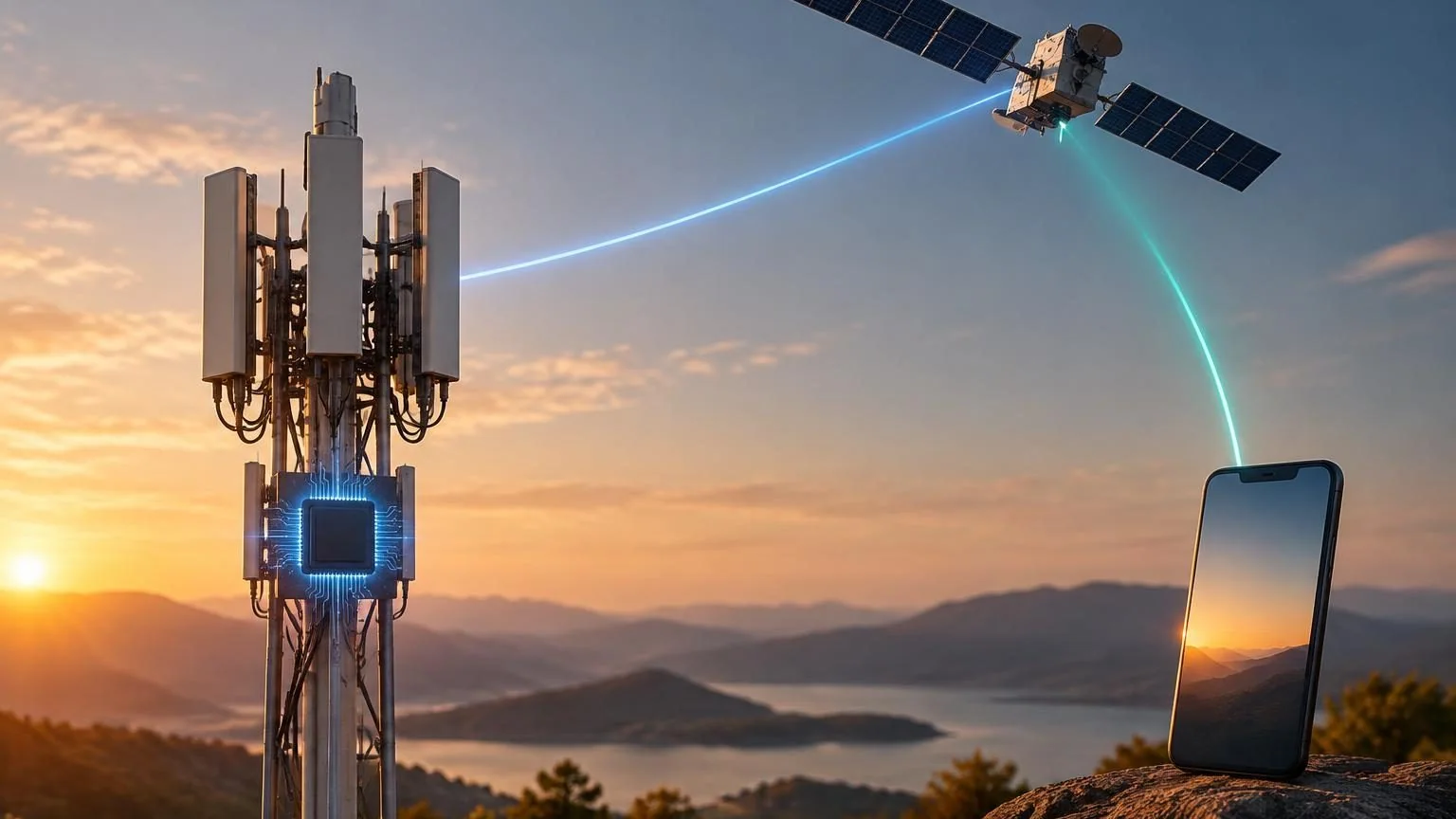
SpaceX has selected Qualcomm’s Dragonwing cellular infrastructure platforms for Starlink Mobile’s planned nationwide US terrestrial 5G network. The November 4, 2026 announcement describes a multi-year equipment collaboration, with rollout expected to start in 2027 and tens of thousands of sites planned.
What the agreement covers
Qualcomm identifies QRU100 radio-unit and QDU100 distributed-unit technology, commercial-grade Layer 1 software, and a Massive MIMO architecture with 64 transmit and 64 receive paths. The deployment described in this announcement concerns ground-based mobile infrastructure. Readers should keep it distinct from existing satellite connectivity services and their device-specific capabilities.
The QRU100 product documentation provides supporting context. It describes an O-RAN-compliant platform for Massive MIMO radio units, including scalable antenna configurations, digital beamforming, and spectrum-sharing features. These component capabilities help explain Qualcomm’s role without promising a particular coverage experience for an eventual subscriber.
A network plan is one part of service readiness
Our reading is that the commercially important step is selection of the radio and processing foundation for a large rollout. The user experience will depend on the complete service. Coverage in a particular building, device compatibility, plan terms, roaming, and operational support all need their own evidence as deployment progresses.
For a business considering connected equipment, the sensible comparison is therefore local and task-specific. A delivery fleet needs to know whether its routes remain connected. A remote sensor deployment needs to know how devices recover after a gap. A field-service team may care most about indoor calling and data reliability at customer sites.
What businesses can prepare now
Create a short list of places where current connectivity causes measurable work interruptions. Record which application failed, how long work stopped, and whether a human workaround was available. That gives a future network trial a useful baseline and prevents a broad nationwide claim from replacing a local test.
Procurement should also keep device and subscription decisions separate from an equipment announcement. Existing contracts can include coverage commitments, service credits, and support obligations that are valuable even when a competing network’s hardware looks promising. An evaluation should compare those operating details alongside signal and throughput measurements.
Watch deployment evidence
Qualcomm and SpaceX describe the agreement as a foundation for network evolution, with longer-term interest in AI-native infrastructure. The immediate dated milestone is the terrestrial 5G partnership and its planned 2027 start. The next meaningful updates will be actual deployment markets, customer availability, supported devices, and results from representative usage. Those details will determine how this infrastructure investment translates into a practical option for households and businesses.