
AI Agent Benchmarks Speed, Accuracy and Reliability
Compare AI systems by speed, accuracy, reliability, latency, and production readiness. Use measurable benchmarks to choose your production stack.
Benchmarks & Performance Articles
Benchmark, performance, latency, reliability, accuracy, and production-readiness pages for teams comparing AI systems by measurable operating criteria.
Browse practical analysis selected to help operators and technical teams understand the options, tradeoffs, and next steps.
Featured AI Agent & Enterprise AI Articles
AMD and Cerebras Make Split Inference a Real Agent Strategy
AMD and Cerebras are pairing Helios with wafer-scale compute, signaling that real-time AI agents may need split inference stacks.
Microsoft’s Azure Helios plan makes AMD a real inference option
Microsoft will deploy AMD Helios on Azure for frontier-model inference and AI services. Here is why the move matters for enterprise AI capacity.
Why Microsoft’s new AMD push on Azure matters for agentic AI
Microsoft and AMD are expanding Azure with Helios, HDv2, and HXv2. Here’s why that matters for enterprise, inference-heavy agentic AI workloads.
DeepSeek’s AI chip push is the clearest sign yet that inference is the real battleground
Reuters says DeepSeek is developing its own AI chip for inference, signaling that the next AI battle is about hardware control, cost, and supply.
OpenAI and Broadcom’s Jalapeño Chip Makes Inference Economics the Main Event
OpenAI and Broadcom's Jalapeno chip shifts attention from training to inference economics. See why cost, latency, and control now shape AI strategy.

DeepSeek DSpark Makes AI Inference Up to 85% Faster
DeepSeek’s new DSpark release claims up to 85% faster V4 inference. Here’s what the DeepSpec codebase means for AI agents, latency, and GPU costs.
SOB vs JSONSchemaBench vs StructEval: Which Predicts Reliability?
SOB vs JSONSchemaBench vs StructEval maps each benchmark to extraction accuracy, schema compliance, or multi-format output reliability in production.
TTFT, TPOT, or Goodput? The Metric That Matters
TTFT vs TPOT vs end-to-end latency explains which AI benchmark matters for chat, streaming copilots, research agents, and production goodput targets.
Local AI Hardware, Ranked: Buy VRAM First for a Better Home Lab
Local AI hardware should start with VRAM and bandwidth. Use this ranked guide to plan a home lab that fits, runs, and supports your target models reliably.

MTEB, BEIR, or BRIGHT? Choosing the Right RAG Benchmark
MTEB vs BEIR vs BRIGHT maps embedding screening, production retrieval, and reasoning-heavy search to the RAG failure each benchmark best reveals.
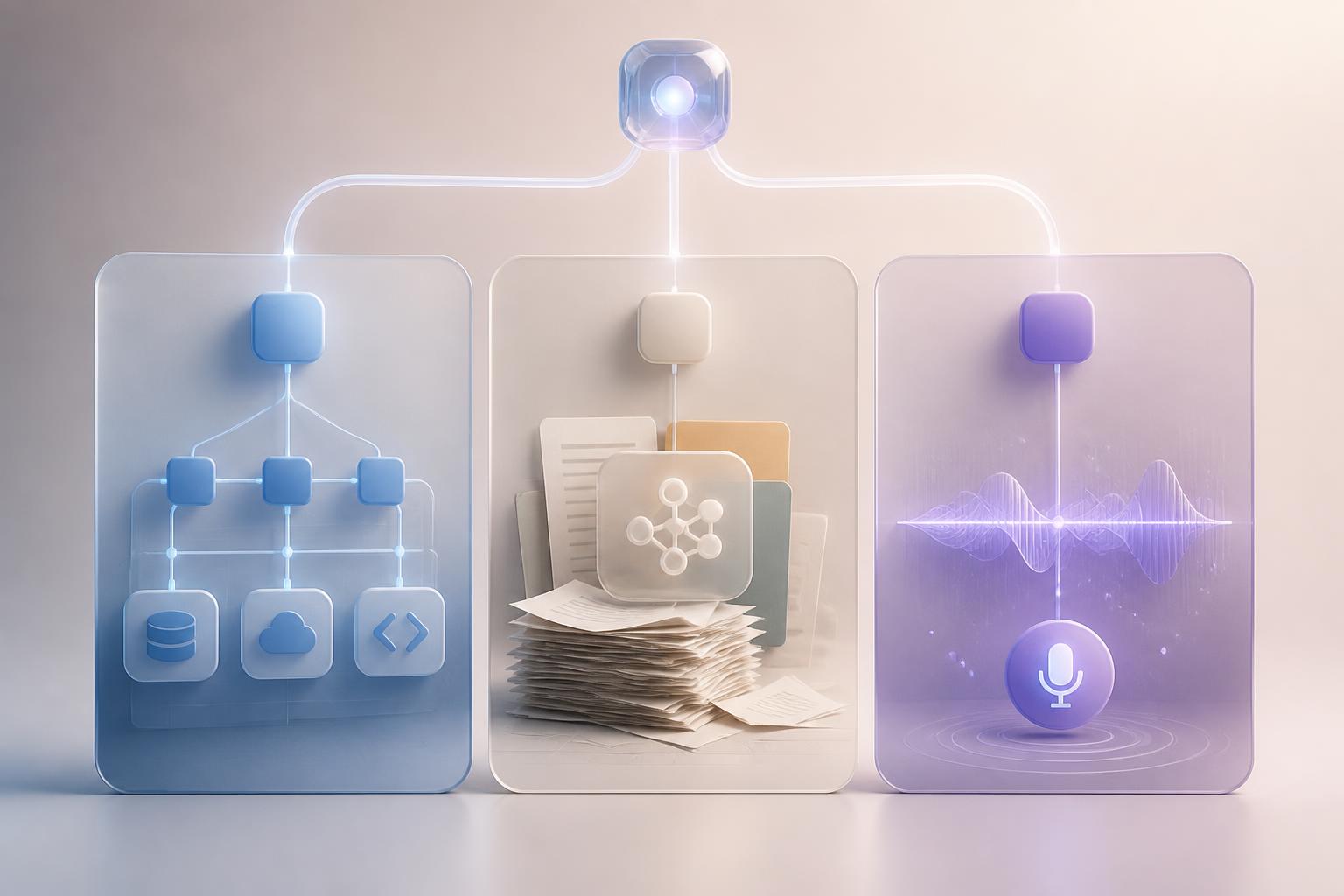
BFCL V4 vs τ-bench vs τ³-Bench for Agent Reliability
BFCL V4 vs tau-bench vs tau3-bench maps tool-call accuracy, policy-following conversations, messy knowledge, and live voice to agent reliability risks.

MRCR, RULER, or LongBench v2 for Enterprise RAG
MRCR vs RULER vs LongBench v2 reveals different long-context failures. Match retrieval, context degradation, or document reasoning to your RAG workflow.