
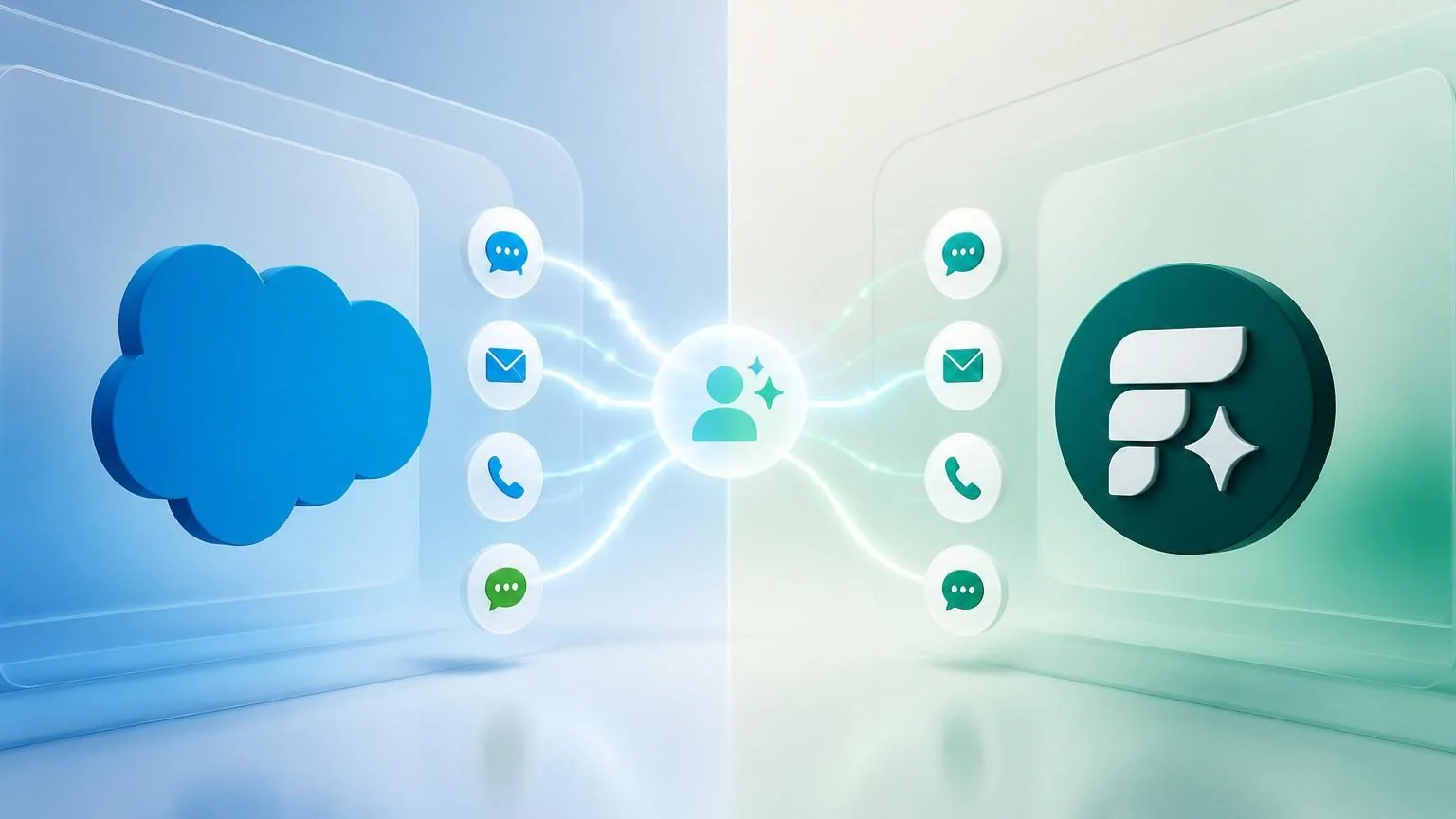
Salesforce made one of the clearest customer-agent bets of 2026 on June 15, signing a definitive agreement to acquire Fin for about $3.6 billion. On the surface, this is a software acquisition. Underneath, it is a signal that one of the most commercially real AI categories right now is not general-purpose copilots, but customer agents that can take over high-volume support work with faster deployment and clearer return on investment.
That is why this story matters beyond Salesforce itself. Businesses have spent the last two years hearing that AI agents will transform work. Customer support is one of the places where that claim can actually be measured quickly. Resolution rates, channel coverage, escalation behavior, response time, deflection, and cost per case all give operators a much cleaner scorecard than most broader AI initiatives. Salesforce is effectively betting that this category is mature enough to justify a major platform move now.
What Salesforce actually agreed to buy on June 15
Salesforce said it signed a definitive agreement on June 15, 2026 to acquire Fin, formerly Intercom, for approximately $3.6 billion. Fin’s core product is an AI customer agent built to resolve support questions across live chat, email, WhatsApp, SMS, phone, and Slack. Salesforce also highlighted Fin’s proprietary Apex model and positioned the deal as a way to expand Agentforce with stronger service-agent capabilities.
The timing matters too. Intercom only changed its company name to Fin in May 2026, making the brand shift itself part of a bigger category claim: that the future of the business is the customer agent, not only the legacy helpdesk. In other words, Salesforce is not just buying a support tool. It is buying a company that had already reorganized itself around the idea that AI agents would become the center of modern customer operations.
Salesforce also framed the acquisition as a speed-to-value move. In its announcement, the company said Fin’s packaged offerings would complement Agentforce’s more customizable platform and give customers more ways to deploy AI agents across service operations, especially for small and midsize businesses and commercial teams that need faster rollout.
Fin was already in Salesforce’s orbit before the deal. Fin already worked with Salesforce Service Cloud, letting teams keep Service Cloud as the system of record while Fin handles cases, live chat, and handoffs. Salesforce is therefore not only buying AI talent. It is buying a working service deployment motion.
Why this matters more than another SaaS acquisition
Most enterprise AI coverage still treats agents as a broad future category. This deal is more specific, and that specificity is what makes it important. Customer support is one of the few agent markets where the workflow is already continuous, high-volume, cross-channel, and tightly connected to business outcomes. That makes it a natural proving ground for whether agent software can move from impressive demos into repeatable operating results.
Salesforce already had Agentforce and a large installed base. What it did not have as clearly was Fin’s sharper identity around fast-to-deploy customer-agent execution. Fin comes with a product story built around measurable service automation, not just a generic enterprise AI platform pitch. That matters because many buyers are no longer asking whether they want AI in theory. They are asking which workflows can go live quickly, where the governance sits, and how soon they can see operational impact.
The acquisition also suggests that packaged agent products are gaining strategic value relative to purely build-it-yourself frameworks. Enterprises still care about customization, but they increasingly want an opinionated product that can start producing outcomes before a long integration program is complete. That is especially true in support, where buyers often want a fast win before expanding AI deeper into sales, success, or back-office workflows.
The real signal is speed to value, not just model quality
One reason Fin matters is that it had already been pushing a more open and easier-to-deploy posture before the acquisition. On June 9, Fin said its service agent could run on top of HubSpot and Freshworks without forcing customers to migrate off their helpdesk first. It also emphasized self-serve setup, broad channel coverage, and policy configurability. That is a strong clue about what Salesforce is really buying: not just model performance, but a deployment wedge.
Fin says its Salesforce deployment can be set up in under an hour, and Salesforce highlighted examples where Fin agents resolved an average of 76% of support volume end-to-end. Whether every buyer matches that number is less important than what the metric represents: service AI is being sold on operational outcomes, not only model quality.
This is the practical lesson many businesses have learned the hard way with AI. The hardest part is often not generating a good answer in a demo. It is fitting the system into the channels, tools, approvals, and edge cases that define real operations. A vendor that can lower migration friction and still deliver useful automation becomes much more attractive than a vendor that simply promises a more general agent future.
That is also why this deal matters for the wider agent market. The next winners may not be the companies with the broadest AI vision statements. They may be the ones that own one workflow deeply enough to prove speed, control, and measurable ROI first. Support is one of the clearest places where that pattern can play out.
What businesses evaluating support AI should do now
Separate demo quality from deployment friction
A polished demo is no longer enough. The more useful question is how much work it takes to connect the agent to your helpdesk, knowledge base, business rules, escalation logic, and customer channels.
Check whether the agent can actually act across channels
Support automation gets more valuable when one system can work across chat, email, phone, and messaging instead of creating a separate AI experience for each surface. That is part of why Fin’s channel coverage matters in this deal.
Look for openness and exit flexibility
Fin’s recent push to work on top of other helpdesks is a reminder that buyers care about avoiding forced migration. Even when one vendor looks strong, preserving flexibility can reduce long-term platform risk.
Treat support as a gateway workflow
For many companies, support is the cleanest place to test whether AI agents deserve a bigger role. If the system can handle repetitive questions, respect policy, escalate well, and improve service economics, that creates a stronger case for expanding AI into adjacent customer operations.
What support leaders and Agentforce buyers should watch
The deal is not expected to close until the fourth quarter of Salesforce’s fiscal year 2027, subject to customary conditions and regulatory clearances. Until then, there are still open questions about how Salesforce will package and position Fin inside its broader stack.
Service leaders and buyers should watch four things over the next two quarters:
- Packaging: whether Salesforce keeps a fast-deployment Fin-style motion instead of forcing every customer into a heavier platform project.
- Metrics: whether Salesforce starts reporting more concrete service-agent outcomes, such as resolution rates, time-to-value, or cost-to-serve improvements.
- Workflow depth: how far the combined product moves beyond answer generation into real case handling and system actions.
- Go-to-market: whether this becomes Salesforce’s main wedge for AI adoption among service teams.
It is also worth watching how competitors respond. If customer-agent products keep proving faster time to value than broader enterprise agent platforms, more acquisitions and packaging moves are likely. That would make support automation one of the most important near-term battlegrounds in business AI.
The practical takeaway is simple: this deal is a sign that customer service AI has moved beyond experimental branding. It is becoming a serious platform category, with real product differentiation around deployment speed, channel depth, operational outcomes, and the ability to work within the systems companies already run.