
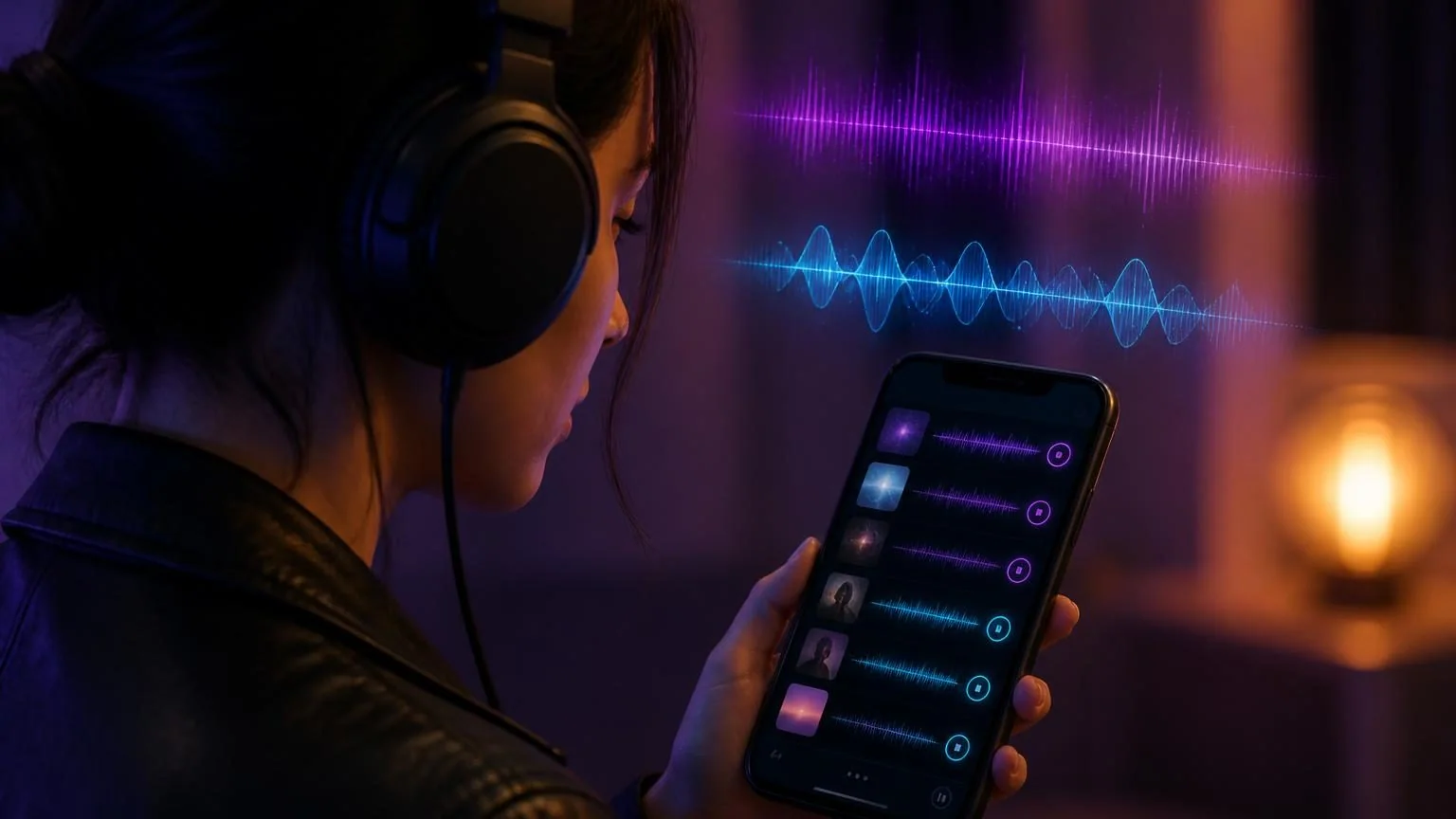
On June 11, 2026, Deezer launched a free AI music detector that lets people scan playlists from 20 major streaming platforms for fully AI-generated tracks. On the surface, that sounds like a clever utility. In practice, it is a much bigger signal about where streaming is headed next.
For years, music platforms have used automation mainly to improve discovery: better playlists, faster recommendations, smarter personalization, more context. Now they have a second automation problem to solve: trust. If synthetic tracks are getting mixed into listener libraries at scale, fans do not just want better recommendations. They want clearer provenance.
That is why Deezer’s move matters. It takes AI detection out of the policy layer and puts it directly in front of listeners. Instead of quietly filtering content behind the scenes, Deezer is making authenticity a visible part of the product experience.
What Deezer actually launched
Deezer’s new detector is available in 27 languages and works across 20 common streaming platforms. Users connect a supported account, let Deezer scan their playlists, and then see how many tracks were flagged as fully AI-generated.
The cross-platform part is the real story. This is not just Deezer cleaning up its own catalog. It is Deezer positioning itself as the company willing to tell listeners what may already be sitting inside playlists built elsewhere.
Deezer says 43% of users switching in from other platforms already have AI tracks in their playlists. It also says 80% of people want AI-generated music to be clearly labeled on streaming services. That combination makes the launch feel less like a niche experiment and more like an early answer to an obvious consumer demand.
Why music fans should pay attention
If you are a listener, the value here is not only about catching novelty tracks made with Suno or Udio. It is about getting more control over what your playlists actually contain.
- It adds context to discovery. If a playlist feels strangely generic, hyper-optimized, or emotionally flat, listeners can now test whether synthetic tracks are part of the reason.
- It makes recommendation quality more legible. A service can no longer hide behind the black box of its algorithm if fans start expecting transparency around what is human-made and what is machine-generated.
- It gives listeners a practical filter. Some fans are curious about AI music. Others want to avoid it. Both groups benefit from labeling.
That matters because music listening is not just about access. It is about taste, discovery, identity, and trust. Once AI-generated tracks become difficult to distinguish by ear alone, metadata and detection start to matter a lot more.
The bigger industry signal: streaming needs a trust layer
Deezer has been building toward this moment for months. In January 2026, the company said it had already tagged more than 13.4 million AI tracks in 2025 and was receiving more than 60,000 fully AI-generated uploads per day. By April 2026, Deezer said that figure had climbed to roughly 75,000 tracks per day, or about 44% of daily uploads to the platform.
Those numbers sound alarming, but the more important detail is what happens after upload. Deezer says fully AI-generated music still accounts for only 1% to 3% of total streams on its service, and that up to 85% of AI-track streams are detected as fraudulent and demonetized. In other words, the main risk is not that fans are suddenly replacing their favorite artists with synthetic music. The risk is that cheap mass-produced uploads can still clog recommendation systems, pollute playlists, distort search moments, and siphon attention.
A June 16, 2026 research paper on AI slop in music streaming reinforces that picture. The authors found that most AI music on Spotify gets little or no listener engagement, but that distributors still make it surprisingly easy to publish at scale. That is exactly the kind of market where detection, labeling, and recommendation guardrails become product necessities instead of optional moderation features.
This is already showing up in fan-facing music moments
The problem is not theoretical. Deezer said last week that unofficial 2026 World Cup anthem uploads were already being flooded by synthetic music, with 70% of those tracks tagged as AI on its service. That is a useful preview of how fast event-based listening moments can be overwhelmed when generative tools make it cheap to manufacture topical music in bulk.
For fans, that means the next battle in streaming is not just over who recommends the right song. It is over who preserves a sense of authenticity when a surge moment hits: a tournament, a festival, a viral trend, an awards show, or a new release Friday.
Why this matters beyond the streaming apps
Music discovery no longer lives only inside Spotify, Apple Music, or Deezer. It flows through fan communities, short-form video, creator tools, radio programming, ticketing ecosystems, and music-adjacent apps. Once synthetic tracks can be mass-produced, every business that helps people discover, organize, or promote music inherits a filtering problem.
That is the more important business-automation lesson in this news cycle. The winners will not just automate recommendation. They will automate credibility: labeling, provenance checks, fraud detection, rights-aware workflows, and clearer user controls.
For builders in music and media, that means three things are worth watching next:
- Visible AI labels at the playlist and playback level.
- Stronger upload and distributor rules before event-driven spam gets worse.
- More consumer controls that let fans choose how much synthetic content they want in discovery flows.
The practical takeaway for CTN readers
Deezer’s scanner is not important because it proves AI music is winning. It is important because it shows the market now has to manage abundance, ambiguity, and authenticity at the same time.
That is a familiar pattern across AI products. First the automation is sold as convenience. Then the scale gets messy. Then trust becomes the feature that actually matters.
Music streaming has reached that third phase. Fans should expect more AI disclosure, more provenance tools, and more fights over what recommendation systems ought to surface by default. The platforms that handle that shift best will not just look smarter. They will feel more trustworthy.