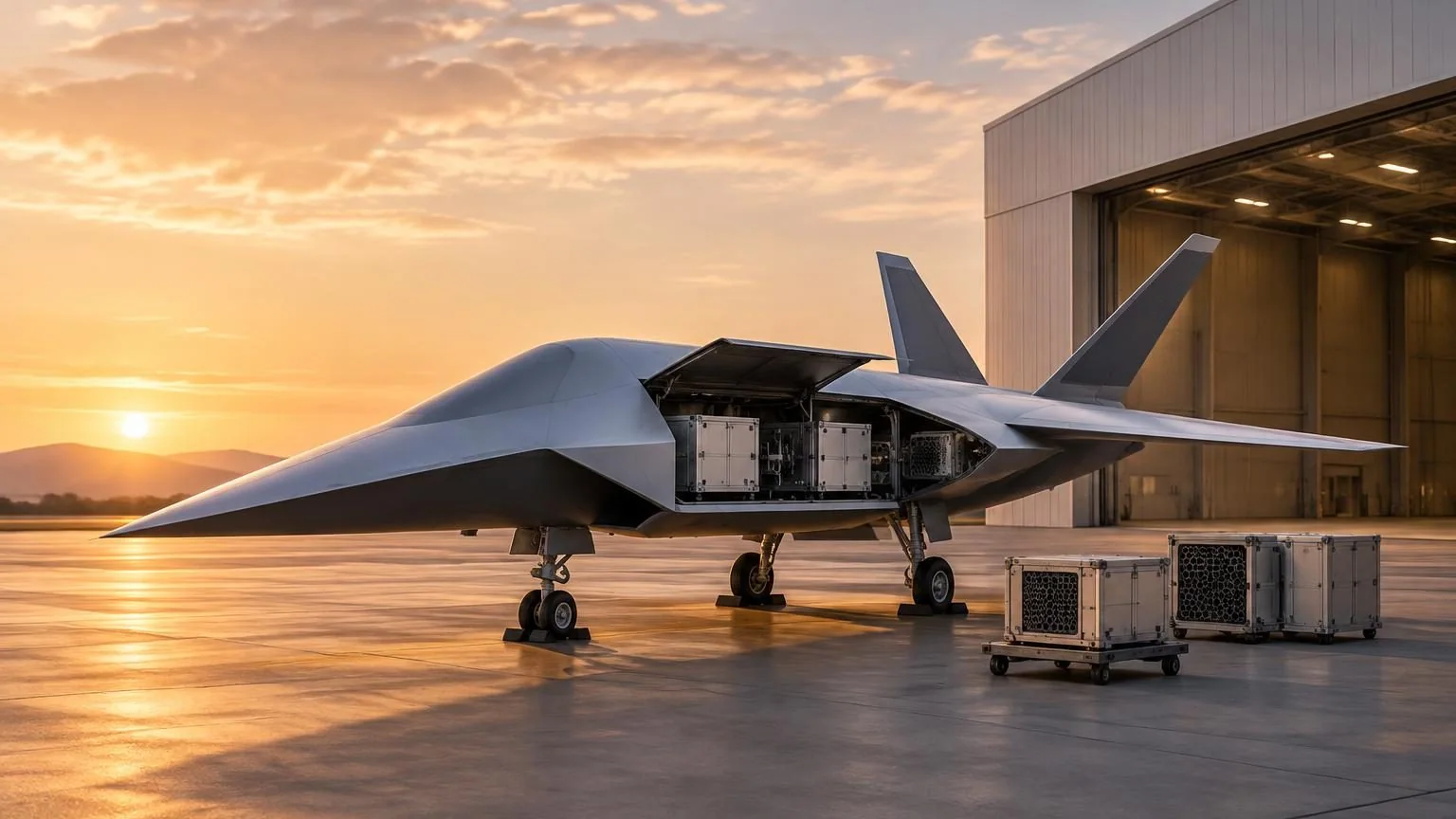
NASA unveiled the X-70 Fractal on November 4, 2026, describing a crewed experimental aircraft with rapidly reconfigurable flight controls and room for interchangeable research payloads. The announcement took place at the UP.Summit at Kennedy Space Center. It adds a planned research platform to the agency’s aeronautics program.
What NASA has announced
The aircraft is intended to carry up to 2,000 pounds of experimental equipment in internal and external locations. NASA gives design figures of Mach 0.75 cruise speed, altitude up to 45,000 feet, and range of roughly 1,500 nautical miles. The agency expects a first flight under its banner within the next two years.
These are announced capabilities and a schedule expectation. The release includes a generated concept image. It does not report a completed NASA flight campaign or publish results from experiments already performed on the aircraft. NASA’s wider aeronautics program provides the research context for this planned addition.
Why reconfiguration matters
Our interpretation is that the most interesting feature is the opportunity to change the experiment between flights. Research aircraft can be useful because they bring an instrument, a control system, and a real operating environment together. A flexible platform could let investigators ask several different questions without starting with a completely new vehicle each time.
That flexibility also creates engineering responsibilities. An experiment needs a well-defined connection to power, data collection, physical mounting, and the aircraft’s operating limits. Changing a payload should come with a clear record of what changed and which earlier measurements remain comparable.
How to assess the next milestones
A useful follow-up report would identify the configuration tested, the conditions encountered, and how the measurements were checked. For a flight-control experiment, readers should be able to separate a controller’s intended behavior from what a completed flight actually demonstrated.
The same discipline applies to schedule reporting. A first flight, a cleared research envelope, and a finished experiment answer different questions. Tracking them separately helps readers understand progress without treating a design target as an accomplished result.
The broader technology significance
The X-70 announcement is a reminder that advanced aviation depends on ways to test ideas as well as on the ideas themselves. A repeatable experimental platform can make a research program easier to compare and extend. Its eventual value will be established through flight evidence, documented experiments, and lessons other engineering teams can use. For now, NASA has set out the platform’s intended role and the next visible milestone.