
OpenAI has published an update on AI-assisted engineering for physical products, including a new research collaboration with Mazda and expanded work with Chip Ganassi Racing. The November 3 announcement focuses on design, simulation and prototyping across mechanical and electrical engineering.
The research account describes Mazda work on vehicle aerodynamics and crash safety, and CGR workflows that convert scans into editable CAD models and manufacturing drawings. Engineers review the outputs for accuracy and practical use. The update is an account of research and industry trials, rather than a launch of a fully autonomous manufacturing service.
A prototype that crossed disciplines
OpenAI also describes a small device project combining an enclosure, printed circuit board, firmware and software. Two team members worked with Astra on the design, and a contract manufacturer produced prototypes. The published material includes an enclosure illustration.
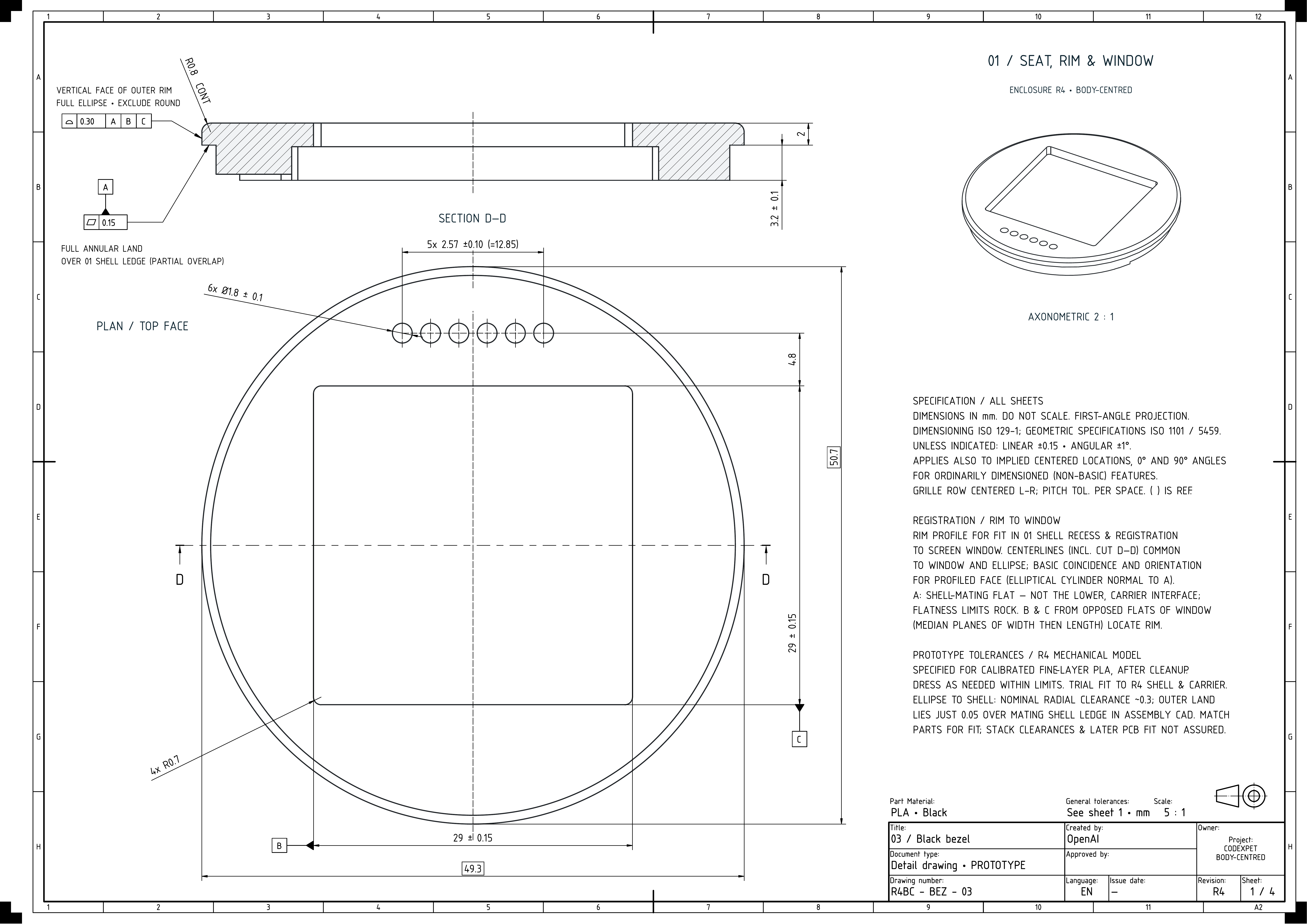
The company says manufacturing preparation required repeated review because the model did not consistently account for production limits, tolerances and assembly details. That qualification is important: producing a design artifact and making a manufacturable product are different milestones.
Where engineering assistance needs verification
Our analysis is that physical-product work makes the relationship between disciplines especially visible. A board can satisfy an electrical requirement while conflicting with an enclosure. A shape can improve a simulation result while becoming expensive or impractical to manufacture. A useful assistant needs access to the relevant constraints and a way to verify changes across them.
Teams testing these workflows should begin with a bounded part or subsystem and preserve the current design requirements. Record the generated geometry, simulation settings and review decisions. A faster iteration is valuable only when the resulting artifact remains connected to those requirements.
Simulation also has limits. A result depends on assumptions, boundary conditions and the quality of the underlying model. Comparing alternatives under the same setup can be informative without establishing how a physical prototype will behave.
For reverse engineering, the acceptance test should include more than visual resemblance. Dimensions, interfaces and downstream manufacturing information determine whether a reconstructed part is useful. Expert review remains part of the workflow described in the announcement.
OpenAI’s update shows a practical direction for general AI systems: coordinating work across CAD, electronics and software tools. The strongest evidence will come from repeatable engineering outcomes and clear accounting of the human review needed to reach them.