
AI Agent Insights News, Guides and Comparisons
Explore AI agent news, comparisons, guides, benchmarks, integrations, and practical automation advice for business operators and technical teams.
AI Agents, Enterprise AI, and Automation Insights
Nerova Blog covers AI agents, enterprise AI, automation, and developer tools with practical analysis of major launches, model updates, and infrastructure changes shaping modern business workflows.
This archive is built to help operators, founders, and technical teams quickly understand which developments matter, what they mean for deployment, and where new AI capabilities create real operational leverage.
Featured AI Agent & Enterprise AI Articles

Why 2026 Feels Different for AI Interpretability
Interpretability in 2026 links emotion vectors, hallucination neurons, and circuits to behavior, improving debugging without providing full transparency.

Mechanistic Interpretability: From Neurons to Model Circuits
Mechanistic interpretability studies how neurons, features, heads, and circuits produce model behavior. Learn the concepts, methods, and current limits.

The Biggest AI Breakthroughs Through History, and Why Each One Mattered
The biggest AI breakthroughs removed limits in learning, scale, generation, alignment, modalities, tools, and interpretability. Follow the timeline.

AI vs. Machine Learning vs. Deep Learning: What Belongs Where
AI, machine learning, deep learning, neural networks, and transformers are distinct. See how the stack fits together and choose the right approach.

How ChatGPT-Like Models Actually Work: A Practical Guide From Tokens to Tool Use
How ChatGPT works goes beyond next-token prediction. Trace tokens, embeddings, attention, post-training, hallucinations, memory limits, and tool use.
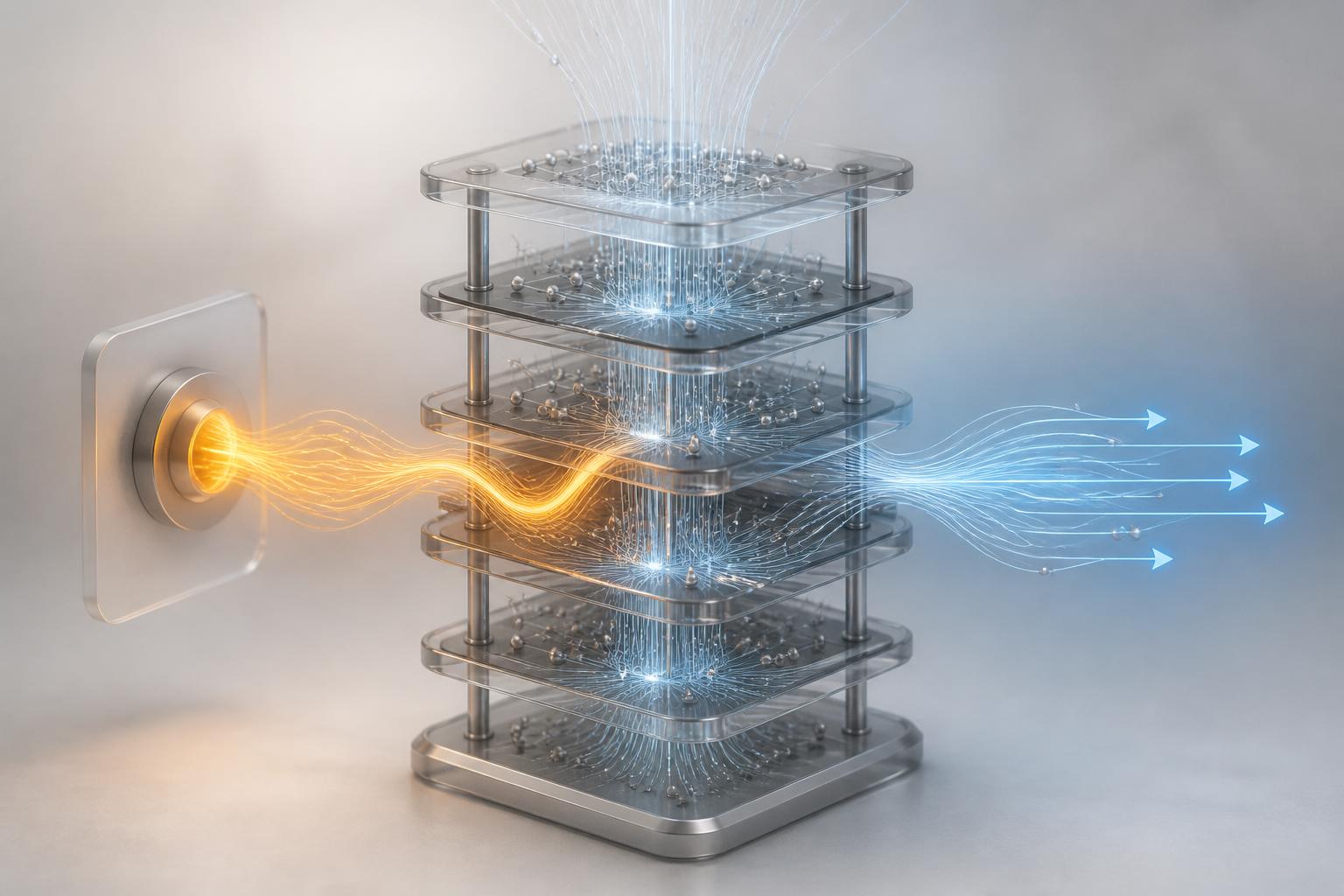
How Activation Steering Changes LLM Behavior
Activation steering changes LLM behavior at inference by editing representations. Learn how steering vectors work, where they help, and their limits.

What Are Hallucination Neurons in LLMs? A Practical Guide to H-Neurons and Their Limits
Hallucination neurons are LLM units whose activity can signal confident false answers. Explore H-Neurons research, cross-domain results, and its limits.

Anthropic Emotion Vectors: What They Mean for AI Safety
Anthropic emotion vectors show internal states can causally influence model behavior without proving consciousness. Learn the safety and monitoring impact.

What Feed-Forward Neural Network Layers and MLPs Actually Do
Feed-forward neural network layers and MLPs transform token features through learned weights, activations, hidden dimensions, residuals, and normalization.

Transformer Architecture: Tokenization, Attention, and Decoding
Transformer architecture explained from tokenization and embeddings through attention, MLPs, logits, and decoding, with practical system implications.

How to Train Local AI Models: A Practical Guide for Business Teams
Train a local AI model by choosing a base, testing if fine-tuning is needed, preparing data, using LoRA or QLoRA, evaluating, and deploying carefully.

What Is a Neural Network? A Practical Guide to How It Learns
Learn what neural networks are and how they learn through neurons, weights, activations, layers, loss functions, gradient descent, validation, and overfitting.