
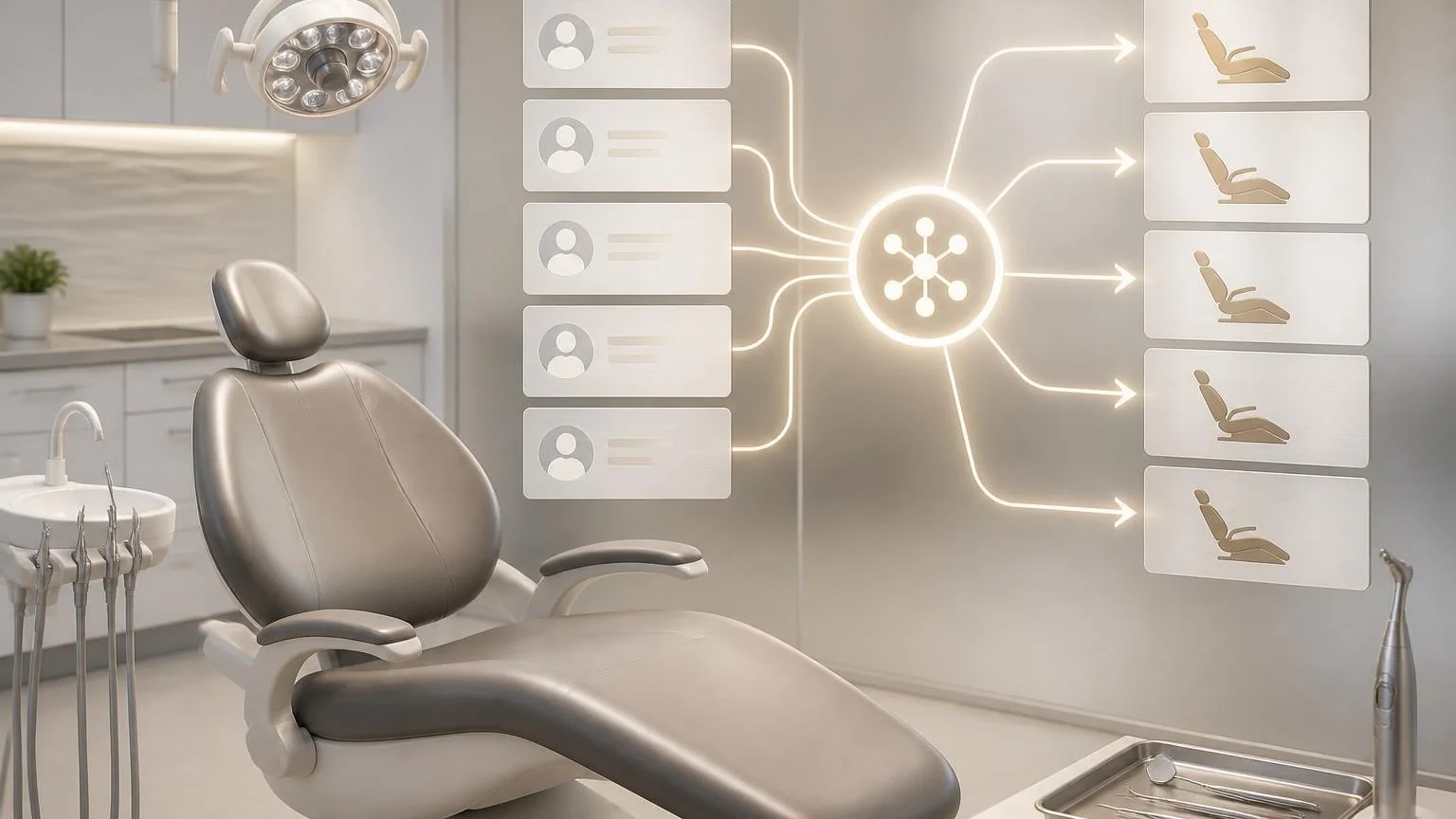
Dental offices rarely lose hygiene production because nobody wants appointments. They lose it because overdue recare patients pile up inside the practice management system while the front desk is busy with today’s confirmations, insurance questions, inbound calls, and same-day schedule changes. A focused AI recall assistant can work that backlog, bring the right patients back into the schedule, and give staff cleaner handoffs instead of another endless phone list.
This is a better first automation than a broad “AI for the whole practice” project. Recall is repetitive, rules-based, and measurable. The office already knows who is due, who is overdue, which provider or operatory constraints matter, and what kinds of questions must go back to a human. That makes it a narrow workflow where AI can create operational lift without pretending to practice dentistry.
Why overdue hygiene reactivation keeps slipping in busy dental offices
Most practices already have some version of a continuing-care or recare list. The issue is not whether the list exists. The issue is that nobody owns it consistently enough when the day gets busy.
- The front desk prioritizes today’s schedule over patients who are six, nine, or fourteen months overdue.
- Manual recall calls happen in bursts, then stop when insurance verification, check-ins, or broken appointments take over.
- Patients who do respond often ask questions that create another task instead of a booked visit.
- Overdue lists mix together easy reactivations, patients who need a different visit type, and patients who should not be pushed straight into a standard hygiene slot.
That is why recall work feels simple on paper but expensive in practice. The labor is fragmented. The follow-up is inconsistent. And the office usually cannot tell which overdue patients are ready to schedule now versus which ones need clinical review first.
Why recall is often the best first dental AI workflow
A recall assistant is useful when it is tightly scoped. Its job is not to answer every patient question or replace the front desk. Its job is to help the practice reactivate overdue patients using approved outreach, basic scheduling logic, and clean escalation rules.
The best first version usually handles one segment, such as overdue adult prophy patients who do not already have an appointment scheduled. That keeps the workflow narrow enough to test, measure, and improve.
What the first dental recall assistant should handle
| Workflow step | AI role | Human role |
|---|---|---|
| Build daily recall queue | Pull approved overdue patient segment and suppress duplicates or recent contacts | Approve list rules and exclusions |
| Outreach | Send approved text, email, or voice follow-up and capture reply intent | Review tone, timing, and compliance settings |
| Booking support | Offer valid visit windows and collect preferred times | Own complex schedule exceptions and provider overrides |
| Exception handling | Flag clinical, financial, complaint, or insurance questions for handoff | Resolve anything requiring judgment or patient-specific advice |
If the practice starts there, the workflow stays grounded in operational reality. It also creates a measurable before-and-after: overdue contacts worked, reply rates, appointments booked, and chair time recovered.
Example workflow: from a 14-month overdue hygiene record to a confirmed visit
Trigger
At 7:00 a.m., the system checks the practice’s approved recall segment and finds a patient who is 14 months overdue for a hygiene visit, has no future appointment booked, and has not been contacted in the last 30 days.
Context
The assistant sees the patient’s last completed hygiene date, continuing-care status, preferred contact method, available hygiene blocks over the next two weeks, and the office’s exclusion rules. It also sees that the patient previously asked for morning appointments and that any insurance or treatment-plan questions must be routed to staff.
Agent action
The assistant sends an approved outreach message offering two valid appointment windows. The patient replies that Friday morning works but asks whether a cleaning is still covered. Instead of guessing, the assistant confirms that the office will review coverage questions directly, places the patient into a pending-booking state, and creates a structured handoff note for the front desk with the suggested appointment slot, the insurance question, and the full conversation history.
Human handoff
A staff member reviews the note, checks benefits, confirms the correct visit type, and finalizes the appointment. The assistant then sends the approved confirmation and removes the patient from the active recall queue so nobody double-contacts them later in the week.
That is the right shape of a dental AI workflow: repetitive work handled automatically, judgment calls handed off early, and the whole exchange leaving behind cleaner operational data than a sticky note or voicemail chain.
Guardrails that keep a recall assistant useful instead of risky
Dental recall gets messy when offices ask the system to do too much. The safer approach is to define the stop points before launch.
- No clinical advice: the assistant should not interpret symptoms, explain treatment necessity, or decide whether a long-overdue patient belongs in a routine hygiene slot.
- No insurance promises: it can collect the question, but staff should verify benefits, frequency limits, and plan-specific exceptions.
- No one-size-fits-all recall list: perio maintenance, overdue prophy, unscheduled restorative work, and inactive patients should not all run through the same logic.
- No uncontrolled outreach cadence: the office should define how often patients can be contacted and when records must be suppressed.
- Clear escalation paths: pain, complaints, billing issues, treatment questions, and unusual scheduling needs should route to a person immediately.
These guardrails matter because recall is operational, not purely administrative. A patient who is slightly overdue for a routine visit is different from a patient who disappeared for two years and now has symptoms. Good automation respects that difference.
Implementation path for a dental office
The strongest rollout is usually smaller than owners expect.
- Start with one recall segment. A common first choice is overdue adult hygiene patients without a future appointment.
- Set exclusion rules. Remove patients with active complaints, recent outreach, unresolved balances if that matters to the office policy, or records needing clinical review first.
- Approve the outreach library. Build a short set of office-approved messages for text, email, and voice, plus handoff language for common exceptions.
- Connect valid scheduling logic. The assistant should only offer appointment types, providers, and time windows the office is comfortable honoring.
- Measure weekly. Track contacts worked, reply rate, booked visits, handoff volume, and how many bookings needed manual correction.
After that first win, the practice can expand carefully into other queues such as unscheduled treatment follow-up or reactivation for specific hygiene categories. But the order matters. If the office cannot trust the first narrow recall workflow, expanding the surface area only multiplies the mess.
Where this fits in a broader dental automation strategy
For many dental offices, recall sits between two other common workflow problems: missed inbound calls and next-day insurance preparation. That means a recall assistant often fits best as one part of a broader patient-operations stack rather than as a standalone experiment.
Once recall is stable, offices can connect adjacent workflows like missed-call recovery, appointment confirmations, insurance verification, or unscheduled treatment follow-up. But recall is a strong starting point because the operational leak is easy to see: overdue patients already exist, empty hygiene slots are expensive, and the front desk rarely has enough uninterrupted time to work the list well.
If you want broader dental or healthcare automation, keep this principle in place: start with one queue, one handoff path, and one measurable outcome. In dental offices, that often means reactivating overdue hygiene patients before chair time goes dark.